
Why Choosing the Right Car Insurance Plans Matters for Your Family
Car insurance plans are not all created equal — and picking the wrong one can leave your family exposed to serious financial risk.
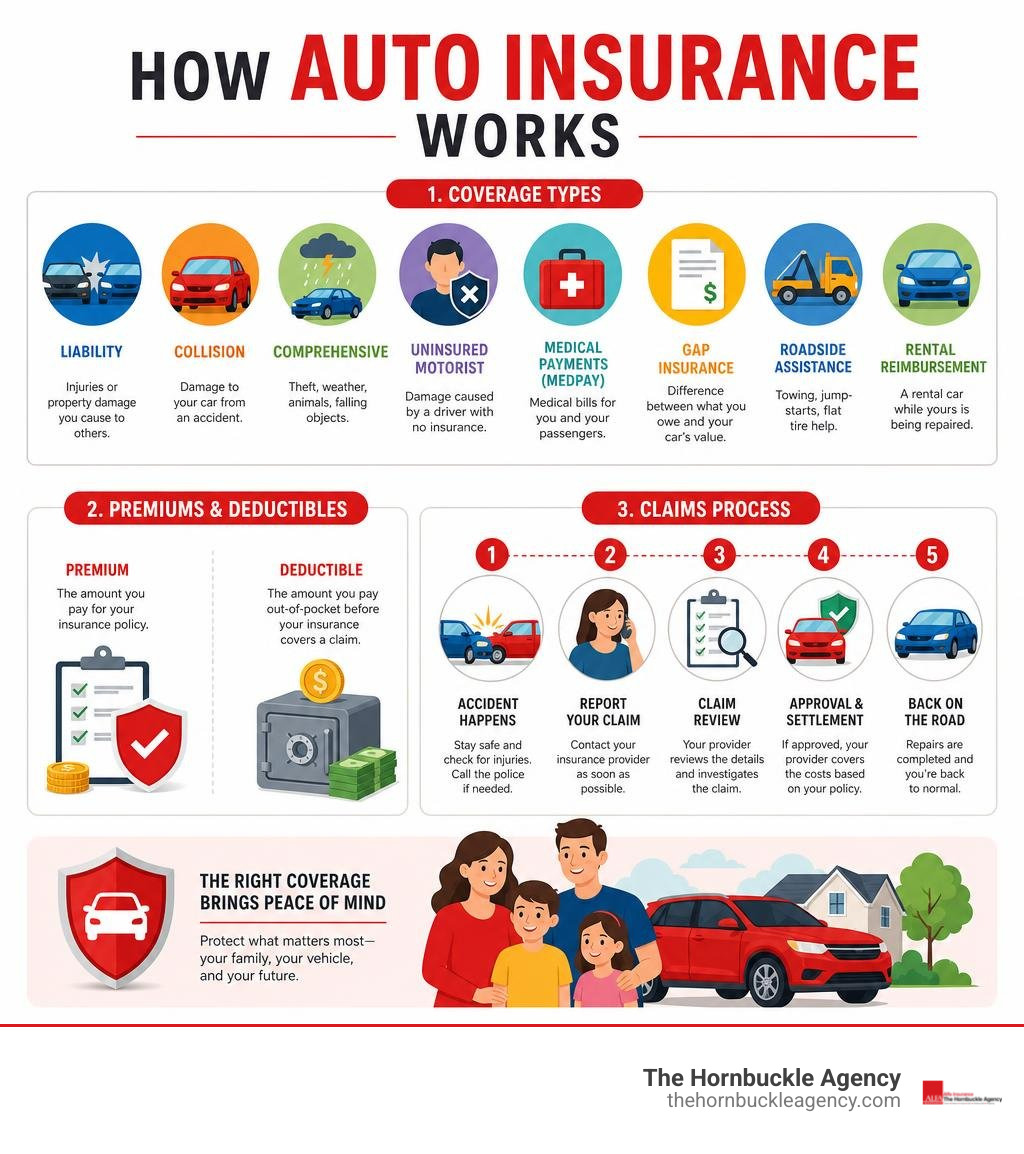
Here’s a quick breakdown of the main types of car insurance coverage available:
| Coverage Type | What It Pays For |
|---|---|
| Liability | Injuries or property damage you cause to others |
| Collision | Damage to your car from an accident |
| Comprehensive | Theft, weather, animals, falling objects |
| Uninsured Motorist | Damage caused by a driver with no insurance |
| Medical Payments (MedPay) | Medical bills for you and your passengers |
| Gap Insurance | Difference between what you owe and your car’s value |
| Roadside Assistance | Towing, jump-starts, flat tire help |
| Rental Reimbursement | A rental car while yours is being repaired |
Most states require at least basic liability coverage. But state minimums are often far too low to fully protect your home, savings, and livelihood if a serious accident happens.
The good news? The right plan doesn’t have to break the bank. Discounts, bundling, and smart coverage choices can dramatically lower what you pay — without sacrificing protection.
I’m Dustin Hornbuckle, owner and agent at The Hornbuckle Agency in Albertville, Alabama, with nearly 18 years of experience helping rural Alabama families find the right car insurance plans to protect what matters most. In this guide, I’ll walk you through everything you need to know to make a confident, informed decision.
Understanding Different Car Insurance Plans and Coverage Options
When you start looking at car insurance plans, the sheer number of options can feel overwhelming. However, building the right policy is simply a matter of selecting the right building blocks. To protect your family on the roads of Marshall County, you need a clear understanding of what each coverage type does and how they work together.
At its core, a solid auto policy is designed to protect your financial well-being. If you are involved in a collision on US-431, the right policy ensures you aren’t paying tens of thousands of dollars out of pocket for medical bills or vehicle repairs.
Let’s break down the primary coverages that form the foundation of most auto policies:
- Liability Coverage: This is the legal foundation of your policy. It is split into two parts: bodily injury liability (which pays for medical expenses, lost wages, and legal fees of other drivers and passengers if you are at fault) and property damage liability (which pays to repair or replace other people’s property, such as their vehicle, mailbox, or fence).
- Collision Coverage: Whether you hit another vehicle or run into a stationary object like a guardrail, collision coverage pays to repair or replace your own vehicle.
- Comprehensive Coverage: Often referred to as “other than collision,” comprehensive coverage handles damage to your vehicle caused by events outside your control. This includes theft, vandalism, fire, hail, windstorms, and collisions with animals.
Basic Liability vs. Comprehensive Car Insurance Plans
Many drivers confuse “basic liability” with having complete protection. In Alabama, the law requires a bare minimum of liability coverage, often written as 25/50/25:
- $25,000 for bodily injury per person.
- $50,000 for total bodily injury per accident.
- $25,000 for property damage per accident.
While carrying state minimums makes you legal to drive, it rarely makes you financially safe. If you cause an accident in Albertville that totals a modern SUV, a $25,000 property damage limit will leave you personally responsible for the remaining balance.
Furthermore, basic liability offers absolutely zero physical damage protection for your own vehicle. If a severe storm rolls through Guntersville and drops a pine limb on your windshield, or if you hit a deer on a dark backroad in Boaz, a liability-only policy won’t pay a dime.
To protect your own vehicle, you need to step up to comprehensive and collision coverage. Comprehensive car insurance details are especially important for local drivers. Marshall County is no stranger to severe spring weather, tornadoes, and heavy hail. Having comprehensive coverage ensures that when Mother Nature strikes, your vehicle’s repair costs are covered.
Optional Add-Ons for Your Auto Policy
Standard car insurance plans cover the basics, but optional add-ons allow you to customize your policy to fit your daily life. Here are the most valuable optional coverages to consider:
- Rental Reimbursement: If your car is in the shop after a covered accident, how will you get to work or drop the kids off at school? Rental reimbursement pays for a rental vehicle (up to daily and policy limits) while your primary ride is being repaired.
- Roadside Assistance: From a flat tire on the way to Lake Guntersville to a dead battery in the middle of Albertville, roadside assistance provides peace of mind with 24/7 towing, fuel delivery, and lockout services.
- Gap Insurance and Loan Protection: If you finance or lease your vehicle, it begins depreciating the moment you drive it off the lot. If your car is totaled, standard collision or comprehensive insurance only pays the actual cash value (ACV) of the vehicle. If you owe more on your loan than the car is worth, gap insurance steps in to cover the difference so you aren’t left paying for a dead car.
Key Factors That Influence Your Auto Insurance Premium
Have you ever wondered why your neighbor pays a different rate for their car insurance than you do? Insurance companies use complex risk assessments to calculate your premium. Understanding these factors can help you take control of your costs.
Here are the primary factors that influence what you pay:
- Your Driving Record: A clean driving history is the single best way to keep your rates low. Speeding tickets, at-fault accidents, and DUIs signal to insurance companies that you are a higher risk, which drives up your premium.
- Demographics: Statistics show that younger, inexperienced drivers (particularly teens) are more likely to be involved in accidents, resulting in higher premiums. Conversely, mature drivers often enjoy lower rates.
- Your Exact Location: Where you garage your car matters. Factors like local accident rates, vehicle theft statistics, and weather risks in your ZIP code affect your premium. Driving in rural areas of Marshall County may carry different risks (such as deer collisions) compared to high-density urban areas.
- Vehicle Make and Model: The cost to repair or replace your vehicle directly impacts your rate. Vehicles with high safety ratings and inexpensive replacement parts are generally cheaper to insure than high-performance sports cars or luxury imports.
- Annual Mileage: The less time you spend on the road, the lower your chances of getting into an accident. Drivers with short daily commutes often qualify for lower rates.
How Deductibles Affect Your Monthly Premium
Your deductible is the out-of-pocket amount you agree to pay before your insurance coverage kicks in to cover a physical damage claim. For example, if you have a $500 deductible and suffer $2,500 in hail damage, you pay $500, and your insurer pays the remaining $2,000.
Choosing the right deductible is a balancing act between your monthly budget and your emergency savings.
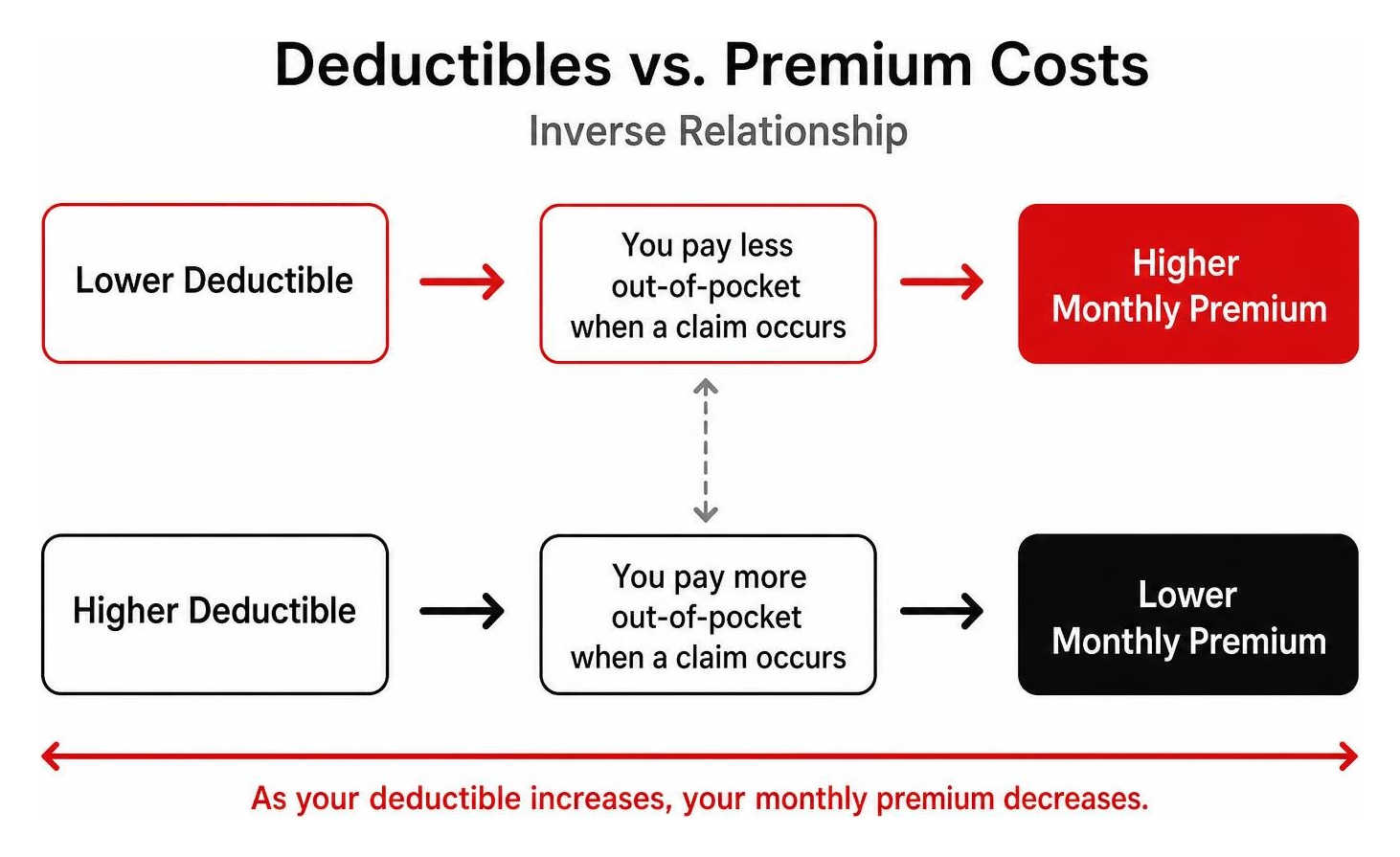
Here is a quick comparison of how your deductible choice impacts your financial risk:
| Deductible Level | Impact on Monthly Premium | Out-of-Pocket Risk in an Accident | Best Suited For |
|---|---|---|---|
| Low ($250 – $500) | Higher monthly premium | Lower out-of-pocket cost | Drivers who prefer predictable monthly expenses and have limited emergency savings. |
| High ($1,000+) | Lower monthly premium | Higher out-of-pocket cost | Drivers with a strong emergency fund who want to minimize their ongoing monthly bill. |
Special Considerations for Unique Drivers and Vehicles
Different stages of life and different types of vehicles require specialized insurance considerations:
- Teen Drivers: Adding a teenager to your policy can cause your premium to jump significantly. To offset this, look for good student discounts or specialized youth driving safety programs that reward teens for maintaining clean driving habits.
- Senior Drivers: While experienced drivers enjoy great rates, mature drivers may face rising premiums as they age. Completing an approved defensive driving course is an excellent way for seniors to secure a guaranteed discount.
- Electric Vehicles (EVs): Insuring an EV can be more expensive than a traditional gas vehicle due to the high cost of battery packs and specialized repair requirements.
- Classic Cars: If you own a vintage or classic car, standard car insurance plans won’t cut it. Classic cars require agreed-value coverage, which protects the collectible value of the vehicle without applying standard depreciation during a claim.
Smart Strategies to Save Money on Your Auto Policy

You don’t have to sacrifice high-quality coverage to get an affordable rate. By utilizing smart strategies and understanding how insurance discounts work, you can significantly reduce your premium.
First, make sure you are taking advantage of standard discounts. Most carriers offer premium reductions for:
- Safe Driving Programs: Utilizing telematics (mobile apps or plug-in devices that track your speed, braking, and mileage) can earn you discounts of up to 30% or 40% for safe habits.
- Good Student Discounts: Unmarried drivers between the ages of 16 and 25 who maintain a “B” average (3.0 GPA) or higher can often save up to 7% to 20% on their premiums.
- Vehicle Safety Features: Vehicles equipped with anti-lock brakes, passive restraint systems, or anti-theft devices often qualify for automatic discounts.
The Power of Bundling Car Insurance Plans with Other Policies
The single most effective way to lower your insurance costs is multi-policy bundling. When you purchase your auto policy from the same provider that handles your other insurance needs, you unlock massive discounts across all policies.
At The Hornbuckle Agency, we recommend looking at your coverage holistically. Consider bundling your auto policy with:
- Home Insurance: Protecting your dwelling and personal property while securing a steep discount on your car insurance.
- Life Insurance: Ensuring your family’s long-term financial security while simplifying your monthly bills.
- Umbrella Insurance: Adding an extra layer of liability protection over both your home and auto policies for complete peace of mind.
What is a No Claim Bonus (NCB) and How Does It Work?
A No Claim Bonus (NCB) is a reward system for safe, accident-free drivers. For every consecutive year you drive without filing an at-fault claim, your insurance provider may reward you with a progressive discount on your policy renewal premium.
This bonus can accumulate over time, sometimes resulting in savings of up to 50% for long-term safe drivers. If you do eventually need to file a minor claim, some policies offer NCB protection as an add-on, which prevents your hard-earned discount from resetting to zero after a single incident.
How to Compare Quotes and Choose the Right Plan
When shopping for car insurance plans, it is tempting to simply select the lowest number you see. However, comparing quotes based on price alone is a dangerous trap. A cheaper policy often means higher deductibles, lower liability limits, or missing coverages that leave you vulnerable.
To compare quotes effectively, you must perform a true “apples-to-apples” comparison. This means ensuring that every quote you evaluate features identical bodily injury limits, property damage limits, and deductible amounts. To help you navigate this process, we have created an Ultimate Guide to Auto Insurance Quotes to ensure you don’t miss any critical details.
Information Required to Get an Accurate Quote
To get a fast and highly accurate auto insurance quote, gather the following information before you reach out to an agent:
- Driver’s License Numbers: For all licensed drivers in your household.
- Vehicle Identification Numbers (VIN): Or the exact make, model, year, and mileage of your vehicles.
- Driving History: Details of any accidents, tickets, or claims over the past three to five years.
- Garaging Address: The physical address where the vehicles are parked overnight.
- Your Current Policy Declarations Page: This shows your current coverage limits and deductibles, making it easy to build a comparable or improved plan.
Evaluating Local Agents vs. National Direct Writers
You can buy car insurance from a massive national website in a few clicks. However, there is a massive difference between buying a generic policy online and working with a local agent who understands your community.
National direct writers use algorithms to calculate your risk, often ignoring the unique geographic and lifestyle factors of Marshall County. A local agent provides personalized risk education, guiding you through your options to ensure your family is truly protected.
Having a local professional in your corner makes all the difference. We understand the specific risks of driving on local roads, from the seasonal traffic near Lake Guntersville to the severe weather patterns that impact our homes and vehicles in Albertville, Boaz, and across Marshall County. Working with someone who lives and works in your community ensures you get personalized coverage options tailored to your actual daily life.
Frequently Asked Questions about Auto Insurance
Does car insurance cover the car or the driver?
In most cases, auto insurance follows the car, not the driver. Under the “permissive user” rule, if you lend your car to a friend or relative who is not listed on your policy, your insurance remains the primary coverage in the event of an accident. However, any regular drivers living in your household must be officially added to your policy to ensure claims are not denied.
What is the grace period for insuring a newly purchased car?
If you already have an active auto insurance policy, most carriers provide a grace period of 14 to 30 days to automatically extend coverage to a newly acquired vehicle. However, if you do not have an existing policy, you must secure coverage before driving your new car off the lot. We always recommend calling your agent immediately upon purchasing a vehicle to ensure continuous coverage.
Does standard auto insurance cover ridesharing or commercial deliveries?
No. Standard personal car insurance plans feature a strict commercial exclusion. If you use your personal vehicle to carry passengers for a fee (like Uber or Lyft) or deliver food/goods (like DoorDash or Amazon Flex), your personal policy will not cover you during those times. To stay protected, you must add a commercial or rideshare endorsement to your policy.
Conclusion: Get Covered with The Hornbuckle Agency
Finding the perfect balance between affordability and reliable protection doesn’t have to be a stressful chore. At The Hornbuckle Agency, we believe that insurance is about more than just a policy document — it’s about providing personalized risk education and protection guidance to families throughout Albertville, Guntersville, Boaz, and Marshall County.
We take the time to sit down with you, evaluate your family’s unique needs, and build customized car insurance plans that protect your hard-earned assets without breaking the bank.
Ready to experience the peace of mind that comes with personalized local protection? Contact Us today or visit our Auto Insurance page to get started on your customized quote. Let us help you protect your family’s journey on the road ahead!
