
What You Need to Know About Mobile Home Insurance
Mobile home insurance protects your home, belongings, and finances when something goes wrong — whether that’s a fire, a storm, theft, or someone getting hurt on your property.
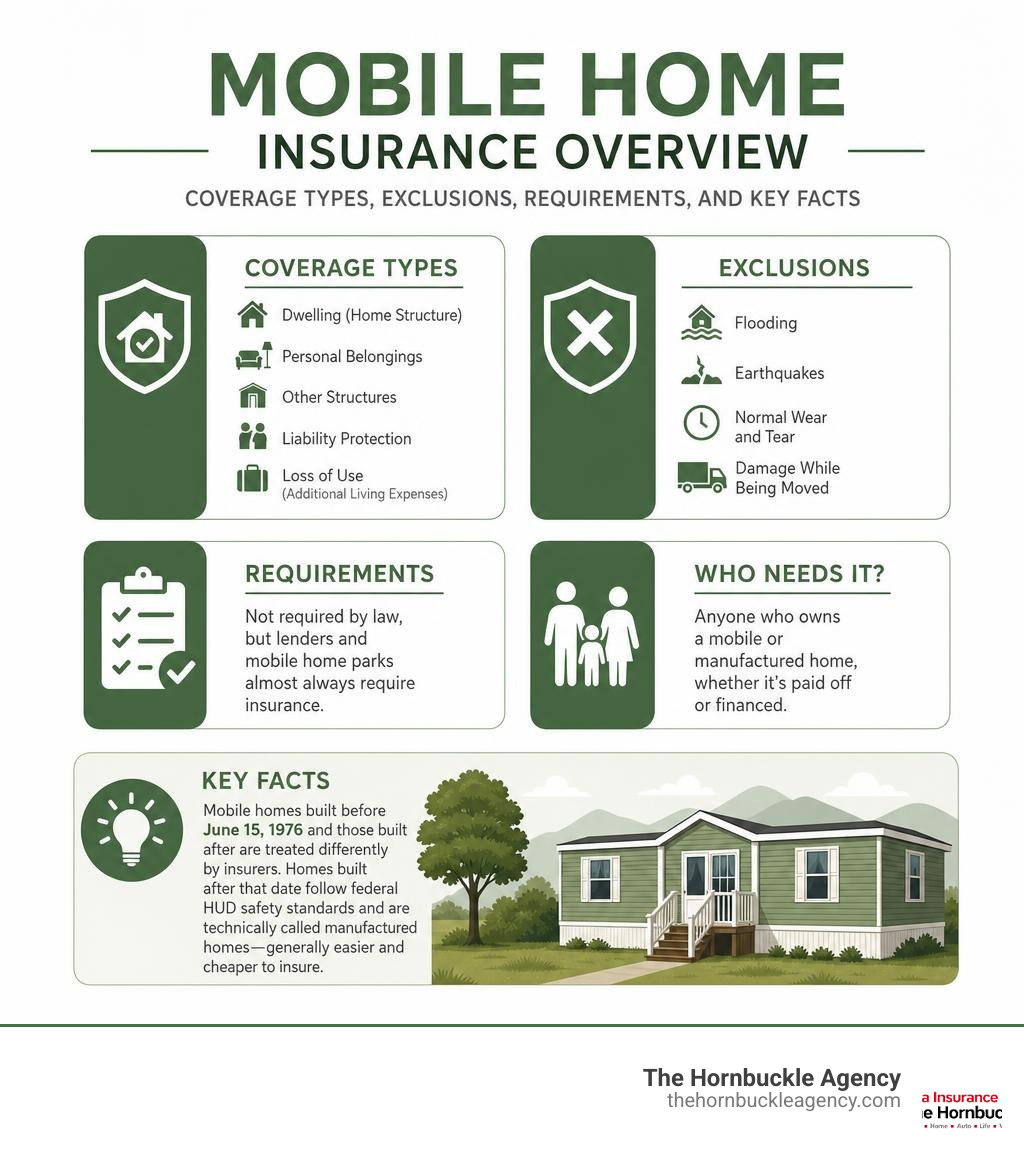
Here’s a quick snapshot of what it covers and how it works:
| What It Is | A specialized home insurance policy (also called HO-7) designed for mobile and manufactured homes |
|---|---|
| What It Covers | Your home’s structure, personal belongings, other structures, liability, and temporary living expenses |
| What It Doesn’t Cover | Flooding, earthquakes, normal wear and tear, or damage that happens while the home is being moved |
| Is It Required? | Not by law — but your lender or mobile home park almost certainly requires it |
| Who Needs It | Anyone who owns a mobile or manufactured home, whether it’s paid off or financed |
If your family depends on your home for shelter and stability, losing it without insurance could be financially devastating. Repair and replacement costs are high, and most families can’t absorb that kind of loss out of pocket.
One important distinction worth knowing upfront: mobile homes built before June 15, 1976 and those built after are treated differently by insurers. Homes built after that date follow federal HUD safety standards and are technically called manufactured homes — they’re generally easier and cheaper to insure.
Whether you own a newer manufactured home or an older mobile home, understanding your coverage options is the first step toward real peace of mind.
What is Mobile Home Insurance and How Does It Work?
For many families in Albertville, Guntersville, Boaz, and throughout Marshall County, AL, a manufactured or mobile home is a wonderful, cost-effective way to own a piece of the American dream. But just like a site-built house, your factory-built home represents a massive financial investment. That is where mobile home insurance comes into play.
A mobile home insurance policy (often classified as an HO-7 policy) is a specialized form of property insurance. It is specifically tailored to the unique construction, risks, and transportable nature of manufactured housing. It works by transferring the financial risk of sudden, accidental damage from your shoulders to the insurance provider. If a severe Alabama storm tears off your roof or a kitchen fire damages your cabinets, the policy helps cover the cost of repairs, rebuilding, or replacing your personal belongings, minus your deductible.
Beyond protecting the physical structure, these policies also provide crucial liability protection. If a visitor trips on your steps or your dog accidentally bites a neighbor, the liability portion of your policy helps cover their medical bills and your legal defense fees if you are sued.
While the concept is simple, navigating the details can feel overwhelming. That is why we focus on personalized risk education to help you understand exactly what you are paying for. To explore how these policies safeguard your property, you can read more about our approach to Manufactured Home Insurance.

Mobile vs. Manufactured Homes: What is the Difference?
While people often use the terms “mobile home” and “manufactured home” interchangeably, the insurance industry and federal regulators draw a very sharp line between the two based on a single date: June 15, 1976.
Before this date, factory-built homes were constructed with very few safety or quality regulations. These are technically classified as mobile homes. Because they lack standardized building regulations, they are more vulnerable to wind, fire, and structural degradation.
On June 15, 1976, the U.S. Department of Housing and Urban Development (HUD) established the Federal Manufactured Home Construction and Safety Standards (commonly known as the HUD Code). Any factory-built home constructed after this date is technically a manufactured home. The HUD Code revolutionized the industry by enforcing strict standards for:
- Structural durability and transportability
- Fire safety and resistance
- Energy efficiency and electrical systems
- Windstorm protection (especially critical for our storm-prone region in North Alabama)
For insurance purposes, this distinction is massive. Because manufactured homes built after 1976 are safer and more durable, they are much easier to insure and qualify for lower premium rates. Older mobile homes built before 1976 require specialized underwriting and can be more challenging to cover.
Is Mobile Home Insurance Required by Law?
The short answer is no: the state of Alabama does not have a law requiring you to purchase mobile home insurance. If you own your home outright and it sits on your own private land in Marshall County, you could legally go without coverage. However, doing so is an immense financial gamble.
In the real world, you will almost certainly be required to carry insurance under the following common scenarios:
- Lender Mandates: If you are financing your manufactured home through a mortgage or a personal chattel loan, your lender will absolutely require proof of insurance before closing. They want to protect their financial stake in your home.
- Mobile Home Communities: If you lease a lot in an organized mobile home park or community in Albertville, Boaz, or Guntersville, the park management will typically require you to carry at least liability insurance, and often physical damage coverage as well, to protect the community as a whole.
Even if your home is fully paid off, maintaining active coverage is the only way to protect yourself from catastrophic financial loss.
What Does a Standard Policy Cover?
A standard manufactured or mobile home policy is designed to be comprehensive, yet it is highly customizable. It protects not just the roof over your head, but also your hard-earned belongings and your financial future.

To help you visualize how your policy is structured, here is a comparison of standard coverages versus optional add-ons:
| Coverage Type | What It Protects | Is It Standard? |
|---|---|---|
| Dwelling Coverage | The main structure of your home, including built-in appliances and utility connections. | Yes |
| Other Structures | Unattached structures like carports, detached garages, decks, and storage sheds. | Yes (typically 10% of dwelling limit) |
| Personal Property | Your clothes, furniture, electronics, and other household items. | Yes |
| Loss of Use | Temporary living expenses (hotel, food) if your home is unlivable after a covered loss. | Yes |
| Personal Liability | Legal fees and medical bills if someone is injured on your property. | Yes |
| Replacement Cost Endorsement | Pays to replace items or the home at current market prices without deducting depreciation. | Optional |
| Water Backup Coverage | Covers damage from backed-up sewers, drains, or sump pump failures. | Optional |
| Flood & Earthquake Protection | Protection against natural disasters like external flooding or ground movement. | Optional (requires separate policy/endorsement) |
Core Coverage Areas
Every standard policy is built around five core pillars of protection:
- Dwelling Coverage: This is the heart of your policy. It covers accidental physical loss to the home itself from covered perils like fire, windstorms, hail, lightning, explosions, vandalism, and falling objects (like a stray pine branch during a spring storm in Marshall County).
- Other Structures: Got a detached carport for your truck or a shed filled with lawn equipment? This coverage protects structures on your property that are not physically attached to your home.
- Personal Property: Imagine taking your manufactured home, turning it upside down, and shaking it. Everything that falls out—your TV, clothes, furniture, and dishes—is your personal property. Your policy covers these items against theft or damage from covered disasters.
- Loss of Use (Additional Living Expenses): If a severe storm damages your home so badly that you cannot safely live in it while repairs are being made, this coverage helps pay for your temporary housing, restaurant meals, and other extra costs.
- Liability Protection & Medical Payments: If a guest slips on your rain-slicked deck and breaks a bone, your policy can cover their medical bills. If they decide to sue you, your personal liability coverage helps pay for your legal defense and any settlements up to your policy limits.
Optional Coverages to Consider
Because every family’s living situation in Albertville and Guntersville is unique, standard coverage might not be enough. We always recommend reviewing these valuable optional coverages:
- Replacement Cost Coverage: Standard policies often pay out “Actual Cash Value” (ACV), which deducts depreciation based on the age of your home or belongings. Opting for Replacement Cost Coverage ensures you receive enough money to buy brand-new replacement items at today’s retail prices.
- Water Backup Endorsement: Standard policies do not cover water that backs up through your sewers or drains. Adding this endorsement protects your home from this messy and expensive headache.
- Trip/Transportation Coverage: If you plan to move your manufactured home to a new lot, standard policies will not cover damage that occurs while the home is in transit. Trip coverage protects your home while it is on the road.
- Hobby Farm Liability: Many families in rural Marshall County keep small hobby farms. If you have chickens, goats, or horses, standard liability may not cover incidents involving your animals, making this a smart add-on.
To explore how to build a policy that perfectly fits your lifestyle, you can learn more about customized Alfa Manufactured Home Insurance options.
Cost Factors, Exclusions, and Older Homes
When shopping for mobile home insurance, it helps to understand what goes on behind the scenes during premium calculations. Insurance companies look at a variety of risk factors to determine your monthly or annual cost:
- Location: Marshall County is beautiful, but our proximity to severe weather and windstorms means location plays a big role. Homes in rural areas further from fire departments may also carry slightly higher premiums.
- Age and Condition: Newer manufactured homes built to modern HUD standards are cheaper to insure because they are constructed with fire-resistant materials and advanced wind-anchoring systems.
- Size and Structure: Single-wide homes generally cost less to insure than double-wide or triple-wide homes because they cost less to replace.
- Claims History: If you have a history of filing multiple insurance claims, carriers may view you as a higher risk.
Common Exclusions in Mobile Home Insurance
No insurance policy covers everything. To avoid unpleasant surprises when you file a claim, it is vital to understand what standard policies exclude:
- Flooding: Damage caused by rising surface water, overflowing creeks, or heavy rain accumulation is never covered by a standard policy. You must purchase a separate flood insurance policy, typically backed by the National Flood Insurance Program (NFIP).
- Earthquakes and Landslides: Ground movement is excluded. If you want protection against earthquakes, you will need to purchase a specific endorsement.
- Wear and Tear / Maintenance Issues: Insurance is designed for sudden, accidental events. It will not pay to repair a roof that is simply old and rotting, nor will it cover damage from slow, long-term plumbing leaks or pest infestations (like termites or mice).
- In-Transit Damage: Unless you have purchased specific trip coverage, any damage that occurs while your home is being transported on public highways is excluded.
Insuring Older Mobile Homes Built Before 1976
If you own an older mobile home built before the 1976 HUD standards, you may have run into roadblocks trying to find coverage. Many mainstream insurance carriers simply decline pre-1976 homes because they do not meet modern fire and wind safety regulations.
Fortunately, you still have options. Specialty carriers exist that focus specifically on older homes. When underwriting an older mobile home, insurers will look closely at:
- Structural Integrity: Is the roof in good condition? Is the flooring solid?
- Anchoring Systems: Does the home have approved, modern tie-downs to keep it secure during high winds?
- Skirting and Handrails: Is the foundation fully enclosed with sturdy skirting to prevent pest damage and wind uplift? Are there secure handrails on steps with three or more risers?
At The Hornbuckle Agency, we believe everyone deserves protection. We can help you navigate these unique guidelines to find a carrier that welcomes older homes.
Discounts to Lower Your Mobile Home Insurance Premiums
Protecting your home does not have to break the bank. Most insurance companies offer a variety of discounts to help make your coverage more affordable:
- Multi-Policy Discount: One of the easiest ways to save is by bundling your mobile home policy with your auto, life, or farm insurance.
- Claims-Free Discount: If you have gone several years without filing an insurance claim, you will likely be rewarded with lower rates.
- Age of Home: Brand-new manufactured homes often qualify for significant discounts because their modern construction makes claims less likely.
- Senior/Mature Owner Discount: Many carriers offer discounts to homeowners who are 50 or older.
- Home Park Discount: If your home is located in an approved, well-maintained mobile home park, you may qualify for a lower premium.
- Safety and Security Features: Installing smoke detectors, deadbolts, and security cameras can help trim your costs.
How to Compare Mobile Home Insurance Policies
When you are ready to shop for coverage, do not just look at the monthly premium. A cheap policy that does not cover your needs can cost you thousands of dollars down the road.
Here is a simple process to compare your options:
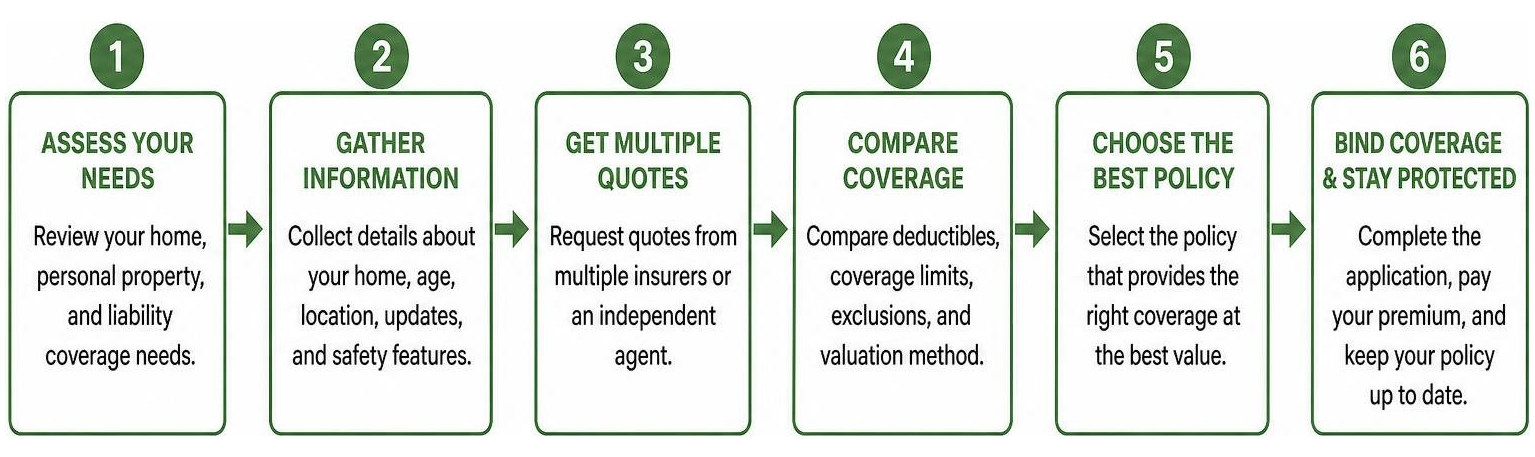
To compare effectively:
- Keep Deductibles Consistent: When comparing quotes, make sure you are using the same deductible amounts (e.g., $1,000 or $2,500) so you are comparing apples to apples.
- Check the Valuation Method: Confirm whether the quotes use Actual Cash Value (ACV) or Replacement Cost for your dwelling and personal property.
- Work with a Local Agent: Working with a local, independent agent who understands the unique climate and community of Marshall County is invaluable.
Frequently Asked Questions About Mobile Home Insurance
We believe that a well-informed policyholder is a protected policyholder. Here are some of the most common questions we hear from families in Albertville, Boaz, and Guntersville.
Does standard mobile home insurance cover flood damage?
No. Standard mobile home insurance policies specifically exclude flood damage caused by rising external waters. If a nearby creek overflows or heavy rain floods your yard and seeps into your home, a standard policy will not pay for the damage.
To protect your home from water damage, you must purchase a separate flood insurance policy. Many flood policies are written through the National Flood Insurance Program (NFIP), and we can easily help you set up this critical layer of protection.
Can I get insurance if my mobile home has a trampoline?
Yes, but it requires careful underwriting. Trampolines pose a significant liability risk because of the high likelihood of injuries. Some insurance carriers will decline coverage entirely if you have a trampoline, while others may exclude liability coverage for trampoline-related injuries.
Fortunately, certain carriers have flexible underwriting guidelines that accommodate trampolines, provided you take proper safety precautions (like installing a safety net and a secure fence around your yard). Always be honest with your agent about trampolines or pools to ensure your liability coverage remains valid.
What information do I need to get a quote?
Getting an accurate quote is quick and easy if you have a few key details on hand:
- The exact physical address of the home
- The year, make, and model of the home (often found on the HUD data plate inside your home or on the title)
- The size of the home (single-wide, double-wide, etc.)
- The type of foundation and anchoring system (such as concrete block piers with wind tie-downs)
- The presence of any additions, such as a built-on porch, deck, or carport
- Your personal claims history and any existing policy details
Conclusion
Your manufactured or mobile home is more than just an assembly of materials — it is where your family gathers, makes memories, and finds comfort. Protecting it requires more than just a cookie-cutter policy. It requires a local partner who truly understands our community and the unique risks we face here in North Alabama.
At The Hornbuckle Agency, located right here in Albertville, AL, we serve families throughout Guntersville, Boaz, and all of Marshall County. We pride ourselves on offering personalized risk education, helping you understand your coverage so you can make smart, confident decisions for your family’s future.
Whether you want to explore local coverage resources or speak with trusted professionals, our team is always here to help you navigate your options and find the right policy for your needs.
Ready to secure the peace of mind your family deserves? Let’s work together to build the perfect protection plan for your home. Protect Your Manufactured Home Today by reaching out to us for a personalized, friendly review of your insurance needs!
