
What Homeowners Insurance Fire Coverage Actually Pays For
Homeowners insurance fire coverage is included in most standard home policies, but the amount a homeowner receives after a fire depends on the policy’s limits, deductibles, exclusions, and payout method.
Here is what a standard policy typically includes:
| Coverage Area | What’s Covered | Typical Limit |
|---|---|---|
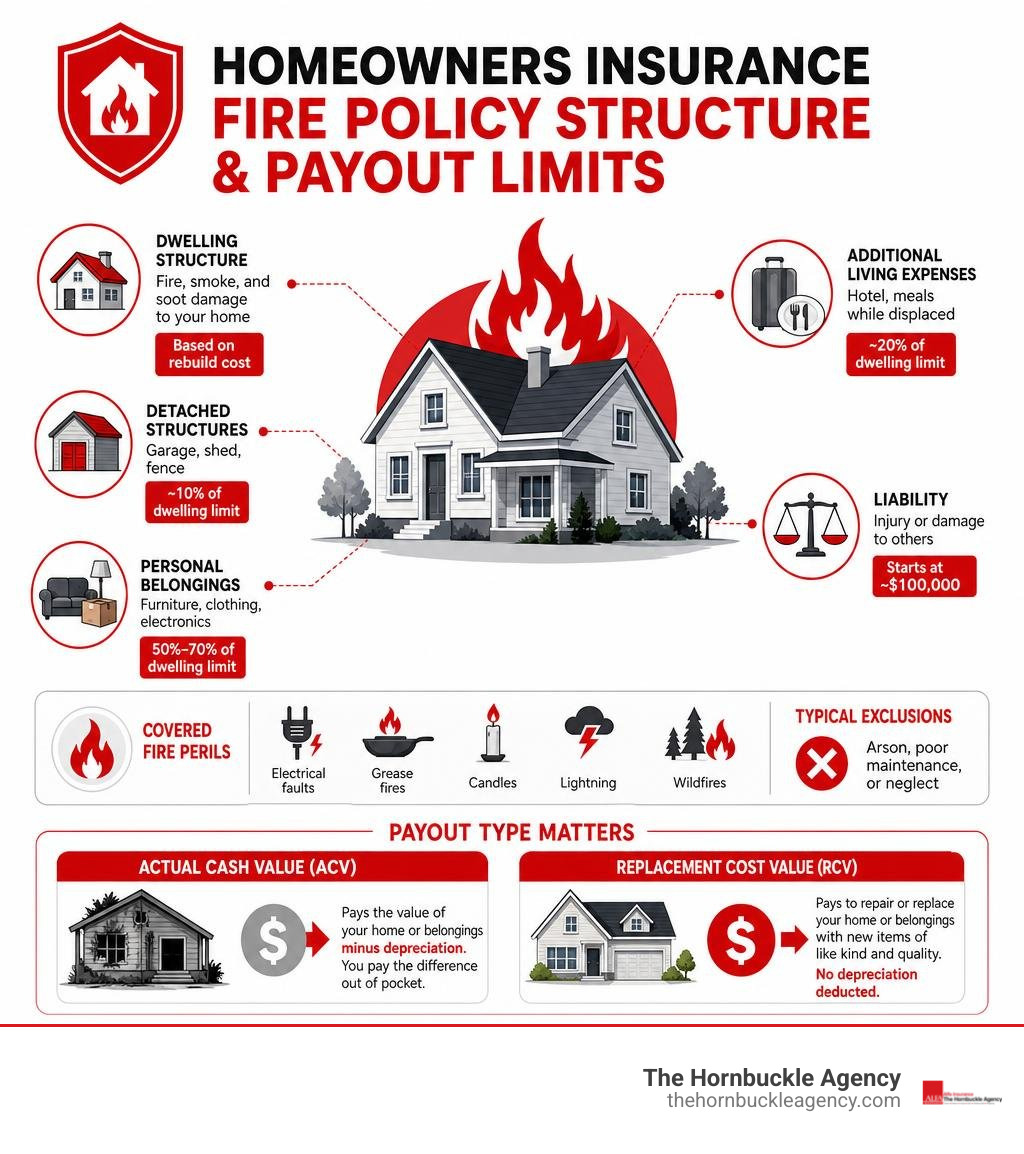
| Dwelling structure | Fire, smoke, and soot damage to the home | Based on rebuild cost |
| Detached structures | Garage, shed, fence, or other separate structures | About 10% of dwelling limit |
| Personal belongings | Furniture, clothing, electronics, and other possessions | 50%–70% of dwelling limit |
| Additional living expenses | Hotel, meals, and temporary housing while displaced | About 20% of dwelling limit |
| Liability | Injury or damage to others if a fire spreads | Often starts around $100,000 |
Most standard policies cover fires caused by electrical faults, grease, candles, lightning, and wildfires. They usually exclude intentional damage, arson by the policyholder, and losses tied to serious neglect or poor maintenance.
The payout method can matter as much as the coverage itself. Actual cash value policies subtract depreciation. Replacement cost policies pay based on the cost to repair or replace damaged property with similar materials, without that depreciation deduction. After a major fire loss, that difference can create a large out-of-pocket gap.
Wildfire exposure is also not limited to western states. Rural homeowners in Alabama and other parts of the country may still need to consider fire risk, property access, defensible space, and coverage availability.
Understanding where fire coverage starts, where it stops, and how payout limits work can help Alabama homeowners avoid costly surprises after a loss. This guide explains the major parts of a standard policy so homeowners can review their coverage with more confidence.
Understanding Homeowners Insurance Fire Coverage Limits and Policy Types
When reviewing a policy, it helps to understand how basic types of homeowners insurance coverage protect the home, belongings, and financial recovery after a covered fire. A standard policy commonly applies to accidental fire perils such as kitchen grease fires, electrical short circuits, candle accidents, space heater incidents, lightning strikes, and spreading wildfires.
Coverage can also extend beyond the flames themselves. Smoke, soot, ash, and water damage from firefighting efforts are generally handled as part of the covered fire loss, subject to the policy’s terms and limits.
Common exclusions include:
- Arson or intentional acts: Damage caused intentionally by the property owner or policyholder is not covered.
- Maintenance neglect: Fires connected to ignored electrical hazards, unsafe storage of combustible materials, or other serious neglect can create claim problems.
- Nuclear hazards and acts of war: These catastrophic events fall outside traditional homeowners property coverage.
What Standard Homeowners Insurance Fire Policies Cover
A key starting point is understanding what dwelling coverage is in home insurance. Dwelling coverage pays to repair or rebuild the physical structure of the home, including attached garages, built-in cabinetry, flooring, and permanent fixtures.
A standard policy usually divides protection into several core sections:
- Primary dwelling: Set to reflect the estimated cost to rebuild the home from the ground up, excluding land value.
- Detached structures: Unattached garages, sheds, tool barns, fences, and similar structures are often capped at about 10% of the dwelling limit.
- Personal belongings: Furniture, electronics, clothing, and other possessions are commonly insured at roughly 50% to 70% of the dwelling limit. Off-premises property coverage may be limited to a smaller share of that amount.
- Special category limits: Jewelry, collectibles, landscaping, and other high-value or specialty items may have lower internal limits unless scheduled separately.
- Liability protection: Personal liability coverage can help with legal fees or medical bills if a covered fire accidentally spreads to neighboring property or injures someone else.
For more help reviewing these coverage areas, visit The Hornbuckle Agency’s Home Insurance resources.
Actual Cash Value vs. Replacement Cost Valuation
The way an insurer calculates the payout can significantly affect a homeowner’s recovery after a fire. Replacement cost coverage typically costs more than actual cash value coverage, but it can reduce the financial gap after a large claim.
Here are four common valuation options used in homeowners insurance fire policies:
- Actual Cash Value (ACV): Pays the current replacement cost minus depreciation based on age, condition, and wear. If an older roof burns, ACV may pay only for its remaining value.
- Replacement Cost Value (RCV): Pays to repair or replace damaged property with comparable materials at current costs, without subtracting depreciation.
- Extended Replacement Cost: Adds a buffer above the dwelling limit, often 10% to 50%, to help with higher labor and material costs after a widespread disaster.
- Guaranteed Replacement Cost: Pays the full cost to rebuild the home as covered by the policy, even if the final amount exceeds the stated dwelling limit.
| Settlement Valuation Type | Base Policy Cap | Local Construction Cost Surge | Insurer Final Payout | Homeowner Out-of-Pocket |
|---|---|---|---|---|
| Actual Cash Value (ACV) | $300,000 | $375,000 after depreciation and cost increases | $225,000 | $150,000 |
| Replacement Cost (RCV) | $300,000 | $375,000 | $300,000 | $75,000 |
| Extended Replacement (20%) | $300,000 | $375,000 | $360,000 | $15,000 |
| Guaranteed Replacement | $300,000 | $375,000 | $375,000 | $0 |
Post-Fire Recovery: Claims, Mitigation, and Expenses
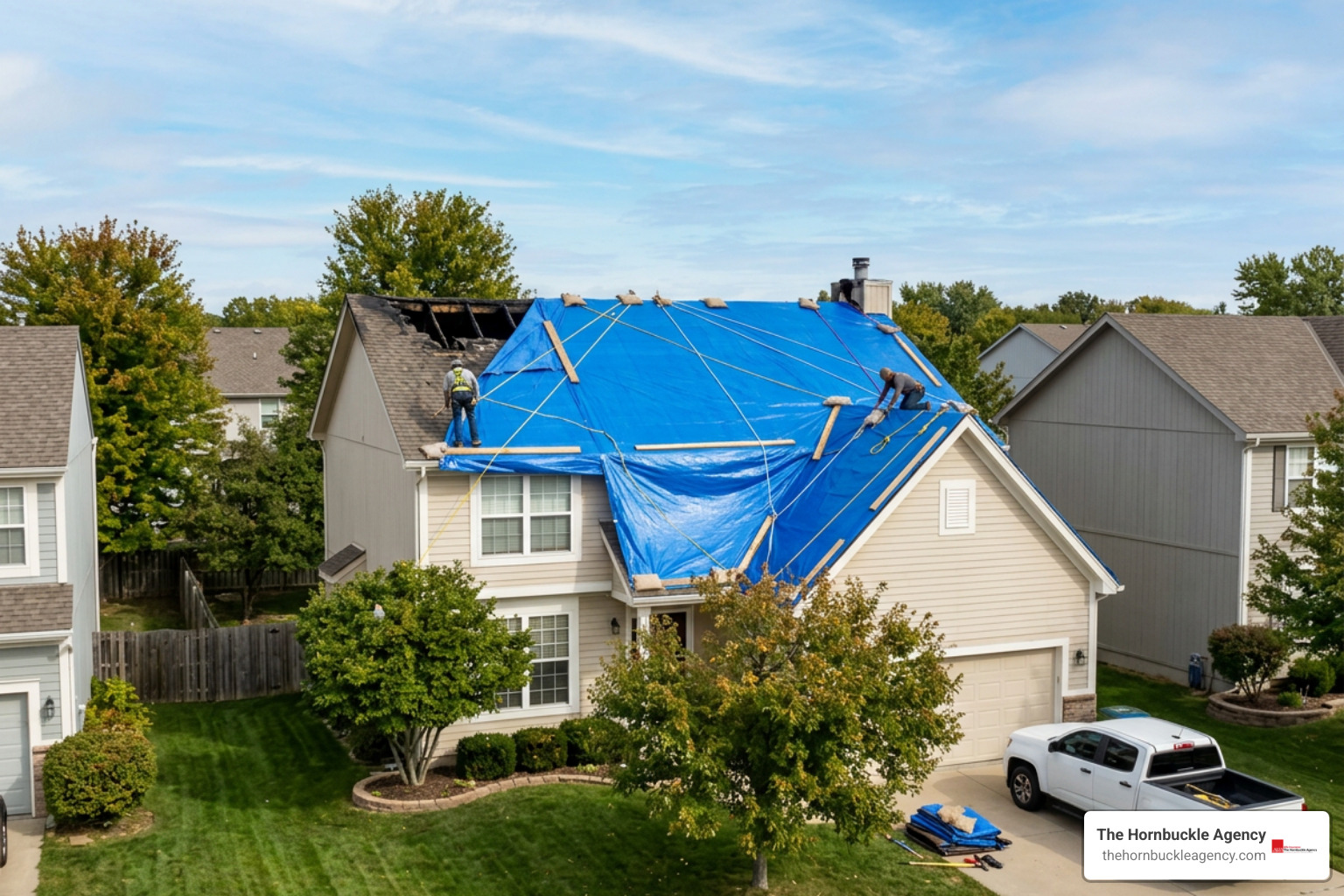
After a property fire, the first few days are critical. Homeowners need to protect the property from additional damage, document the loss, and keep records that support the claim.
Filing a Homeowners Insurance Fire Claim After Property Loss
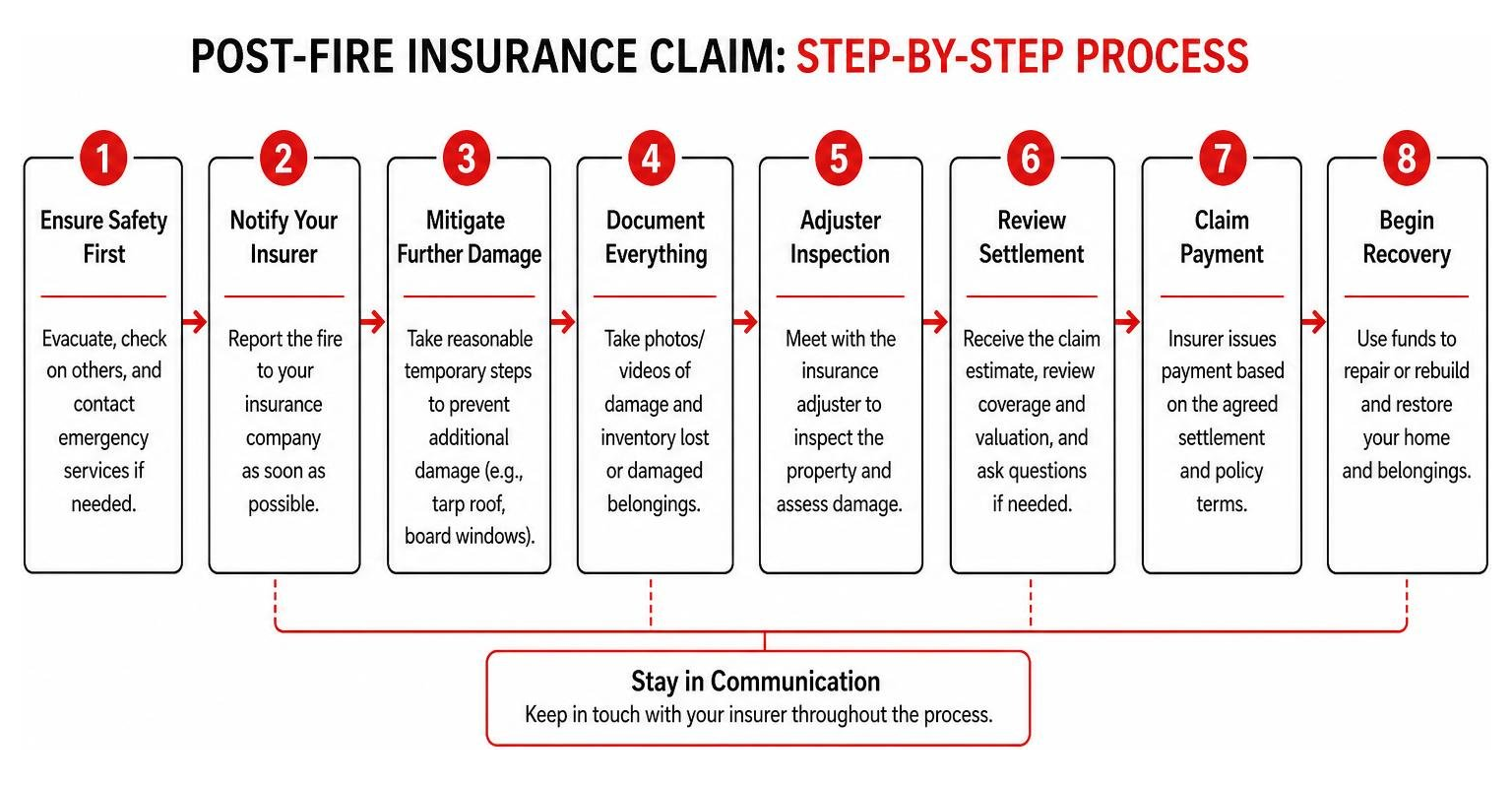
Once authorities confirm the property is safe to access, the homeowner should notify the insurance company as soon as possible. Most policies require prompt notice and reasonable steps to protect the property after a covered loss.
Important claim steps include:
- Mitigate secondary damage: Use temporary measures, such as tarping a damaged roof or boarding broken windows, to prevent additional weather damage. Avoid permanent structural repairs until the adjuster has inspected the property or the insurer gives written approval.
- Document the destruction: Take photos and videos of damaged rooms, exterior areas, personal belongings, and any visible smoke, soot, or water damage before cleanup begins.
- Submit proof of loss: Prepare an itemized list of damaged possessions. Keep contractor estimates, receipts, invoices, and other formal documentation to support the claim amount.
The Hornbuckle Agency’s Homeowners Insurance Complete Guide offers additional guidance for preparing and reviewing a claim.
Navigating Additional Living Expenses (ALE)
When a covered fire makes the home uninhabitable, Additional Living Expenses (ALE) coverage helps pay for reasonable temporary costs so the household can maintain a normal standard of living during repairs.
- Standard policy limits: ALE limits are often set at about 20% of the dwelling limit, though the exact amount depends on the policy.
- Eligible expenses: Covered costs may include hotel stays, short-term rentals, storage fees, increased commuting costs, and restaurant meals above the household’s normal grocery spending.
- Recordkeeping requirements: Save receipts, itemized bills, hotel folios, lease agreements, and proof of payment so the insurer can review and reimburse eligible expenses.
Securing Coverage in High-Risk Fire Zones
Homeowners in higher-risk rural or wildfire-prone areas may have fewer standard insurance options as carriers review fire exposure, property access, nearby vegetation, and local loss trends.
The Hornbuckle Agency’s guide to comparing home insurance quotes in Alabama can help homeowners understand available coverage options and compare policy terms.
Surplus Lines Insurers and Non-Admitted Markets
When standard admitted insurance companies decline to insure a property because of elevated fire risk, homeowners may need to explore the surplus lines market.
- Specialized risk underwriting: Surplus lines carriers, also called non-admitted insurers, may insure unique or higher-risk properties that standard carriers will not accept.
- State guaranty fund limits: Unlike admitted insurers, surplus lines carriers are generally not protected by state insurance guaranty funds if the company becomes insolvent. Financial strength and policy terms should be reviewed carefully.
State FAIR Plans as Last Resort Coverage
If private standard and surplus market options are unavailable, a state FAIR Plan may provide basic property insurance as a last-resort option.
- Safety net access: FAIR Plans are designed for property owners who cannot obtain coverage in the voluntary market.
- Coverage limitations: These policies may provide narrower protection and may not include the same endorsements or liability options available through a standard policy.
- Higher premium costs: Because FAIR Plans serve higher-exposure properties, premiums can be higher than coverage in the voluntary market.
Fire-Hardening, Premium Discounts, and Policyholder Rights
Fire mitigation can reduce the chance of severe property damage and may also help homeowners qualify for available insurance discounts.
Useful mitigation steps include clearing brush and debris away from the home, maintaining defensible space, installing fire-resistant roofing materials, updating aging electrical systems, and using centrally monitored smoke or fire alarms. Properties that meet recognized fire-hardening standards, such as Wildfire Prepared Home guidance from the Institute for Business & Home Safety, may be viewed more favorably by some insurers.
For more regional safety and coverage guidance, visit The Hornbuckle Agency’s resource on protecting farm and home property in Marshall County.
Policy Non-Renewals and Filing State Complaints
If a carrier non-renews a policy or a homeowner believes a claim was handled unfairly, state insurance regulators may be able to help review the issue.
- Advance written notice: Insurance companies generally must provide written notice before non-renewing a homeowners policy, giving the policyholder time to seek replacement coverage.
- Regulatory intervention: Alabama homeowners can contact or file a complaint with the Alabama Department of Insurance to request review of a claim, cancellation, or non-renewal concern.
Frequently Asked Questions About Fire Insurance
Does standard homeowners insurance cover wildfire and smoke damage?
Yes. Standard homeowners insurance generally covers structural fire damage, wildfire damage, and smoke or soot contamination, subject to policy limits, deductibles, and exclusions such as intentional acts or serious maintenance neglect.
What happens if rebuilding costs exceed my dwelling insurance limit?
If rebuilding costs exceed the dwelling limit, the homeowner may have to pay the difference unless the policy includes extended replacement cost, guaranteed replacement cost, or other endorsements that increase available coverage. Ordinance or Law coverage may also help pay for required building code upgrades after a covered loss.
How can homeowners lower their fire insurance premiums?
Homeowners may be able to lower rates by installing monitored fire alarms, updating electrical systems, clearing defensible space, bundling home and auto coverage, and reviewing liability needs with options such as Umbrella Insurance.
Conclusion
Understanding homeowners insurance fire limits, payout methods, and exclusions can help homeowners avoid expensive surprises after a loss. Annual policy reviews are especially important because rebuilding costs, home improvements, and local risk conditions can change over time.
The Hornbuckle Agency helps Alabama families compare coverage, understand policy limits, and choose protection that fits their homes and budgets. The agency serves multiple Alabama communities, including Albertville, Guntersville, Boaz, Arab, Geraldine, Crossville, Collinsville, Horton, and Douglas.
Contact Us to speak with a local team member, or explore homeowners insurance options tailored to your property and coverage needs.
