
Compare Rural Property Insurance Before a Loss Happens
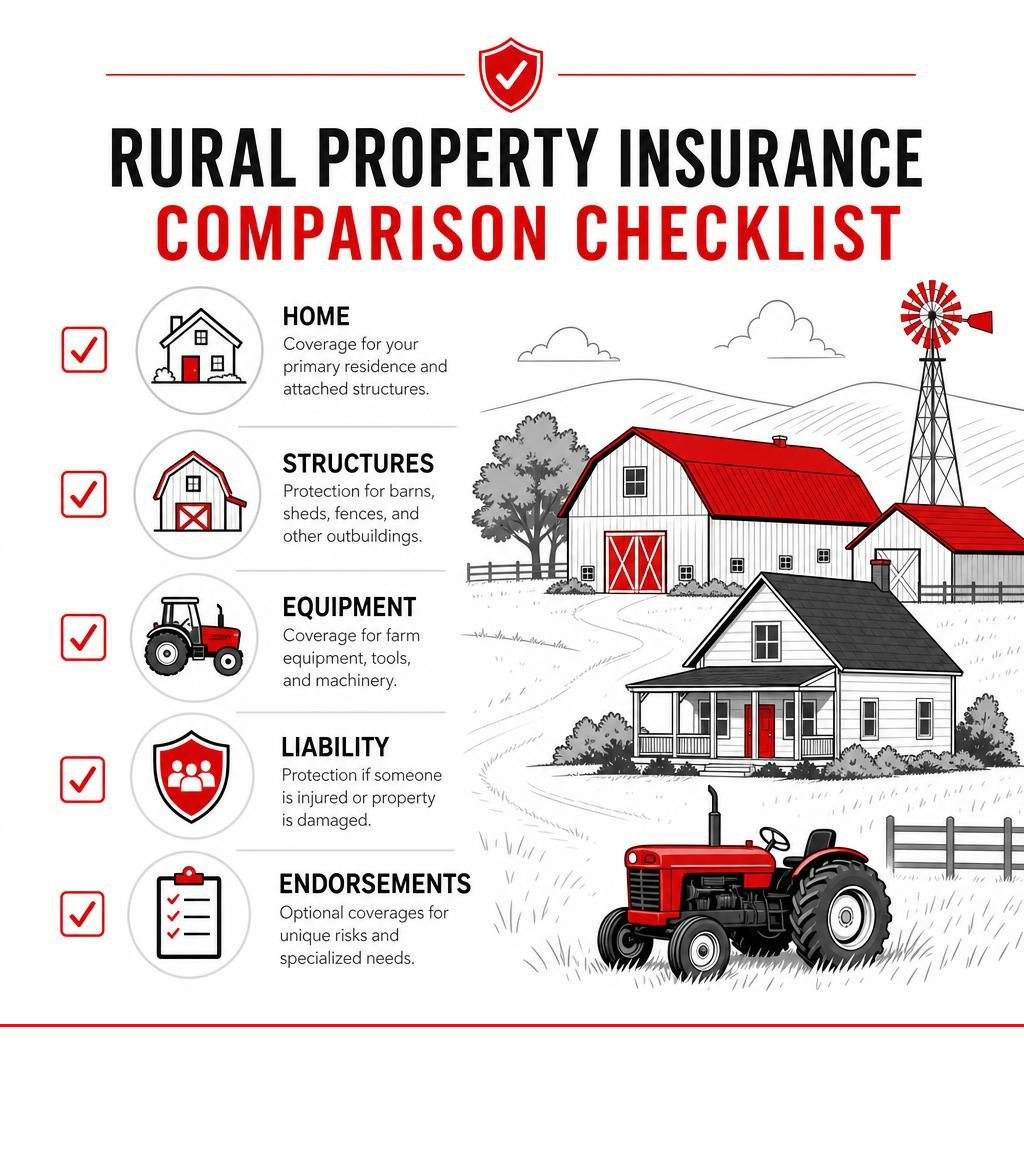
To compare rural property insurance options, start by listing every asset and activity on your land: your home, barns, sheds, tractors, tools, livestock, vehicles, and any income-producing work. Then compare each policy’s property limits, liability protection, exclusions, deductibles, and optional endorsements.
A standard homeowners policy may protect the house, but it often does not fully cover farm buildings, agricultural equipment, livestock, or business-related liability. A farm or rural policy can bring these protections together, with options for equipment that travels between properties, pollution risks, agritourism activities, and more.
The right policy depends on whether your land is a small hobby farm, a working family operation, or a larger commercial enterprise. It should protect both the place you live and the livelihood built around it.
Understanding Rural Property Insurance vs Standard Homeowners Coverage
When living outside municipal boundaries or managing acreage, standard residential policies quickly show their limits. A typical suburban policy is engineered exclusively for a private family residence and normal residential belongings. It assumes your primary risk is a kitchen fire, a burst interior pipe, or someone slipping on the front porch steps.
Once you introduce acreage, outbuildings, livestock, heavy machinery, or any revenue-generating agricultural work, residential policies no longer fit. In fact, standard home policies routinely exclude structures used for business or agricultural storage, damage caused by livestock, and liability arising from farming operations. Even tractors need insurance—otherwise they’d be “uninsured and rolling” down the pasture!
| Coverage Feature | Standard Homeowners Policy | Comprehensive Rural / Farm Property Policy |
|---|---|---|
| Primary Dwelling | Covered up to specified policy limits | Covered (site-built, modular, or manufactured homes) |
| Outbuildings | Limited (often capped at 10% of dwelling limit for personal sheds) | Fully schedule individual barns, milking parlors, sheds, and silos |
| Machinery & Equipment | Excluded if used for farming or commercial tasks | Covered (tractors, combines, implements, tools, and attachments) |
| Agricultural Liability | Explicitly excluded | Comprehensive coverage for farm operations, livestock, and land use |
| Livestock & Feed | Excluded | Covered against specified perils (theft, fire, weather, transport) |
| Pollution & Chemical Drift | Excluded | Available via specialized farm pollution liability endorsements |
Key Differences in Rural Property Insurance Structures
The core difference between traditional residential coverage and agricultural policies lies in scope. While home insurance handles the roof over your head and your household furniture, rural operations encompass tools, tractors, balers, utility vehicles, and specialized storage buildings.
Agricultural buildings face distinct hazards that standard residential structures rarely encounter. Dust accumulation in feed mills, spontaneous combustion in hay storage, high-amperage electrical demands for grain dryers, and heavy machinery maneuvering near support beams all introduce unique physical risks. A specialized rural policy accounts for these commercial hazards, ensuring both structural repair costs and agricultural continuity are protected.
Protecting Dwellings, Barns, and Manufactured Housing
Rural land frequently features diverse residential and storage setups. Understanding the ins and outs of farm house insurance coverage ensures that the main homestead receives proper valuation alongside working outbuildings.
Moreover, rural tracts often utilize manufactured or modular structures for extended family or farm hands. Navigating practical mobile home insurance options guarantees that manufactured dwellings, detached utility garages, and storage sheds receive equitable peril protection alongside traditional timber-frame barns.

Core Property and Liability Protection for Rural Land

Protecting a rural holding requires balancing physical structure protection with strong liability safeguards. When heavy machinery operates near public roads or visitors step onto your acreage, your exposure extends far beyond standard household slips and falls.
Farm Structures, Equipment, and Inland Marine
Farm equipment rarely stays inside a single barn. Tractors, implements, sprayers, and utility trailers move across fields, navigate rural roads, and occasionally travel between non-contiguous parcels.
To safeguard these mobile investments, policies incorporate inland marine endorsements. Inland marine covers mobile machinery, tools, and equipment against physical loss, theft, overturns, and transit damage regardless of where they are operating on your land.
Specialized policies also account for advanced facilities such as dairy milking parlors and borrowed equipment. In robust combined farm policies, protection can extend to equipment rental charges and borrowed implements up to specific limits, alongside accidental machinery damage when business interruption coverage is active.
Agricultural Liability and Environmental Protection
Standard personal liability does not shield you from operational farming incidents. If cattle break through a perimeter fence onto a highway, or if agricultural spray drifts across property lines into a neighbor’s timber stand, you need dedicated agricultural and commercial insurance solutions.
Agricultural liability protects against:
- Premises Liability: Slips, falls, or property damage suffered by vendors, delivery drivers, or visitors on your property.
- Product Liability: Claims arising from raw agricultural goods, livestock, or farm products sold directly to consumers.
- Environmental Impairment Liability (EIL): Coverage for sudden or accidental pollution events, chemical spills, fertilizer runoff, and mandated environmental cleanup costs.
Specialized Endorsements and Tailored Coverage Options
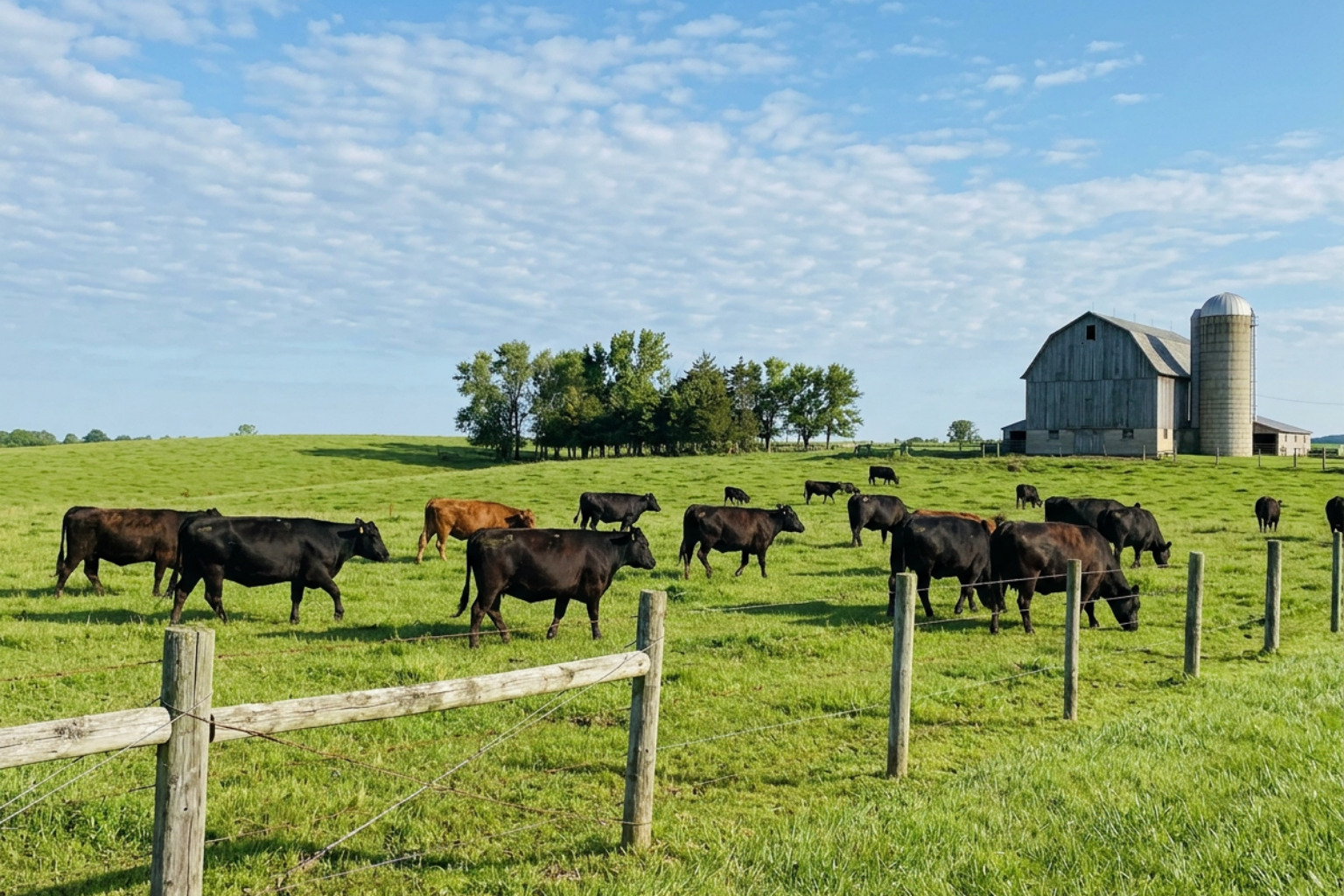
No two rural properties operate the same way. A 10-acre horse property has different operational needs than a 1,500-acre commercial row-crop and cattle holding.
Comparing Needs for Hobby Farms vs Commercial Estates
When evaluating coverage, we help landowners compare farm insurance options based on operational revenue, livestock head count, and acreage scale.
Local land records and agricultural zones, accessible through resources like Marshall County Online, help establish parcel boundaries, building footprints, and property classifications.
- Hobby Farms: Typically smaller acreage where agricultural work is secondary to residential living. Coverage centers on the home, personal outbuildings, small livestock herds, and light maintenance equipment.
- Commercial Agricultural Estates: Large-scale operations requiring extensive machinery fleets, high-limit environmental coverage, worker protection, commercial business interruption, and structured liability layers.
Custom Endorsements: Agritourism, Pollution, and Animal Collision
Modern rural properties often diversify into public-facing ventures or specialized agricultural services. Standard policies exclude these unless tailored endorsements are added:
- Agritourism Coverage: If you host seasonal pumpkin patches, corn mazes, farm tours, or hayrides, public liability must be expanded to cover agritourism activities.
- Animal Collision: Covers death or injury to your livestock caused by collision with motor vehicles on public roadways, while also helping absorb specialized veterinary surgeon fees (often up to £1,000 per animal under specific farm combined terms).
- Custom Farming: If you perform baling, planting, or harvesting work on neighboring land for a fee, custom farming endorsements ensure your equipment and liability extend to third-party acreage.
- Liquor Liability & Farm Product Sales: Essential for properties operating farm stands, cideries, or small on-site tasting facilities.
How to Evaluate and Compare Rural Property Insurance Policies
Choosing the right policy requires looking beyond the monthly premium. Evaluating structural limits, deductible structures, and specialty provisions guarantees that your property is rebuilt without financial shortfalls following severe weather or property loss.
Combining Policies, Deductibles, and Umbrella Endorsements
One of the most practical strategies for rural landowners is policy consolidation. By combining home, auto, farm structure, and equipment coverage under a unified policy schedule, you can secure a combined deductible.
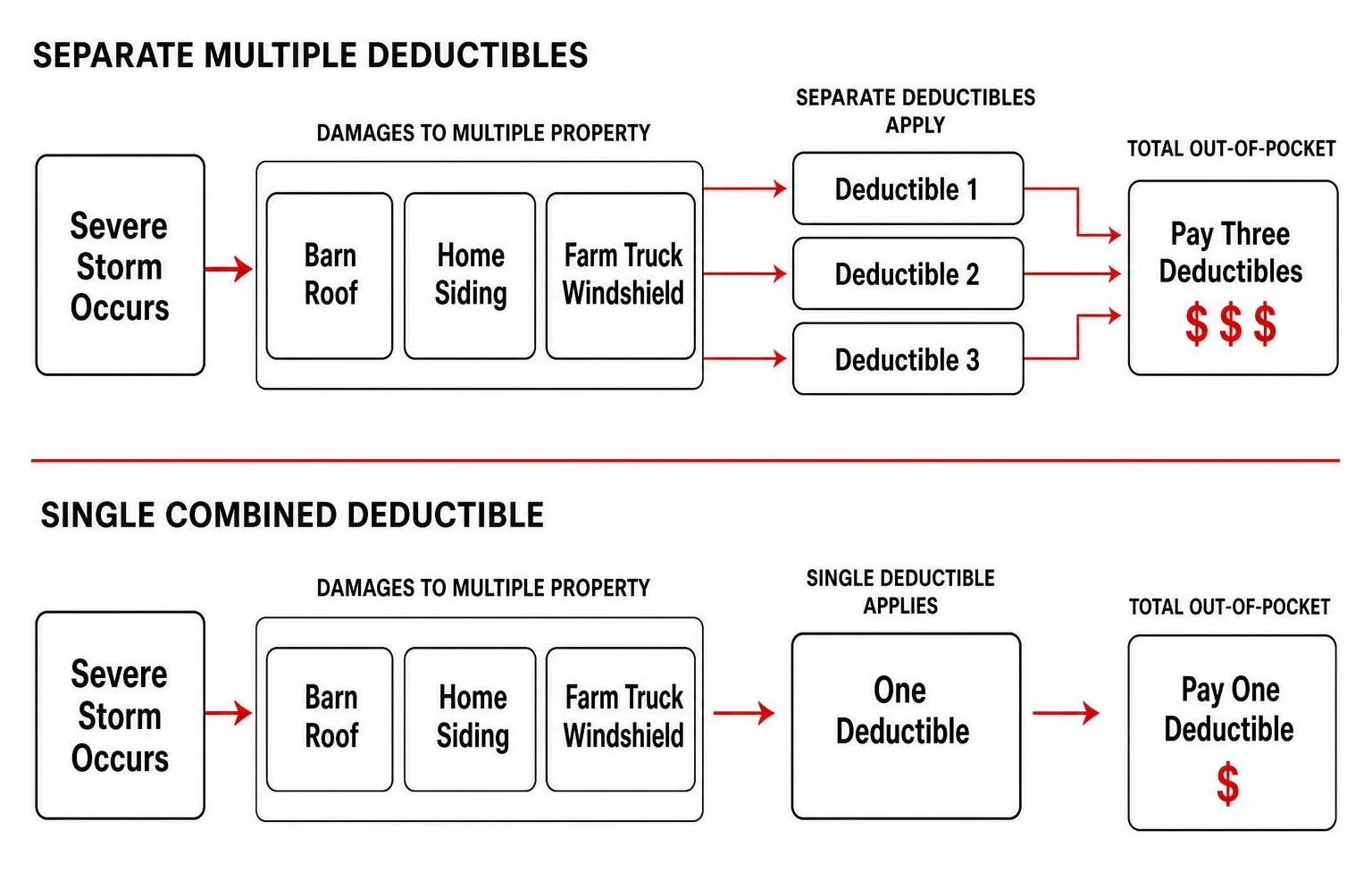
Imagine a severe convective storm delivers high winds and hail across your property, damaging your barn roof, puncturing the home’s siding, and cracking your farm truck’s windshield. Under separate unbundled policies, you would pay three distinct deductibles. Under a consolidated rural policy with a single deductible endorsement, you pay only one deductible for the entire occurrence.
Furthermore, integrating umbrella insurance provides an essential secondary layer of liability protection, closing multi-hundred-thousand-dollar liability gaps if an agricultural accident leads to substantial claims.
Assessing Risks and Updating Rural Property Insurance Coverage
Your insurance policy should evolve alongside your land. Key triggers for reviewing and evaluating farm insurance coverage include:
- Purchasing New Machinery: Adding a new tractor, baler, or skid steer requires updating your scheduled inland marine inventory immediately.
- Erecting New Outbuildings: Constructing hay sheds, equipment barns, or processing spaces requires verifying replacement cost valuations.
- Livestock Herd Changes: Major shifts in herd size or acquiring high-value breeding stock require adjustments to livestock limits.
- Diversification into Direct Sales: Starting roadside sales, custom harvesting, or public tours creates immediate liability exposures that require policy endorsements.
- Seasonal Audits: Conducting annual reviews before peak operational seasons ensures stored grain, fuel reserves, and seasonal labor are adequately protected.
Crop Insurance vs Farm Property Protection
A common misconception is that standard rural property insurance protects field crops from drought, hail, or market decline.
Traditional farm property insurance covers physical farm structures, stored grain, harvest machinery, and tools against listed perils (fire, wind, theft, lightning). In contrast, crop insurance is a specialized risk management tool—often backed by USDA federal programs—designed to protect standing crops against yield loss, drought, severe freeze, insect infestations, and dramatic commodity price fluctuations. Full protection for working acreage typically requires pairing comprehensive property coverage with multi-peril crop insurance.
Frequently Asked Questions About Rural Property Coverage
Why is standard homeowners insurance insufficient for working acreage?
Standard homeowners policies carry strict exclusions for agricultural activities, business use of outbuildings, and commercial equipment. If a tractor causes property damage, livestock escape onto a highway, or a barn storing commercial hay catches fire, a standard homeowner policy will routinely deny the claim due to agricultural exclusions.
How does a combined deductible work after severe weather damage?
A combined deductible unites multiple covered property items (such as your home, detached garage, equipment barn, and personal vehicle) under one single loss assessment per occurrence. When a single weather event damages multiple scheduled assets simultaneously, you pay only one deductible rather than individual deductibles for every damaged item.
When should rural property owners add commercial liability endorsements?
Landowners should add commercial endorsements the moment activities produce revenue or invite the general public onto the property. Common triggers include fee-based custom farming, agritourism events (hayrides, farm tours), boarding horses, or selling produce directly to consumers.
Conclusion: Securing the Right Rural Protection Plan
Protecting acreage, agricultural machinery, and rural dwellings requires a tailored strategy built around your property’s daily operations. By evaluating structural needs, equipment mobility, and liability exposures, you can build a resilient safety net for your home and land.
At The Hornbuckle Agency, we believe that understanding your risk is the first step toward lasting peace of mind. We take the time to review your outbuildings, equipment inventories, and liability needs to craft balanced, cost-effective rural property plans. Whether you manage a quiet homestead or an expanding agricultural operation, exploring dedicated farm insurance ensures your legacy is protected for generations to come. The Hornbuckle Agency serves multiple Alabama communities, including Albertville, Guntersville, Boaz, Arab, Geraldine, Crossville, Collinsville, Horton, and Douglas.
