
Mobile Home Insurance Cover for Manufactured Homes
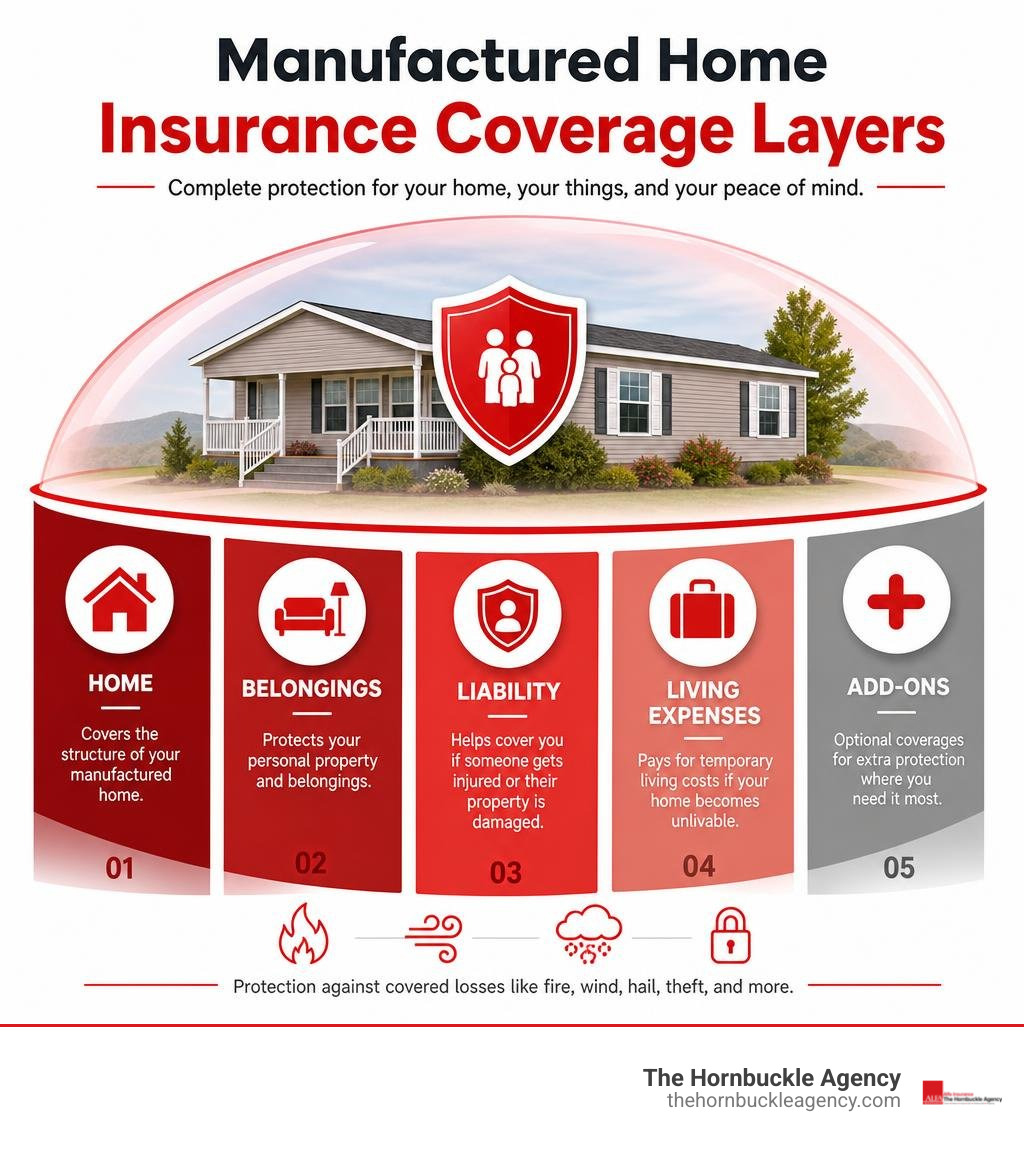
Mobile home insurance cover protects your manufactured home, belongings, and liability if a covered loss such as fire, wind, hail, theft, or a guest injury occurs. A specialized manufactured-home policy, often called an HO-7 policy, can also help pay for temporary living costs after a covered loss makes the home unsafe to live in.
Standard homeowners insurance is not always built for factory-built homes. Before choosing a policy, confirm that it includes enough dwelling coverage, personal property protection, liability coverage, and loss-of-use benefits. Then review key gaps: flood and earthquake damage usually require separate coverage, and moving the home may require a transit endorsement.
Understanding Mobile Home Insurance Cover and How It Works
Securing the proper insurance for a factory-built residence starts with understanding how insurers classify the home. “Mobile home,” “manufactured home,” and “modular home” are often used casually, but they can mean different things when a carrier evaluates risk, pricing, and policy eligibility. Choosing the right manufactured home insurance helps ensure the structure is accurately valued and protected against unexpected hazards.
Mobile Home vs. Manufactured Home vs. Modular Home
The main distinction between factory-built structures comes down to construction standards and when the home was built:
- Mobile Homes: Technically, structures built before June 15, 1976, before federal construction standards for factory-built housing took effect.
- Manufactured Homes: Factory-built homes constructed after June 15, 1976, under federal HUD construction and safety standards. These homes are built on a permanent steel chassis for transport and must meet standards for structural design, fire safety, plumbing, electrical systems, and energy efficiency.
- Modular Homes: Factory-built in sections, transported to the site, and placed on a permanent masonry or concrete foundation. Because modular homes are built to local and state building codes rather than federal HUD codes, they are typically insured using standard home insurance forms.
Why Standard HO-3 Policies Do Not Apply
Standard HO-3 homeowners insurance policies are designed for traditional site-built houses anchored to permanent foundations. Manufactured homes have different construction, transport, anchoring, and wind-exposure considerations, so trying to insure one on the wrong form can create coverage gaps.
Manufactured homes usually need a specialized policy form, commonly referred to as an HO-7 policy, because they have unique structural and underwriting factors:
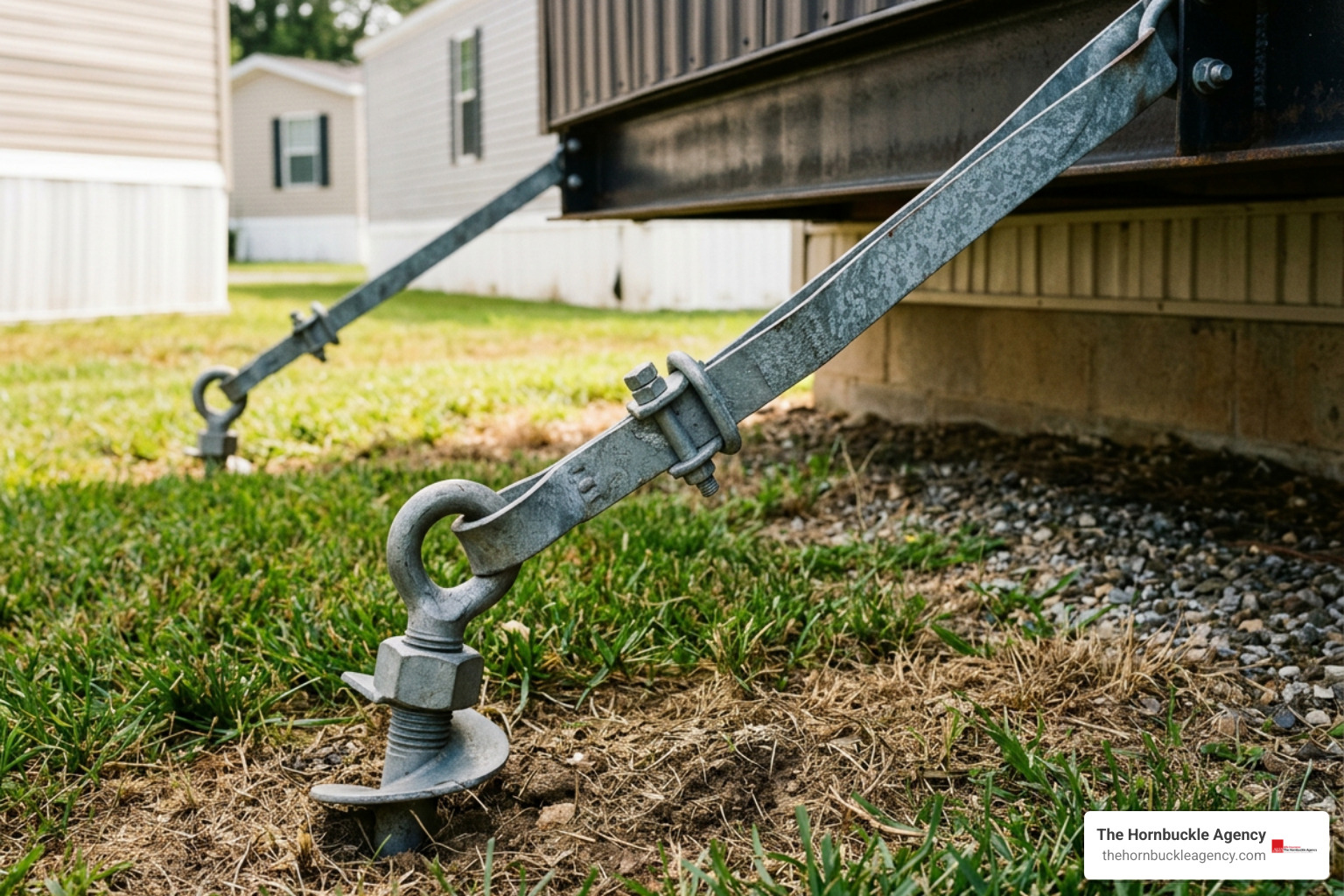
- Chassis and Anchoring: Manufactured homes rely on a steel chassis and specialized ground tie-down systems rather than conventional poured footings.
- Factory Transport Risks: Structural components must withstand delivery and placement before the home is occupied.
- Depreciation Patterns: Materials and factory assemblies may age differently than conventional site-built construction.
- Wind Exposure: Manufactured homes can experience different wind pressures because of their elevation, skirting, and anchoring systems.
Core Protections Included in an HO-7 Policy
An HO-7 manufactured home policy packages several distinct coverage sections together to shield your household from physical loss and legal liability.
Essential Mobile Home Insurance Cover for Dwellings and Belongings
The physical protection components of your policy safeguard the investments you have made in your living space:
- Dwelling Coverage (Coverage A): Covers the manufactured home’s primary structure, including the roof, outer walls, built-in cabinetry, flooring, and integrated plumbing or electrical systems. If a sudden fire, hail storm, or falling tree damages your home, dwelling coverage pays to repair or rebuild the structural envelope. Reviewing your structural limits alongside resources on homeowners insurance fire coverage limits demystified helps ensure you do not face out-of-pocket shortfalls during major repairs.
- Other Detached Structures (Coverage B): Extends protection to unattached structures situated on your property, such as storage sheds, detached garages, carports, fences, and freestanding workshops.
- Personal Property (Coverage C): Protects your everyday belongings—such as furniture, electronics, clothing, kitchenware, and tools—against covered perils including fire, lightning, theft, and vandalism.
Liability Protection and Additional Living Expenses
Beyond physical structures, an HO-7 policy provides crucial financial shielding against third-party claims and temporary displacement:
- Personal Liability (Coverage D): Protects your personal assets if a visitor is accidentally injured on your property or if you unintentionally cause bodily injury or property damage to someone else. Standard liability limits typically start at $100,000, with options to expand to $300,000 or $500,000 for comprehensive defense and settlement coverage.
- Medical Payments to Others (Coverage E): Covers immediate, minor medical expenses (usually between $1,000 and $5,000) for guests injured on your premises, regardless of fault, helping resolve minor mishaps quickly without formal litigation.
- Loss of Use / Additional Living Expenses (Coverage F): If a covered peril renders your manufactured home uninhabitable, this coverage reimburses the extra costs incurred to maintain your normal standard of living. Covered expenses include hotel bills, temporary rental housing, extra fuel, and restaurant meals above your normal grocery budget.
Optional Endorsements and Specialized Add-Ons
While a base HO-7 policy provides broad coverage against standard perils, factory-built homes often need customized endorsements to close potential gaps. An independent insurance agent can help compare policy forms, deductibles, and exclusions so your coverage reflects how and where the home is used. For broader quote-shopping guidance, review the ultimate guide to compare home insurance quotes in Alabama.

Expanding Your Mobile Home Insurance Cover with Water Backup and Trip Collision
- Water and Sewer Backup: Standard policies often exclude damage caused by water backing up through municipal sewers, drains, or sump pumps. A water backup endorsement can help cover structural repairs and ruined flooring resulting from drain overflows.
- Trip Collision and In-Transit Endorsement: Standard manufactured home policies generally exclude coverage while the home is in motion on public roadways. If you are relocating your home to a new property or park, a short-term trip collision endorsement can protect the structure against highway collisions, rollovers, and transit damage.
- Debris Removal and Re-Siting Cover: Following a catastrophic total loss, clearing debris and preparing the pad or foundation for a replacement home can cost thousands. A specialized endorsement can keep those expenses from reducing the dwelling funds needed for replacement.
Weather Perils: Flood, Wind, and Earthquake Protection
- Flood Protection: Standard mobile home policies exclude surface water flooding, storm surge, and overflowing creeks. A separate policy through the National Flood Insurance Program or a private flood carrier is required to protect against rising water.
- Windstorm Coverage and HUD Wind Zones: HUD categorizes manufactured homes into Wind Zones I, II, and III based on structural resistance to severe gusts. Confirming your home meets regional tie-down and anchoring requirements can help avoid wind-related coverage issues.
- Earthquake and Earth Movement: Damage from ground tremors, landslides, or sinkholes requires a dedicated earthquake endorsement or standalone earth movement policy.
Policy Valuation: Replacement Cost vs. Actual Cash Value
The single most important claim-settlement choice in a manufactured home policy is whether losses are paid on an Actual Cash Value (ACV) or Replacement Cost Value (RCV) basis. This decision affects how much money is available after a major fire, wind, hail, or total-loss claim.
| Feature | Actual Cash Value (ACV) | Replacement Cost Value (RCV) |
|---|---|---|
| Depreciation Deduction | Yes, deducts for age, wear, and tear | No, pays the cost to replace with comparable new materials |
| Payout Basis | Depreciated value minus the deductible | Current repair or replacement cost minus the deductible |
| Monthly Premium Cost | Lower upfront premium | Usually higher premium |
| Total Loss Outcome | Settlement may be far below the cost of a new home | Better protection for replacing the home after a covered loss |
| Best Suited For | Older paid-off homes with tight budgets | Newer homes, financed homes, and stronger asset protection |
How Settlement Methods Affect Claim Payouts
Under an Actual Cash Value (ACV) policy, depreciation is subtracted from your settlement. If a ten-year-old roof is destroyed by hail, the insurer calculates what that roof is worth today after a decade of weathering, then subtracts your deductible.
Under Replacement Cost Value (RCV), the insurer pays the amount required to repair or replace damaged property with materials of like kind and quality at current market prices, without subtracting depreciation. Some specialty policies may also offer Agreed Loss Settlement terms, which set a predetermined payout if the home is declared a total loss.
Securing Coverage for Older Manufactured Homes
Insuring homes built before 1990 or older pre-HUD units can present underwriting challenges. Some carriers limit older units to ACV payouts or decline coverage due to outdated wiring, aging plumbing, or roof condition.
To improve coverage options for an older manufactured home:
- Document major updates, such as updated circuit breaker panels, modern PEX plumbing, and newer roofing.
- Keep skirting, steps, decks, and foundation tie-downs in good repair.
- Work with an independent agent who can compare carriers that regularly underwrite manufactured homes.
2026 Insurance Costs and Ways to Save on Premiums
Manufactured home insurance premiums vary widely by home age, size, location, construction details, selected deductibles, and coverage limits. Rather than shopping on price alone, compare whether each quote includes the same dwelling limit, personal property protection, liability limit, loss-of-use coverage, and settlement method.
Newer single-section homes in well-maintained communities may cost less to insure than older double-wide homes or homes in severe-weather areas. For local policy structuring help, contact an independent agent or review this practical overview on how to secure coverage in a quick start guide to insurance quote.
Key Factors Determining Annual Rates
- Size and Configuration: Double-wide and multi-section manufactured homes contain more square footage, requiring higher dwelling limits than compact single-wides.
- Home Age: Newer HUD-code homes may qualify for better pricing because they include updated construction, electrical, and safety standards.
- Location and Wind Exposure: Distance from fire protection, local storm patterns, and regional wind or hail risk can directly influence underwriting rates.
- Deductible Selection: Raising your physical damage deductible from $500 to $1,000 or $2,500 can lower the annual premium, but it also increases your out-of-pocket cost after a claim.
Discounts for Safety, Anchoring, and Bundling
Lowering your annual insurance premium does not have to mean sacrificing essential coverage. Ask whether you qualify for discounts tied to:
- Certified Tie-Downs and Anchoring: Verifying that your home is secured with certified anchors and heavy-duty steel strapping can reduce wind damage risk.
- Sturdy Foundation Skirting: Durable, well-ventilated vinyl, composite, or masonry skirting protects under-home plumbing and helps deter pests.
- Protective Safety Devices: Interconnected smoke detectors, deadbolt locks, fire extinguishers, and monitored security systems may qualify for credits.
- Mature Homeowner Discount: Some carriers offer rate reductions for qualifying older homeowners.
- Multi-Policy Bundling: Pairing manufactured home coverage with auto, life, farm, or other policies through the same agency may create multi-line savings.
Frequently Asked Questions About Mobile Home Insurance
Is mobile home insurance required by law or lenders?
While state governments do not legally mandate insurance on a fully paid-off manufactured home, carrying insurance is practically mandatory under most living arrangements:
- Lenders: If you finance your home via a mortgage or chattel loan, the lender will contractually require continuous comprehensive dwelling and physical damage coverage to protect their loan collateral.
- Manufactured Home Communities: If you lease a lot in a residential community, the park management almost always requires proof of active liability and dwelling insurance before approving your tenancy lease.
Does owning land versus renting a park lot change my coverage?
Yes, the physical location of your home changes how your policy is structured:
- Owning Private Land: You are responsible for insuring the entire property envelope, including long private driveways, underground service lines, septic systems, fencing, detached outbuildings, and land liability.
- Renting a Lot in a Community: The park owner’s commercial policy only covers shared infrastructure, clubhouses, and common roadways. You remain entirely responsible for your personal dwelling, attached porches, skirting, personal property, and any liability incidents occurring within your leased lot boundary.
How does flood insurance work with manufactured homes?
Standard manufactured home insurance policies do not cover rising floodwaters. To protect against flood damage:
- The home must be insured via a standalone flood policy through the National Flood Insurance Program (NFIP) or an approved private flood insurer.
- Under NFIP rules, the manufactured home must be anchored to a permanent foundation system (or properly tied down to ground anchors) and elevated at or above the base flood elevation to qualify for standard program rates.
Conclusion
Protecting your manufactured home requires a specialized insurance strategy tailored to HUD-standard construction, anchoring systems, personal property needs, and severe-weather risks. The right policy should match the home’s replacement value, include appropriate liability limits, and clearly explain how claims are settled.
Review your policy each year after renovations, new exterior decking, major purchases, or changes to how the home is used. For broader homeowners coverage guidance, explore The Hornbuckle Agency’s standard home insurance resources.
When you are ready to review your current policy or establish a new policy, reach out to The Hornbuckle Agency’s local team. The Hornbuckle Agency serves multiple Alabama communities, including Albertville, Guntersville, Boaz, Arab, Geraldine, Crossville, Collinsville, Horton, and Douglas. Contact Us today or explore our tailored manufactured home insurance solutions to secure reliable, personalized coverage for your home and family.
