
How Collision Car Insurance Protects Your Vehicle
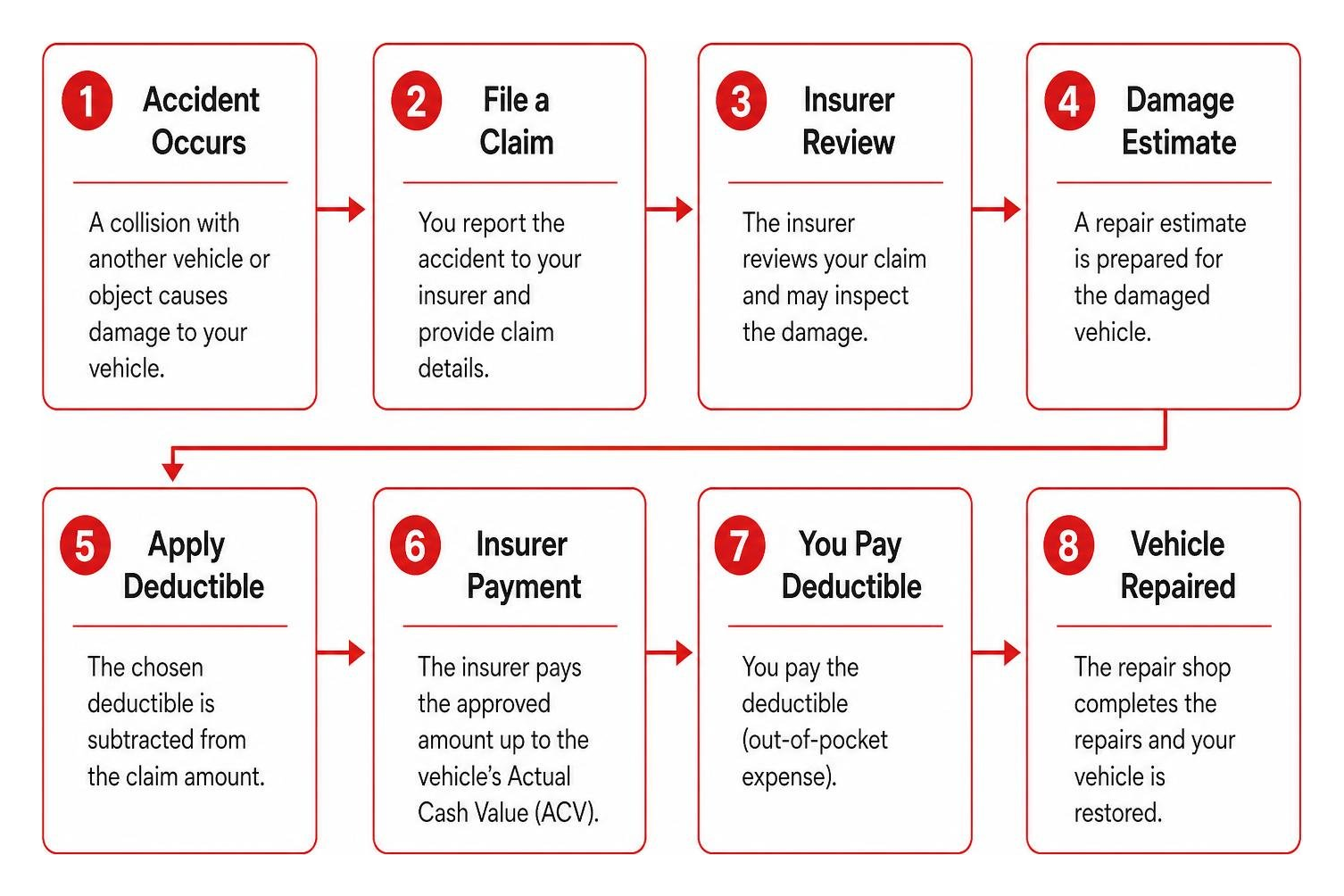
Collision car insurance pays to repair or replace your own vehicle after it hits another vehicle, a fixed object, or a severe pothole. You pay your deductible first, and the insurer pays the covered loss up to your vehicle’s actual cash value.
It protects your budget after at-fault crashes and single-car accidents, such as sliding into a tree or guardrail. It does not cover theft, hail, flood damage, animal strikes, injuries, or damage you cause to other people; those losses belong under other parts of an auto policy.
Collision coverage is optional under state law, but lenders and lease companies usually require it. When comparing options, focus on three things:
- Your car’s current value.
- A deductible you could afford to pay after an accident.
- Whether the yearly premium still makes sense compared with the cost of replacing the vehicle.
Learn more about collision car insurance:
- car insurance plans
- new vehicle insurance
Understanding Collision Car Insurance Coverage and Protection
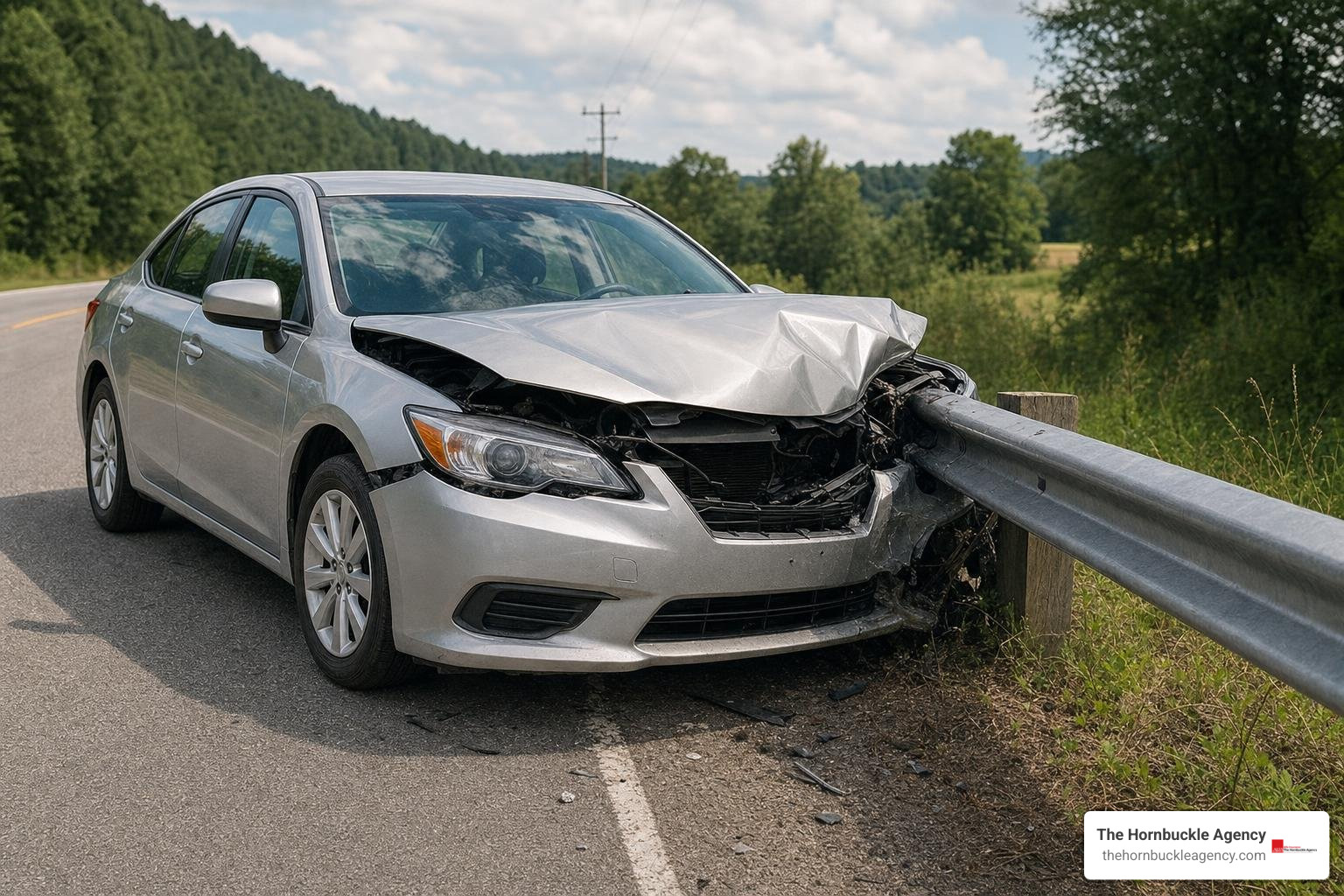
Accidents happen quickly, and damage to your own vehicle can leave you with thousands of dollars in repair bills. Collision coverage helps pay for those repairs when your car is damaged by an impact or rollover.
This coverage applies whether the accident involves another vehicle on the highway or an immovable object on a rural backroad. The payout is generally limited to the vehicle’s Actual Cash Value (ACV), minus your selected deductible.
Covered Perils and Accident Scenarios
Common covered scenarios include:
- Multi-Vehicle Crashes: You rear-end another car during sudden traffic slowdowns or cause an accidental side-impact collision at an intersection.
- Stationary Object Impacts: You lose traction and hit a tree, slide into a concrete median, strike a guardrail, or back into a mailbox.
- Single-Vehicle Rollovers: Your car flips over on a sharp highway exit ramp or overturns after swerving.
- Pothole Impacts: A severe pothole damages your wheel, axle, or suspension components.
- Parking Lot Incidents: Another vehicle backs into your door and leaves visible body damage.
- Permissive Drivers: If you lend your car to a visiting relative or close friend and they crash, your policy’s collision coverage can apply to the damage to your vehicle.
What Is Excluded: Comprehensive and Liability Boundaries
Collision coverage handles impacts with vehicles and objects, but it does not cover every loss. Key exclusions include:
- Animal Strikes: Hitting a deer, wild turkey, or stray cow is typically handled under comprehensive coverage.
- Weather and Natural Disasters: Hail dents, lightning strikes, hurricane flooding, falling tree branches, and tornado damage belong under comprehensive protection.
- Crime and Vandalism: Vehicle theft, broken windows from break-ins, or keyed doors require comprehensive coverage.
- Third-Party Harm: Collision insurance does not pay for injuries to other drivers or damage to public property you hit. Those expenses fall under bodily injury and property damage liability coverages.
Comparing Collision, Comprehensive, and Liability Policies
Navigating an auto insurance package requires balancing state-mandated limits with optional physical damage protections. Many people refer to having “full coverage,” but in practice that usually means combining liability, collision, and comprehensive insurance on a single vehicle.
| Feature | Collision Coverage | Comprehensive Coverage | Liability Coverage |
|---|---|---|---|
| Primary Focus | Your vehicle’s physical repairs after an impact | Non-collision damage to your vehicle | Harm you cause to other people and property |
| Mandated by State Law? | No | No | Yes in most states |
| Mandated by Lenders? | Yes, for active loans or leases | Yes, for active loans or leases | Yes |
| Deductible Required? | Yes | Yes | No deductible |
| Typical Covered Events | Crashes, rollovers, guardrails, potholes | Fire, theft, hail, floods, animal strikes | Medical bills and property repair for others |
| Maximum Payout | Vehicle’s Actual Cash Value (ACV) | Vehicle’s Actual Cash Value (ACV) | Policy liability limits |
Understanding Alabama Car Insurance | From Minimum to Full Coverage helps drivers see why carrying only the state minimum liability limits leaves their own vehicle unprotected after an at-fault wreck. For a broader look at tailoring your policy package, review the ultimate auto insurance roundup finding the best coverage for your ride.
Why Standalone Policies Do Not Exist
Drivers sometimes ask if they can purchase a collision-only policy for a work truck or an extra car without paying for liability coverage. The answer is no. State insurance regulations require valid underlying liability coverage on registered vehicles operating on public roads.
Insurance carriers structure collision and comprehensive coverages as optional physical damage endorsements attached to a core liability policy. If you finance or lease a vehicle, dropping collision coverage may also violate your loan agreement. When lenders detect a lapse in physical damage coverage, they may implement force-placed insurance—an expensive, limited policy billed directly to you that protects only the bank’s financial interest.
Pricing Variables and Deductible Optimization

How much does collision coverage add to your premium? According to the NAIC’s 2023 national average, collision coverage costs about $464 a year, or roughly $39 per month.
Rates vary based on local factors, vehicle specs, and personal driving profiles. Understanding these variables can help you optimize coverage without overpaying.
Key Factors That Influence Collision Car Insurance Rates
Several underwriting variables can affect the exact cost:
- Vehicle Make, Model, and Trim: Advanced safety sensors, expensive body panels, and high-performance parts increase repair costs.
- Chosen Deductible: Selecting a higher collision deductible lowers your recurring premium. Raising your deductible to $1,000 can reduce your collision premium compared with a $500 deductible.
- Driving History: A clean record earns preferred pricing, while at-fault crashes can signal higher future claim risk.
- Geographic Location: Dense traffic corridors and urban centers experience more frequent collisions than quiet rural areas.
When to Drop Collision Car Insurance on Older Vehicles
Because collision payouts are capped at your vehicle’s ACV minus your deductible, maintaining the coverage on an aging car can eventually become inefficient.
A practical guideline is the 10% Rule:
- Check your car’s market value using trusted valuation tools.
- Subtract your collision deductible from that value to estimate your maximum possible payout.
- If your annual collision premium exceeds 10% of that net potential payout, consider dropping collision coverage and self-insuring against physical damage.
For example, if your 14-year-old commuter car has an ACV of $3,500 and your deductible is $1,000, the maximum claim check after a total loss would be $2,500. If collision coverage costs $400 per year, that is 16% of the potential payout, so continuing the coverage may not make financial sense if you have enough savings to replace the car.
Strategic Policy Management and Claims Decisions
Managing insurance is not just about buying a policy; it is also about knowing when and how to use it. Filing a small collision claim can sometimes cost more over time than paying for minor repairs out of pocket.
Filing Claims for Minor Damage vs. Paying Out of Pocket
After a minor fender-bender or scrape against a parking garage pillar, compare the repair estimate with your deductible before filing a claim.
A collision claim can raise your premium for several years. Consider this scenario:
- You back into a post, causing $800 in bumper damage.
- Your collision deductible is $500, meaning the insurer pays $300 toward repairs.
- Your annual policy premium increases by $250 because of the at-fault claim record.
- Over three years, you pay an extra $750 in premiums to recover a $300 claim payout.
As a general rule, if the repair cost is only a few hundred dollars above your deductible, paying out of pocket may protect your claims-free discount and keep ongoing rates lower.
Coverage Transfers for Leases, Rentals, and New Vehicles
Understanding how your policy moves with you helps prevent costly coverage gaps during everyday transitions:
- Rental Cars: If you carry personal collision coverage, that protection may extend to rental cars driven for personal use within the United States, helping you evaluate whether a collision damage waiver is necessary.
- New Vehicle Purchases: When buying or trading in a car, many insurers provide a short automatic coverage grace period. Notify your agent as soon as possible so physical damage endorsements and lienholder information are updated properly.
- Financed Vehicles and Gap Coverage: Because new vehicles depreciate quickly, an early total loss can leave an outstanding loan balance higher than the vehicle’s market value. Pairing collision coverage with gap insurance can help close the difference between the ACV payout and remaining loan principal.
Frequently Asked Questions About Collision Protection
Can you buy collision coverage without liability insurance?
No. Insurance carriers do not sell collision coverage as an isolated, standalone policy. State motor vehicle laws require liability insurance on registered operating vehicles, and collision coverage functions as an optional physical damage addition to that underlying policy.
What happens if your vehicle is totaled in a collision?
If repair estimates exceed a specific percentage of your vehicle’s market value, your insurer may declare the car a total loss. The company issues a settlement for the vehicle’s Actual Cash Value immediately before the crash, minus your policy deductible. If you have an outstanding auto loan, the settlement typically goes to your lienholder first.
Does collision insurance cover hitting a deer or animal?
No. Physical impacts with animals are categorized under comprehensive coverage, not collision. This distinction matters because comprehensive and collision claims may have different deductibles and rating consequences.
Conclusion
Collision car insurance provides financial peace of mind by helping pay for your own vehicle repairs after covered crashes, rollovers, and object impacts. By balancing an affordable deductible, monitoring your vehicle’s depreciating market value, and pairing collision with comprehensive and liability protections, you can build a resilient safety net for the miles ahead.
At The Hornbuckle Agency, we believe in personalized risk education to help you find the right balance of protection and value. Serving multiple Alabama communities, including Albertville, Guntersville, Boaz, Arab, Geraldine, Crossville, Collinsville, Horton, and Douglas, our team can help you review your policy limits, optimize your deductibles, and explore your auto insurance options.
