
Why Insurance for Tenants Matters
Insurance for tenants helps protect your belongings if they are stolen or damaged by a covered event, such as a fire. It typically also includes personal liability coverage if you are responsible for someone else’s injury or property damage, plus help with extra living costs if a covered loss makes your rental unlivable. Your landlord’s insurance generally covers the building, not your possessions.
A burst pipe or kitchen fire can leave you facing costs you did not expect. Knowing what your policy covers, what it excludes, and how much protection you need can help you prepare.
Core Protections Included in Insurance for Tenants
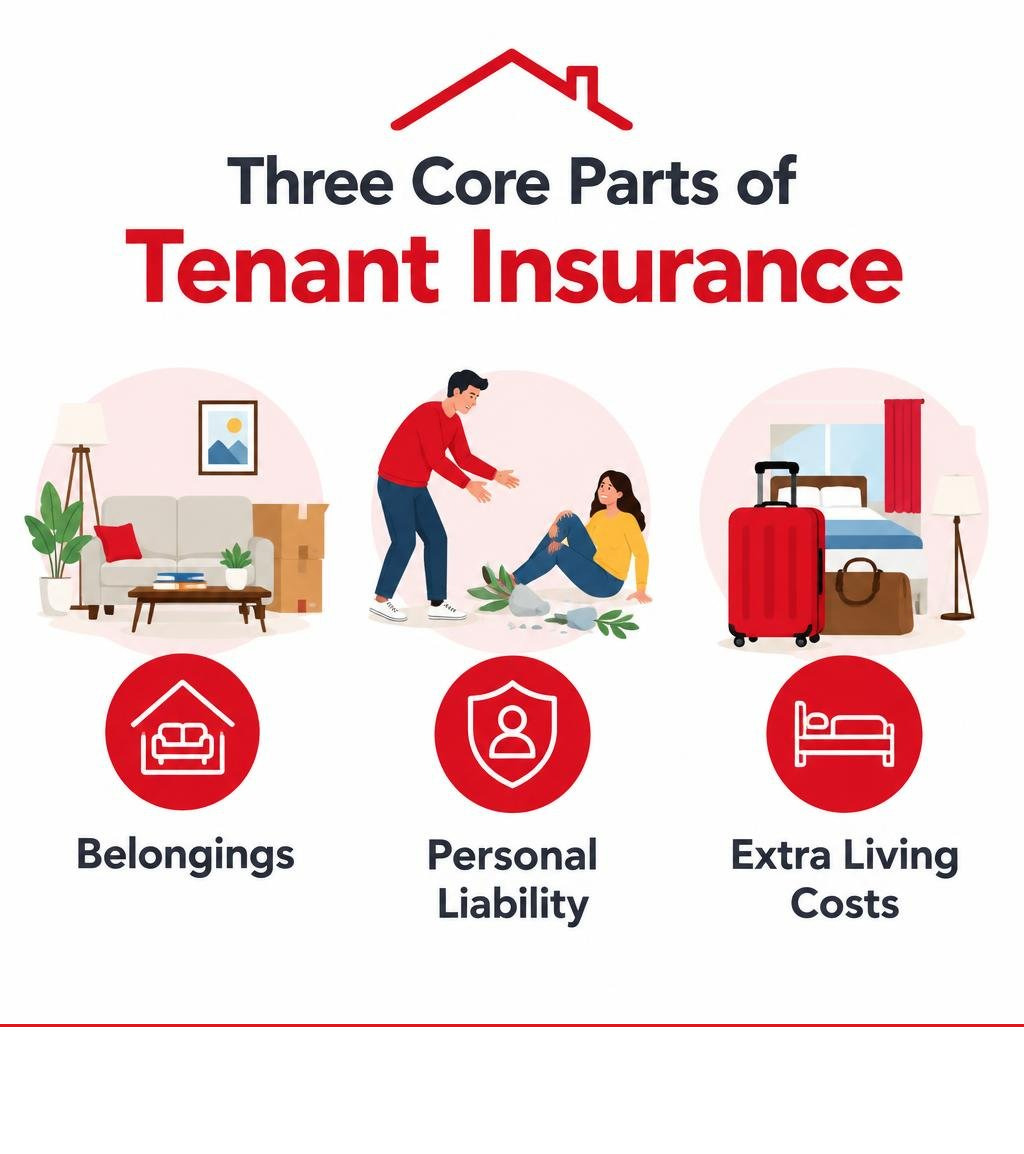
When you rent a home or apartment, securing comprehensive coverage is one of the most effective ways to protect your financial stability. A standard tenant policy (commonly referred to as an HO-4 policy) brings together three main pillars of protection into a single agreement. Instead of leaving you to pay out of pocket after an unexpected disaster, this coverage steps in to handle personal property losses, liability claims, and relocation expenses.
Understanding how these elements work together allows you to tailor your limits appropriately. For renters exploring their options across North Alabama, reviewing an essential guide to comparing home rental insurance options can provide additional perspective on policy structures and available choices.
Personal Property Protection and Off-Premises Coverage
Personal property coverage protects the items you own inside your rented space. If a sudden electrical fire breaks out, smoke ruins your wardrobe, or someone vandalizes your home, this portion of your policy helps cover the cost of repairing or replacing your belongings. Standard policies protect against a broad list of named perils, including:
- Fire, smoke, and lightning strikes
- Windstorms and hail
- Theft and vandalism
- Explosions
- Sudden, accidental discharge of water from plumbing or heating systems
Crucially, this protection does not stop at your front door. Standard policies include off-premises coverage, which applies to your belongings when you travel or commute. If someone breaks into your vehicle while parked in downtown Guntersville and steals your laptop, or if your luggage is stolen from a hotel room during a vacation, your tenant policy can help reimburse the loss up to your policy’s off-premises limit (typically 10% of your total personal property limit or a specified dollar amount).
Personal Liability and Medical Payments
Accidents happen, and when they occur inside your rented home, you could be held legally responsible. Personal liability coverage defends you if a guest slips, falls, and suffers an injury in your living room, or if you accidentally cause damage that spreads to neighboring units (such as an overflowing bathtub that leaks into the apartment below).
This protection pays for your legal defense costs, court fees, and any settlements or judgments awarded against you, up to your policy limit (commonly starting at $100,000). Additionally, policies include no-fault medical payments to others. This provision covers smaller medical bills—usually between $1,000 and $5,000—if a visitor sustains a minor injury on your premises, allowing them to seek prompt medical attention without needing to file a formal lawsuit. For a deeper look at liability thresholds and standard terms, you can consult renters insurance consumer guidance from Triple-I.
Loss of Use and Additional Living Expenses (ALE)
If a covered disaster damages your rental property to the point where it becomes uninhabitable, you cannot simply stay there while contractors complete repairs. Loss of Use coverage, also known as Additional Living Expenses (ALE), reimburses you for the necessary extra costs incurred while maintaining your normal standard of living elsewhere.
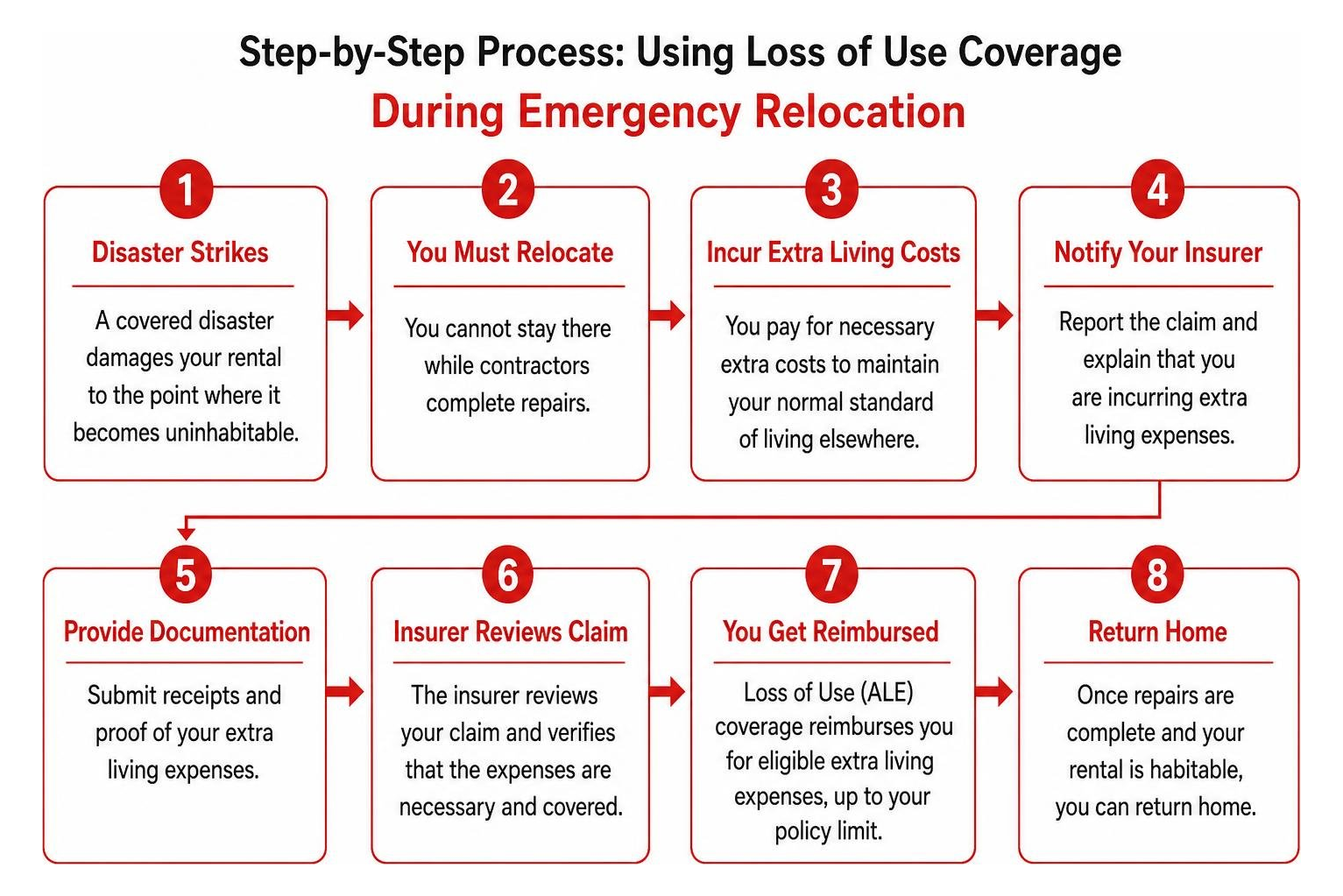
ALE helps pay for:
- Temporary hotel or short-term apartment rental costs
- Restaurant meal allowances that exceed your usual grocery budget (due to lacking a kitchen)
- Laundry services and temporary storage units
- Extra commuting expenses if your temporary home is farther from work or school
Landlord Policies vs. Tenant Coverage: What Is and Isn’t Covered?

One of the most persistent myths among renters is that the property owner’s insurance extends to everything under the roof. In reality, landlords and tenants operate under completely separate insurance spheres. Property owners carry commercial or dwelling policies designed to safeguard their own financial interests, not yours. If you want to understand how property owners structure their protections, reading a practical guide to comparing landlord rental insurance helps clarify the division of responsibility.
Why Building Policies Leave Tenant Belongings Exposed
A landlord’s insurance policy covers the physical building structure, roof, siding, common hallways, and any landlord-owned appliances or built-in fixtures. It offers zero coverage for your furniture, clothing, electronics, or personal valuables.
Furthermore, if an accidental kitchen fire starts in your unit due to unattended cooking, your landlord’s insurance carrier may pay to rebuild the structure and then initiate subrogation against you. Subrogation is the legal process where an insurer pursues the at-fault party to recover the money paid out for a claim. Without personal liability protection on your own policy, you could be held personally responsible for thousands of dollars in structural repairs.
Standard Exclusions: Floods, Earthquakes, and Normal Wear
While insurance policies for tenants protect against many common perils, they do not cover every possible scenario. Standard policies carry specific exclusions that require alternative planning:
- Natural Floods: Rising surface water, overflowing rivers, and coastal storm surges are excluded. If heavy rainfall causes localized flooding that enters your ground-floor apartment, standard tenant policies will not pay for the damaged contents. A separate flood insurance policy through the National Flood Insurance Program (NFIP) or private carriers is required.
- Earth Movement: Earthquakes, landslides, and sinkholes are excluded from baseline policies and require specialized endorsements.
- Routine Wear and Tear: Gradual deterioration, fading furniture, and minor scuffs are maintenance issues rather than sudden accidental losses.
- Pest Infestations: Damage from rodents, termites, bedbugs, or other pests is considered a property maintenance responsibility.
- Sewer and Drain Backups: Water backing up through municipal sewer lines or drain pipes is typically excluded unless you add a specific water backup endorsement.
Evaluating High-Value Items and Essential Policy Endorsements
Standard policies contain internal sub-limits (category caps) on certain classes of high-risk or high-value personal property. For example, while you might have $40,000 in total personal property coverage, the policy may cap theft payouts for jewelry at $1,500, firearms at $2,500, and fine art or silverware at similar thresholds.
If you own engagement rings, high-end musical instruments, valuable collectibles, or specialized electronics, you can schedule these items individually through policy endorsements (often called floaters). Scheduling an item provides broader protection, often eliminates the deductible for that specific piece, and ensures you are reimbursed for its full appraised value.
Similarly, if you run a side business or store commercial stock in your rented space, standard policies strictly limit coverage for business inventory. In those cases, securing dedicated endorsements or exploring a practical guide to small business insurance for a private suite rental can keep your commercial assets fully protected.
Determining Coverage Limits and Calculating Policy Costs
Selecting the right coverage involves evaluating the total replacement value of everything you own and choosing limits that prevent severe out-of-pocket losses after a total disaster. When reviewing local property standards or local zoning resources across our region, consulting Marshall County local property resources can offer useful regional context regarding local residential frameworks.
Actual Cash Value vs. Replacement Cost for Insurance for Tenants
When structuring your personal property coverage, you must choose between two distinct valuation methods: Actual Cash Value (ACV) and Replacement Cost Value (RCV). This choice directly affects your payout in the event of a claim.
| Policy Feature | Actual Cash Value (ACV) | Replacement Cost Value (RCV) |
|---|---|---|
| Depreciation Applied? | Yes, factors in age, wear, and market decline | No, pays the modern retail price for a new equivalent |
| Out-of-Pocket Burden | High; you must pay the difference to buy new items | Minimal; limited to your chosen deductible |
| Monthly Premium Cost | Lower base premium | Slightly higher base premium (typically 10%–15% more) |
| Best Suited For | Budget-restricted renters with older furnishings | Anyone with modern electronics, appliances, and quality goods |
Consider a scenario where a five-year-old television that originally cost $1,200 is destroyed by a covered electrical surge. Under an Actual Cash Value policy, the insurer deducts five years of depreciation, valuing the TV at its current market worth—perhaps $300. After applying a $250 deductible, your net payout is only $50. Under a Replacement Cost policy, the insurer reimburses you for the full cost of purchasing a brand-new television of comparable kind and quality (e.g., $1,200 minus the $250 deductible, yielding a $950 payout). We consistently recommend Replacement Cost coverage because it allows you to truly rebuild your life after a major loss.
Average Monthly Premiums and Deductible Mechanics
Tenant insurance remains one of the most affordable property coverage products on the market. Across the United States, the average renters policy costs between $15 and $30 per month (or roughly $180 to $360 per year) for a standard policy providing around $30,000 to $50,000 in personal property protection alongside $100,000 in liability limits.
Your policy deductible is the out-of-pocket amount you agree to pay toward an insured loss before your insurance coverage responds. Common deductible options range from $250 to $1,000. Selecting a higher deductible reduces your recurring premium payments, but you must ensure you have those funds readily available in an emergency savings account if you ever need to file a claim.
Creating an Accurate Home Inventory for Possessions
Most people drastically underestimate the total value of their possessions until they sit down and add them up room by room. Creating a thorough home inventory ensures you buy adequate coverage and speeds up claim processing after a disaster.
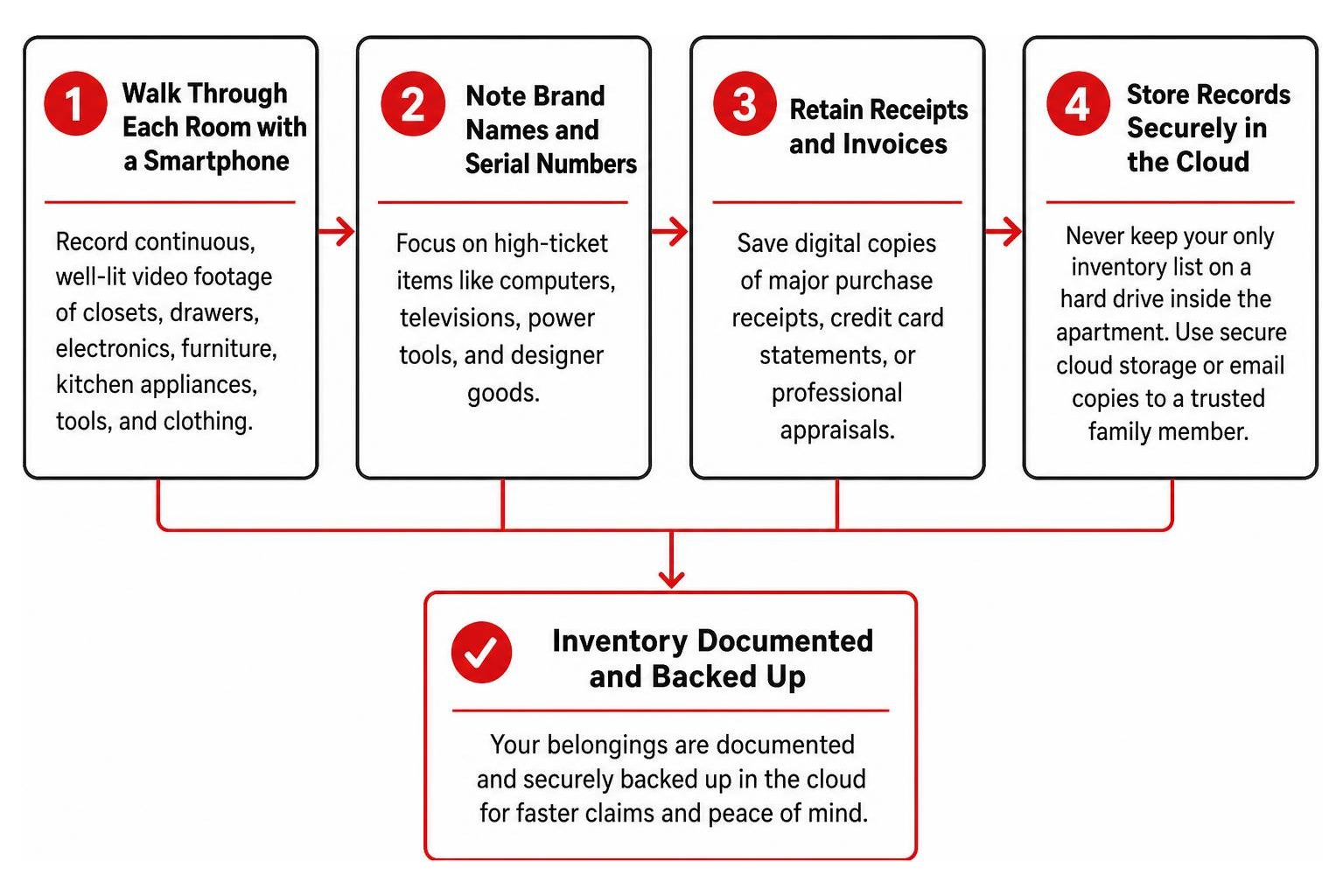
Follow these steps to document your belongings:
- Walk Through Each Room with a Smartphone: Record continuous, well-lit video footage of closets, drawers, electronics, furniture, kitchen appliances, tools, and clothing.
- Note Brand Names and Serial Numbers: Focus on high-ticket items like computers, televisions, power tools, and designer goods.
- Retain Receipts and Invoices: Save digital copies of major purchase receipts, credit card statements, or professional appraisals.
- Store Records Securely in the Cloud: Never keep your only inventory list on a hard drive inside the apartment, where it could be destroyed in the same fire that damages your property. Use secure cloud storage or email copies to a trusted family member.
Managing Policies for Shared Rentals, Students, and Special Living Arrangements

Living with roommates or residing in student housing introduces unique questions regarding policy management and insurable interest. Because an insurance policy is a legal contract tied to specific individuals, you must structure your coverage carefully when sharing living quarters.
Coverage Rules for Roommates and Student Housing
While some insurance carriers permit non-related roommates to be listed on a single tenant policy, doing so is rarely advisable. Sharing a single policy divides the personal property limits between both parties, and if your roommate files a claim for stolen property, that claim appears on your shared insurance record, potentially raising your rates for years to come.
Furthermore, standard policies generally do not cover a roommate’s personal belongings unless they are officially named on the declarations page. The cleanest, most effective solution is for each tenant to purchase their own individual policy. This guarantees dedicated property limits, separate liability protection, and complete control over policy endorsements.
For college students living in on-campus dormitories, dependent students under age 24 may have partial coverage extended through their parents’ primary property policy. However, this off-premises extension is often capped at 10% of the parent’s total contents limit. Once a student moves into off-campus apartments or private rental housing, an independent tenant policy is almost always required by the property manager.
Qualifying Discounts to Reduce Premium Costs
You can lower your monthly premiums by taking advantage of various insurer discounts and risk-reduction credits:
- Protective Safety Devices: Installing smoke detectors, fire extinguishers, deadbolt locks, or carbon monoxide alarms often earns a premium credit.
- Monitored Security Systems: 24/7 centrally monitored burglar and fire alarm systems can yield significant policy savings.
- Claims-Free Record: Maintaining a clean insurance record without prior claims helps keep baseline rates low.
- Gated Communities and Modern Construction: Living in communities with controlled access or buildings near fire hydrants and modern fire stations can reduce underwriting risk.
How to Select the Right Insurance for Tenants
When shopping for coverage, look beyond the initial premium quote. Verify that the insurance agency is fully licensed with your state’s department of insurance and holds strong financial stability ratings. Review lease requirements carefully, as many rental agreements mandate minimum liability limits (such as $100,000 or $300,000) and require the property management company to be listed as an “Interested Party” or “Additional Certificate Holder” so they receive notification of active coverage.
Frequently Asked Questions About Tenant Protection
Does my landlord’s insurance cover my possessions after a fire or burst pipe?
No. Your landlord’s policy covers only the physical structure, roof, and common areas. Your personal belongings, clothing, furniture, and electronics are entirely your responsibility to insure through a personal tenant policy.
How much personal property coverage do I actually need?
Your required coverage equals the total amount it would cost to buy brand-new replacements for everything you own today. Conducting a detailed, room-by-room home inventory gives you the exact dollar figure required to establish accurate policy limits.
Does tenant coverage protect my belongings when I travel?
Yes. Standard policies provide off-premises coverage, which protects your personal possessions worldwide against covered perils like theft or fire, whether items are in your car trunk, a hotel room, or a storage unit.
Securing Reliable Protection for Your Rental Home
Renting provides flexibility, but it does not eliminate the risk of unexpected property damage or liability claims. A single plumbing failure, kitchen fire, or severe storm can wipe out years of personal investments in an afternoon. By securing a customized tenant insurance policy, you ensure that your belongings, your living arrangements, and your financial future remain protected against the unexpected.
At The Hornbuckle Agency, we believe in empowering our neighbors with personalized risk education and straightforward protection strategies. We proudly serve families and renters across multiple Alabama communities, including Albertville, Guntersville, Boaz, Arab, Geraldine, Crossville, Collinsville, Horton, and Douglas.
To review your current coverage limits or explore customized home insurance solutions tailored to your specific rental, contact our local team today. We are here to help you protect the space you call home.
