
Understanding Landlord Rental Insurance: Core Coverages and Protections
When you transition a property from a primary residence to an income-generating asset, your exposure shifts dramatically. Landlord rental insurance—often structured as a DP-3 (Dwelling Property 3) or specialized commercial rental policy—is tailored to address the financial vulnerabilities unique to leasing residential real estate.
A standard policy centers on several fundamental protections:
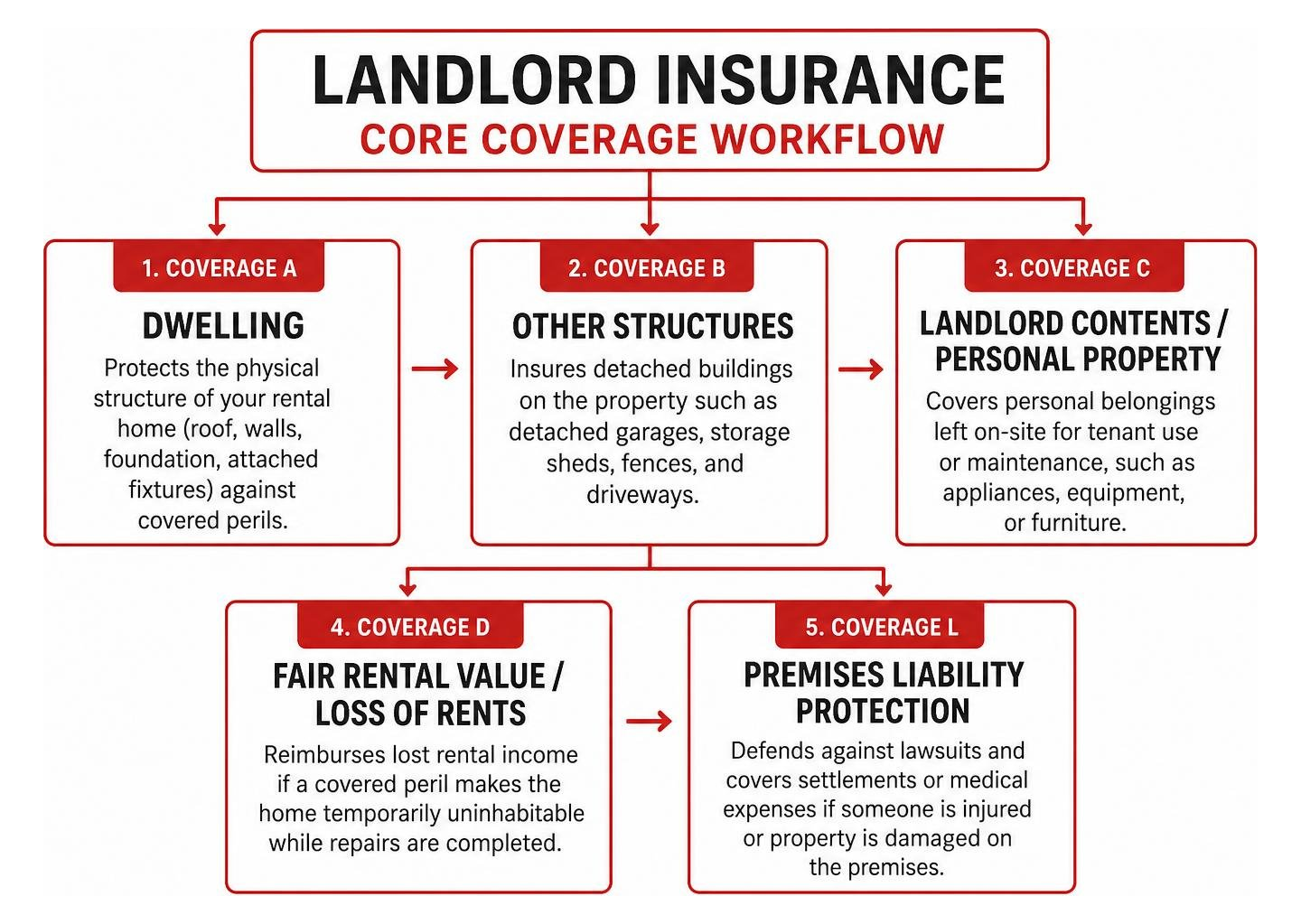
- Dwelling Coverage (Coverage A): Protects the physical structure of your rental home, including the roof, walls, foundation, and permanently attached fixtures (such as cabinetry and built-in appliances), against covered perils like fire, windstorms, hail, and lightning.
- Other Structures (Coverage B): Insures detached buildings on the property parcel, such as detached garages, storage sheds, fences, and driveways.
- Landlord Contents / Personal Property (Coverage C): Safeguards your personal belongings left on-site for tenant maintenance or use. This includes items like lawnmowers, snowblowers, washer-dryer sets, refrigerators, or furniture in a fully furnished rental.
- Fair Rental Value / Loss of Rents (Coverage D): Reimburses lost gross rental income if a covered peril causes damage that renders the home temporarily uninhabitable while repairs take place.
- Premises Liability Protection (Coverage L): Defends you against lawsuits and covers court settlements or medical expenses if a tenant or guest suffers bodily injury or property damage due to conditions on the premises.
Key Differences Between Homeowners and Landlord Insurance
Many first-time real estate investors assume their standard homeowners policy can simply remain in place when tenants move in. In reality, maintaining an owner-occupied policy on a rented property can lead to denied claims or outright policy cancellation because insurers view tenant occupancy as carrying higher risk.
| Feature | Standard Homeowners Policy (HO-3) | Landlord Rental Insurance (DP-3) |
|---|---|---|
| Primary Occupancy | Owner-occupied primary residence | Tenant-occupied rental property |
| Personal Property | Comprehensive coverage for owner’s household belongings | Limited strictly to landlord-owned items servicing the rental |
| Tenant Belongings | N/A | Excluded entirely (requires renters insurance) |
| Loss of Use | Covers owner’s additional living expenses (ALE) | Reimburses lost gross rental income (Fair Rental Value) |
| Liability Scope | Personal liability covering owner anywhere | Premises liability tied strictly to the rental property |
| Tenant Negligence | Not applicable | Covered within policy terms or specialized endorsements |
Understanding home insurance structures helps highlight why these distinctions matter. While an owner-occupier needs substantial coverage for personal clothing, electronics, and daily living displaced costs, a landlord primarily needs structural security, liability defense, and cash flow protection.
Protecting Income with Loss of Rent and Rent Default Coverage
When a severe storm or kitchen fire forces a tenant to relocate, your mortgage payments, property taxes, and municipal fees do not magically stop. Fair Rental Value coverage acts as a financial bridge, paying out the gross rental income you would have collected while the property undergoes repairs.
Coverage limits and duration parameters vary:
- Policies often cap loss of rent payments at a specified dollar threshold or provide compensation for a defined timeframe (such as up to 12 months, or in some basic policies, up to 3 months of rental income).
- Standard policies require an underlying covered property loss (such as wind or fire) to trigger loss of rent benefits.
- Specialized rental default endorsements or supplemental tenant protection programs can cover scenarios where a tenant abruptly abandons a lease or refuses to pay. For example, skip rent provisions can reimburse up to $1,000 for the final month’s rent when a tenant vacates without notice after fulfilling a minimum active lease term.
When dealing with tenant abandonment or default, property owners should also remember the common-law and statutory landlord’s duty to mitigate damages by making reasonable efforts to re-rent the property promptly rather than allowing losses to accumulate unchecked.
Managing Tenant Risks, Negligence, and Liability Exposures

Owning rental property involves entrusting high-value physical assets to third parties. Managing this exposure requires a combination of robust baseline liability limits, clear lease terms, and endorsements designed for tenant-specific behaviors.
Landlord premises liability provides vital protection if a tenant or visitor slips on an icy walkway, trips over an uneven porch step, or suffers an injury related to maintenance issues. Liability limits generally start at $300,000 or $500,000, with umbrella policies extending protection up to several million dollars to shield personal and business assets.
How Landlord Rental Insurance Interacts with Renters Insurance
A common point of confusion for property owners is how their master policy intersects with a tenant’s personal policy. Landlord policies protect the landlord’s assets, not the tenant’s.
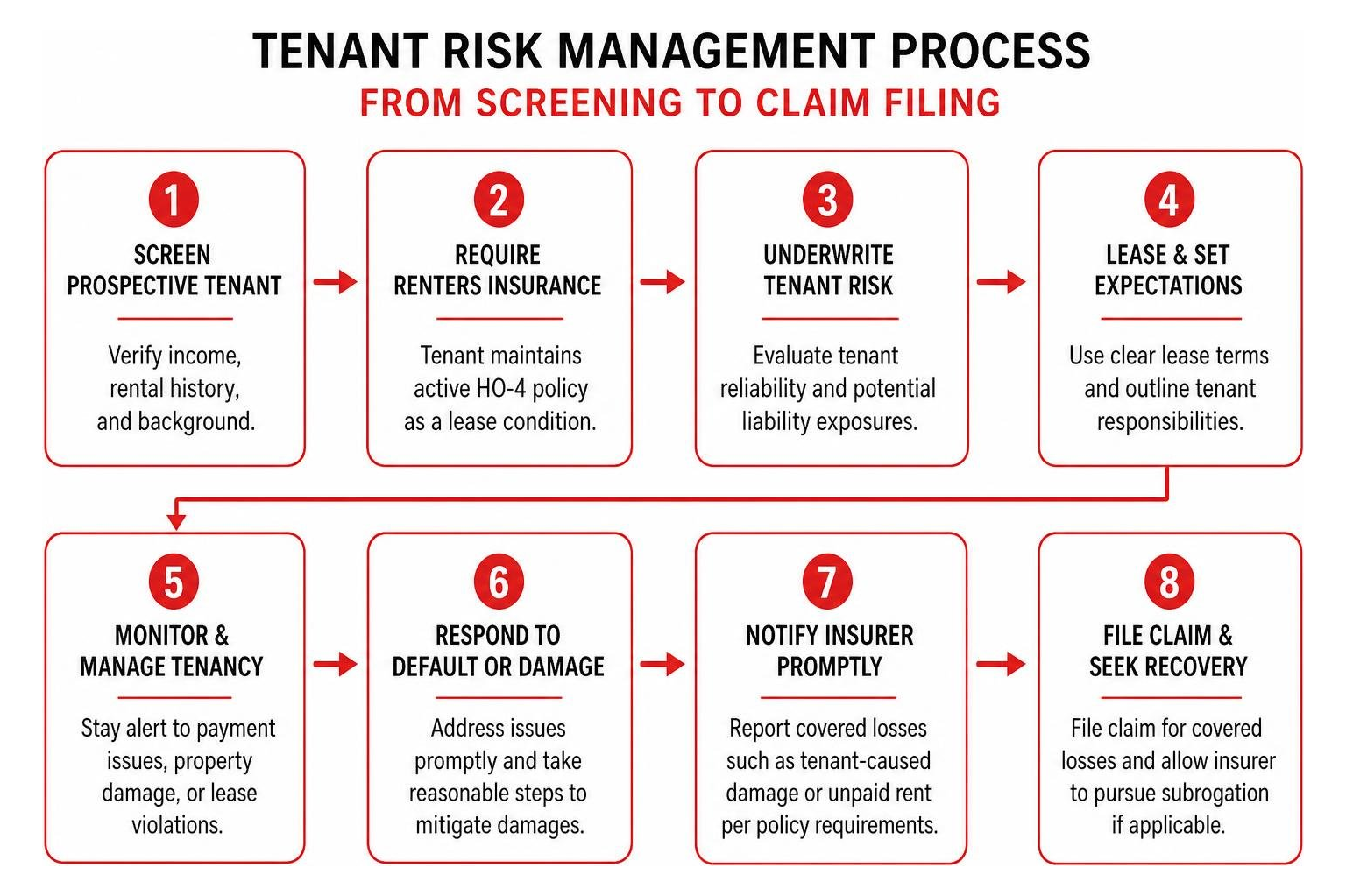
To create a balanced risk management system, landlords should require tenants to carry active renters insurance (HO-4) as a mandatory lease condition:
- Personal Property Separation: The tenant’s renters policy covers their furniture, clothing, and electronics. Your landlord policy covers the building structure and your service equipment.
- Liability Offsets: If a tenant accidentally starts a grease fire or overflows a bathtub, their renters liability policy acts as primary coverage for the resulting damage.
- Subrogation Rights: When your landlord insurer pays a claim caused by tenant negligence, the insurer retains the right to subrogate against the tenant’s renters insurance carrier to recoup repair costs, protecting your loss history.
Understanding these operational boundaries reflects fundamental landlord responsibilities and ensures both parties remain adequately insured without overlapping or missing critical coverage.
Handling Tenant Negligence, Pet Damage, and Specialized Risks
Accidental property damage caused by tenants represents one of the most frequent friction points in rental management. While standard landlord policies cover sudden perils like fire or pipe bursts, everyday wear and tear is excluded.
To protect your balance sheet against tenant-specific risks, consider these supplemental options:
- Tenant Damage Protections: Tenant liability plans offer coverage limits ranging from $60,000 to $100,000 for tenant-caused damages such as fire, smoke, and explosion, often subject to a manageable $500 deductible.
- Fire Coverage Limits: Understanding homeowners insurance fire coverage limits ensures your policy limits align with actual structural rebuild costs should a major blaze occur.
- Pet Damage Endorsements: While pet deposits offset minor scratches, dedicated pet damage endorsements can provide up to $4,000 in coverage for severe carpet destruction, drywall damage, or chewed structural moldings.
- Sewer and Drain Backup: Protects against municipal drain backups or tenant-induced plumbing clogs that push contaminated water into living spaces.
- Specialized Environmental Decontamination: Policies can include up to $35,000 in coverage for chemical decontamination clean-up costs if an unauthorized tenant engages in hazardous chemical operations or illegal drug manufacturing.
Critical Policy Provisions: Vacancy Clauses and Property Types

A property policy is only as reliable as its alignment with actual day-to-day operations. Two major variables that catch landlords off guard are turnover vacancy windows and the specific construction style of the dwelling.
Navigating Unoccupied Rental Property Coverage Gaps
Between tenant move-outs, deep cleaning, repainting, and marketing, rental properties naturally experience gaps in occupancy. However, standard insurance contracts contain strict vacancy and unoccupancy clauses.
- The 30-to-60-Day Rule: Most standard dwelling policies restrict or suspend coverage for vandalism, glass breakage, and water discharge if a property sits unoccupied for more than 30 to 60 consecutive days.
- Extended Unoccupied Coverage: High-grade landlord policies often provide unoccupied property coverage between tenants for periods ranging from 30 consecutive days up to 90 consecutive days, giving you time to locate quality tenants without forfeiting structural protection.
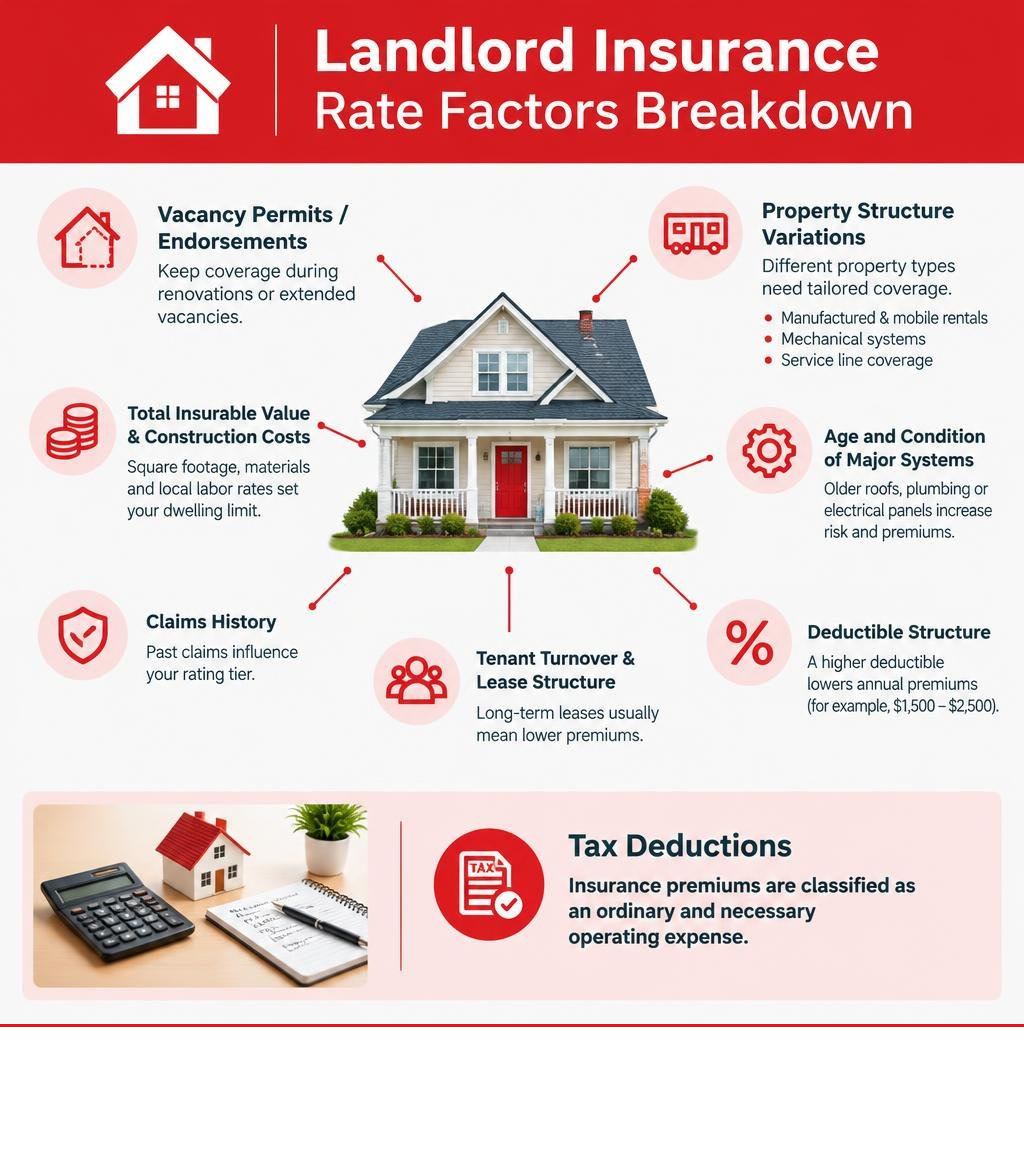
- Vacancy Permits / Endorsements: If you plan extensive renovations between leases that will leave the home empty for several months, you must secure a vacancy permit or builder’s risk endorsement to ensure continuous protection.
Property Structure Variations and Mechanical Breakdowns
Different rental properties require tailored underwriting approaches:
- Manufactured and Mobile Rentals: If you manage manufactured rental properties, review options for mobile home insurance to account for specialized anchoring, transport, and structural characteristics.
- Mechanical Systems: Rental homes endure significant stress on HVAC units, water heaters, and electrical panels. Adding equipment breakdown endorsements covers sudden mechanical failures that standard property policies exclude, keeping your repair expenses predictable.
- Service Line Coverage: Covers subterranean water, sewer, and power lines running from the municipal street connection to your rental structure.
Evaluating Rates, Deductibles, and Financial Benefits
Calculating the net yield of an investment property requires a clear view of insurance costs and available tax advantages.
Key Factors Influencing Landlord Rental Insurance Premiums
Insurance carriers evaluate multiple operational and geographic data points when determining premium rates for rental real estate:
- Total Insurable Value & Construction Costs: The square footage, materials, and local labor rates required to rebuild the home determine your baseline dwelling limit.
- Age and Condition of Major Systems: Older roofs, outdated plumbing, or aging electrical panels increase risk profiles and baseline premiums.
- Claims History: Past weather or liability claims on the property parcel influence rating tiers.
- Tenant Turnover and Lease Structure: Long-term leases generally command lower premiums than short-term vacation rentals due to reduced turnover and lower risk of accidental damage.
- Deductible Structure: Opting for a higher property deductible ($1,500 to $2,500) lowers annual premiums, provided you maintain adequate reserves to cover that out-of-pocket cost when a claim arises.
Property owners can review guidance on how to compare home insurance quotes across local markets to balance comprehensive coverage with competitive rate structures.
Tax Deductions and Operating Expense Classification
One major financial advantage of owning rental real estate is the tax treatment of carrying costs:
- Ordinary Business Expense: Under Internal Revenue Service (IRS) guidelines, insurance premiums paid on rental properties are classified as ordinary and necessary operating expenses.
- Schedule E Deductions: Premiums paid for dwelling protection, liability riders, loss of rent coverage, and umbrella policies are fully deductible on Schedule E (Form 1040) against rental income.
- Entity Management: Real estate investors operating through limited liability companies (LLCs) or corporations can review entity status via state registries like the Alabama Secretary of State business entity search to align their insurance named-insured designations with their corporate filing structure.
Frequently Asked Questions About Landlord Insurance
Does landlord insurance cover a tenant’s personal belongings?
No. Landlord insurance covers only the physical building structure, fixtures, and personal property owned by the landlord for maintenance or furnishing. Tenants must secure their own renters insurance policy (HO-4) to protect their furniture, electronics, clothing, and personal liability.
What happens if my rental property is empty between tenants?
Most standard policies maintain full coverage during brief turnover windows, but restrict protections for perils like vandalism or water damage if the home sits vacant beyond 30 to 60 consecutive days. If your turnover takes longer, notify your agent to add an unoccupied property endorsement or vacancy permit.
Is landlord insurance legally required for property owners?
While state laws do not mandate landlord insurance, mortgage lenders require a comprehensive dwelling policy before financing an investment property. Even for properties owned free and clear, operating without landlord insurance exposes your personal and real estate assets to substantial financial liability from property damage and tenant lawsuits.
Conclusion: Securing Your Real Estate Investment
Protecting your rental property requires more than basic dwelling coverage—it demands a tailored strategy that shields your physical structure, protects your rental income stream, and defends against tenant liability exposures.
At The Hornbuckle Agency, we work directly with property owners across Alabama to design personalized protection plans that keep real estate investments secure and profitable. We proudly serve multiple Alabama communities, including Albertville, Guntersville, Boaz, Arab, Geraldine, Crossville, Collinsville, Horton, and Douglas.
Reach out to our team today for a comprehensive policy review and explore our home insurance solutions to safeguard your rental portfolio.
