
How Home Rental Insurance Protects Renters
Home rental insurance, also called renters insurance, helps pay for your belongings after covered losses such as theft or fire. It can also help if you are held responsible for an injury or damage to someone else’s property, or if a covered loss forces you to live elsewhere for a time. It does not insure the building; that is generally the landlord’s responsibility.
To compare policies, check the coverage limits, exclusions, deductible, and whether belongings are paid for at their depreciated value or the cost to replace them. Your landlord’s policy typically will not replace your belongings.
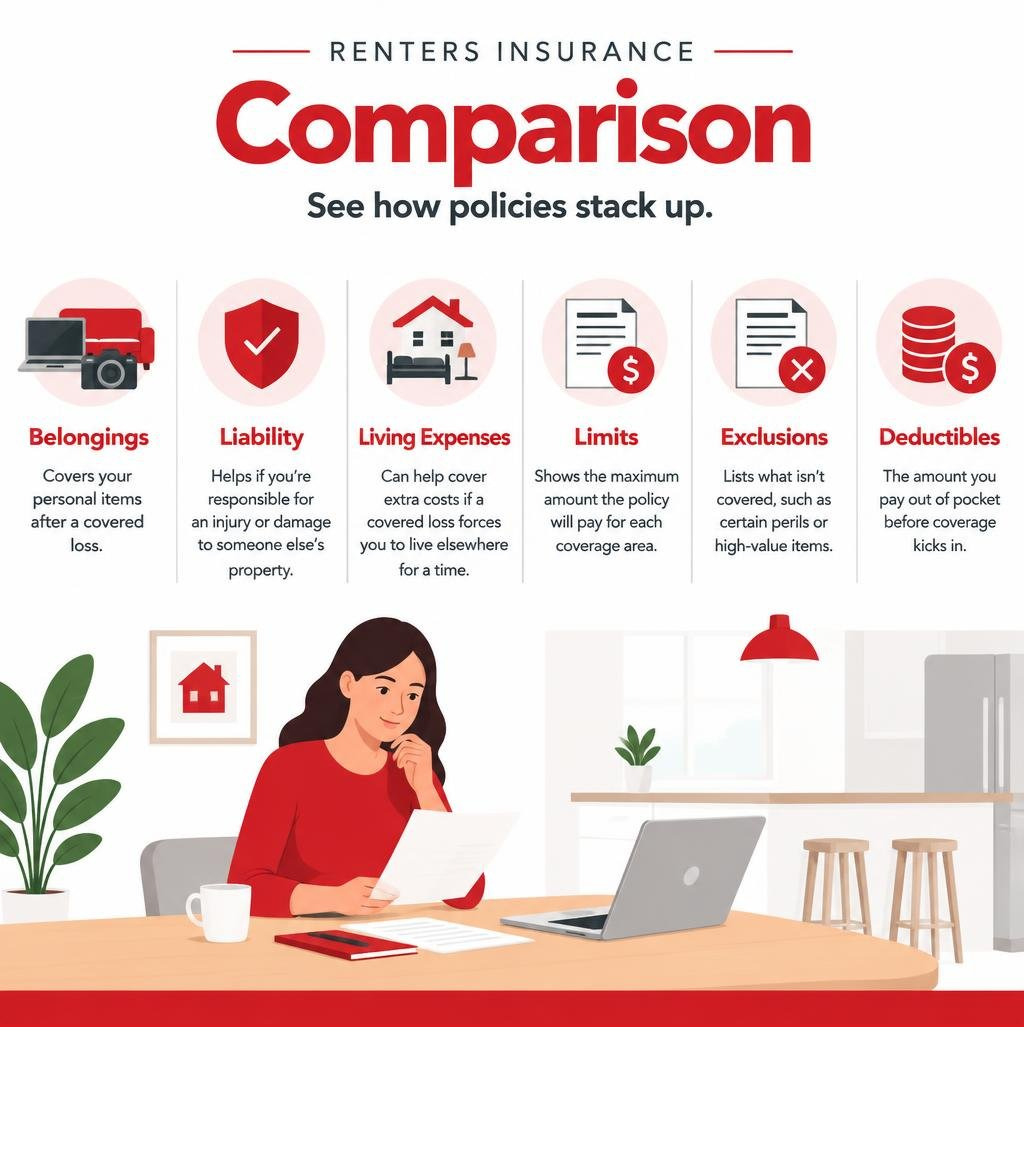
Quick home rental insurance terms:
What Is Home Rental Insurance and How Does It Work?
When you sign a lease for a house or an apartment, it is easy to assume the building owner’s policy has you covered. In reality, a landlord’s policy covers the physical structure, roof, and exterior siding, but it offers zero protection for your furniture, electronics, wardrobe, or everyday personal items. That is where home rental insurance steps in.
A standard tenant policy acts as a personal financial shield built around three core pillars:
- Personal Property Coverage: Reimburses you if your personal possessions are damaged, destroyed, or stolen due to named hazards like fire, lightning, smoke, theft, or vandalism.
- Personal Liability Protection: Shields your savings if a guest slips and falls inside your rented home or if you accidentally cause property damage to a neighboring unit.
- Additional Living Expenses (ALE): Pays for temporary housing, hotel bills, and restaurant meals if a covered disaster makes your rental uninhabitable.
While property owners require their own specialized policies, tenants need dedicated coverage tailored to their personal risk profile. Landlord policies protect business assets and rental income, whereas tenant plans safeguard individual livelihoods. If you are curious about how broader structural protections work on the ownership side, you can explore our home insurance resources to see how property ownership coverage operates behind the scenes.
Home Rental Insurance vs Homeowners Insurance
While both policy types share common principles regarding personal liability and personal property protection, they serve entirely different structural roles. The primary distinction centers on who owns the real estate.
| Feature | Home Rental Insurance (HO-4) | Homeowners Insurance (HO-3 / HO-5) |
|---|---|---|
| Dwelling Structure Coverage | Excluded (Landlord responsibility) | Fully covered up to policy limits |
| Personal Property | Included (Tenant belongings) | Included (Owner belongings) |
| Personal Liability | Included (Tenant liability) | Included (Owner liability) |
| Loss of Use / ALE | Included for tenant displacement | Included for homeowner displacement |
| Loss of Rental Income | Excluded | Optional / Add-on for landlords |
| Average Annual Premium | Lower ($150 – $300/year typical) | Higher ($1,200 – $2,500+/year typical) |
Because tenants do not bear the financial burden of rebuilding walls, repairing roofs, or replacing heating systems, tenant premiums are substantially lower than standard homeowner rates. Whether you are living in a traditional suburban house or reviewing manufactured home insurance coverage options, understanding the line between the physical structure and your personal contents ensures you never pay for duplicate or unnecessary coverage.
Common Policy Exclusions and Hazard Limitations
While home rental insurance covers a wide array of everyday perils, it does not cover every possible scenario. Standard policies outline clear exclusions that require specialized endorsements or separate standalone policies:
- Floods and Rising Water: Damage from natural flooding, overflowing rivers, or surface water runoff is universally excluded from standard tenant contracts. In the United States, flood protection must be secured separately through specialized insurers or government-backed programs.
- Earthquakes and Earth Movement: Sinkholes, tremors, and landslides require dedicated earthquake endorsements.
- Normal Wear and Tear: Gradual deterioration, pest infestations, rust, or routine maintenance problems are the landlord’s responsibility, not an insurable peril.
- High-Value Items Above Standard Sub-Limits: Jewelry, high-end electronics, fine art, and rare collectibles often carry category payout caps (often $1,000 to $2,500 total) unless individually scheduled.
Local community ordinances, safety alerts, and civic emergency resources available via Marshall County Online civic resources help residents stay informed about regional severe weather patterns and municipal emergency guidelines.
Core Coverage Options and Policy Valuation

Choosing the right policy requires looking past the monthly premium to understand how your claim will actually be calculated when disaster strikes. Your policy limit represents the maximum amount your insurer will pay out, while your deductible is the out-of-pocket amount you pay before coverage kicks in.
Actual Cash Value vs Replacement Cost in Home Rental Insurance
When setting up your personal property coverage, you must choose between two distinct valuation methods:
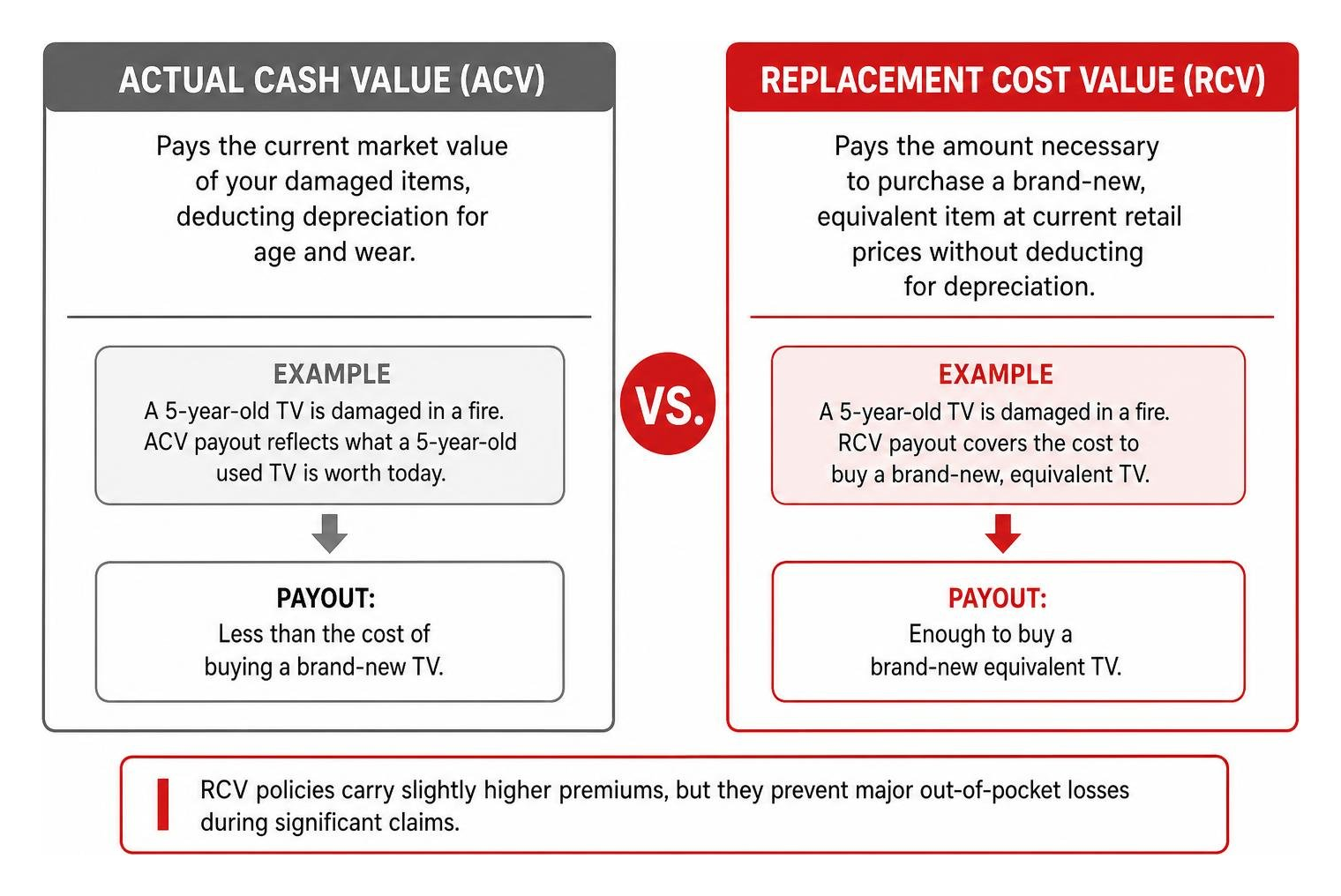
- Actual Cash Value (ACV): Pays the current market value of your damaged items at the time of loss, deducting depreciation for age and wear. If a five-year-old television is ruined in a fire, an ACV payout reflects what a five-year-old used TV is worth today—often leaving you with a fraction of what you need to buy a brand-new model.
- Replacement Cost Value (RCV): Pays the amount necessary to purchase a brand-new, equivalent item at current retail prices without deducting for depreciation.
While RCV policies carry slightly higher annual premiums, they prevent major out-of-pocket losses during significant claims. Maintaining an up-to-date digital home inventory—complete with photos, serial numbers, and receipts stored securely in cloud storage—drastically speeds up the adjustment process regardless of which valuation method you choose.
Liability and Additional Living Expenses (ALE)
Personal liability coverage protects your personal assets if you are legally responsible for third-party bodily injury or property damage. For example, if a guest trips over a rug in your living room and breaks an ankle, liability coverage helps pay for their legal defense costs and medical bills up to your policy limit (typically $100,000 to $300,000).
Meanwhile, Additional Living Expenses (ALE), or “loss of use” coverage, keeps a roof over your head if a kitchen fire or severe storm renders your rental unlivable. ALE covers:
- Hotel rooms or short-term apartment rentals
- Restaurant meal allowances above your normal grocery budget
- Emergency laundry and storage fees
- Pet boarding costs while you are temporarily relocated
Pricing Factors and Selecting the Right Policy

Securing reliable coverage does not have to strain your monthly budget. Evaluating quotes from knowledgeable local agents helps ensure you receive every available discount. If you want to dive deeper into regional pricing strategies, check out our guide on comparing home insurance quotes in Alabama.
Factors That Influence Home Rental Insurance Rates
Insurance carriers calculate premiums by assessing risk metrics specific to your household and property location:
- Location and Weather Patterns: Rental units in areas prone to tornadoes, severe hail, or severe convective storms carry adjusted risk profiles compared to sheltered regions.
- Deductible Selection: Choosing a $1,000 deductible instead of a $500 deductible lowers your annual premium, though you must be prepared to pay that higher amount out of pocket if you file a claim.
- Security and Safety Systems: Monitored fire alarms, deadbolts, sprinkler systems, and smoke detectors can earn meaningful policy credits.
- Credit Profile and Claims History: Insurers review past claims frequency and credit-based insurance scores where permitted by state regulations.
- Proximity to Student Housing Areas: Rentals near high-density college communities, such as off-campus housing surrounding The University of Alabama, may experience slight rate variations due to localized property turnover and occupancy densities.
Step-by-Step Claims Filing Process
Filing an insurance claim does not have to be intimidating if you follow a clear, organized sequence:
- Ensure Safety and Prevent Further Damage: Protect undamaged items from exposure to rain or debris without putting yourself in danger.
- File a Police Report for Theft or Vandalism: Obtain an official report number immediately if a crime has occurred.
- Document Everything with Photos and Video: Capture thorough visual evidence of all damaged items, water marks, and structural impact before cleaning up.
- Notify Your Insurance Agent Promptly: Contact your local agency to initiate the claim and receive your assigned adjuster’s contact details.
- Submit Your Inventory and Proof of Loss: Provide receipts, estimated purchase dates, and detailed item descriptions to your adjuster for settlement review.
Frequently Asked Questions About Rental Coverage
Is renters insurance legally required by state law?
No state law mandates home rental insurance. However, private landlords and property management companies have the full legal right to require proof of coverage as a mandatory condition of your lease agreement. Landlords frequently require minimum liability limits (such as $100,000) and request to be listed on the policy as an “Additional Interested Party” so they receive automated notification if the policy is canceled or lapses.
Does a rental policy cover dog bites and pet damages?
Standard tenant policies often provide personal liability coverage for pet-related incidents, including dog bites away from the premises. However, many insurers maintain specific breed restriction lists or exclude animal liability entirely unless an optional rider is purchased. Furthermore, a tenant policy does not cover damage that your own pet causes to your rental property (like chewing baseboards or scratching doors); those costs are typically deducted directly from your security deposit.
How do deductibles impact tenant claim payouts?
A deductible is the specific dollar amount subtracted from your total claim settlement check. For example, if a lightning power surge destroys $3,500 worth of computer equipment and your policy carries a $500 deductible, your insurer issues a payout of $3,000. Choosing your deductible is a balance between annual premium savings and your available cash reserves for unexpected emergencies.
Conclusion
Finding the right coverage comes down to balancing proper liability protection, accurate personal property limits, and a deductible that fits your family’s budget. Whether you rent a single-family house, a townhouse, or a lakefront cottage, having a dedicated local insurance team makes all the difference when unexpected events occur.
At The Hornbuckle Agency, we believe in providing personalized risk education so you can make confident, informed decisions about your insurance portfolio. We proudly serve multiple Alabama communities, including Albertville, Guntersville, Boaz, Arab, Geraldine, Crossville, Collinsville, Horton, and Douglas. Reach out to our local team today for guidance on securing your custom home insurance policy and protecting what matters most.
