
Hunting Land Insurance in Alabama Starts With a Coverage Check
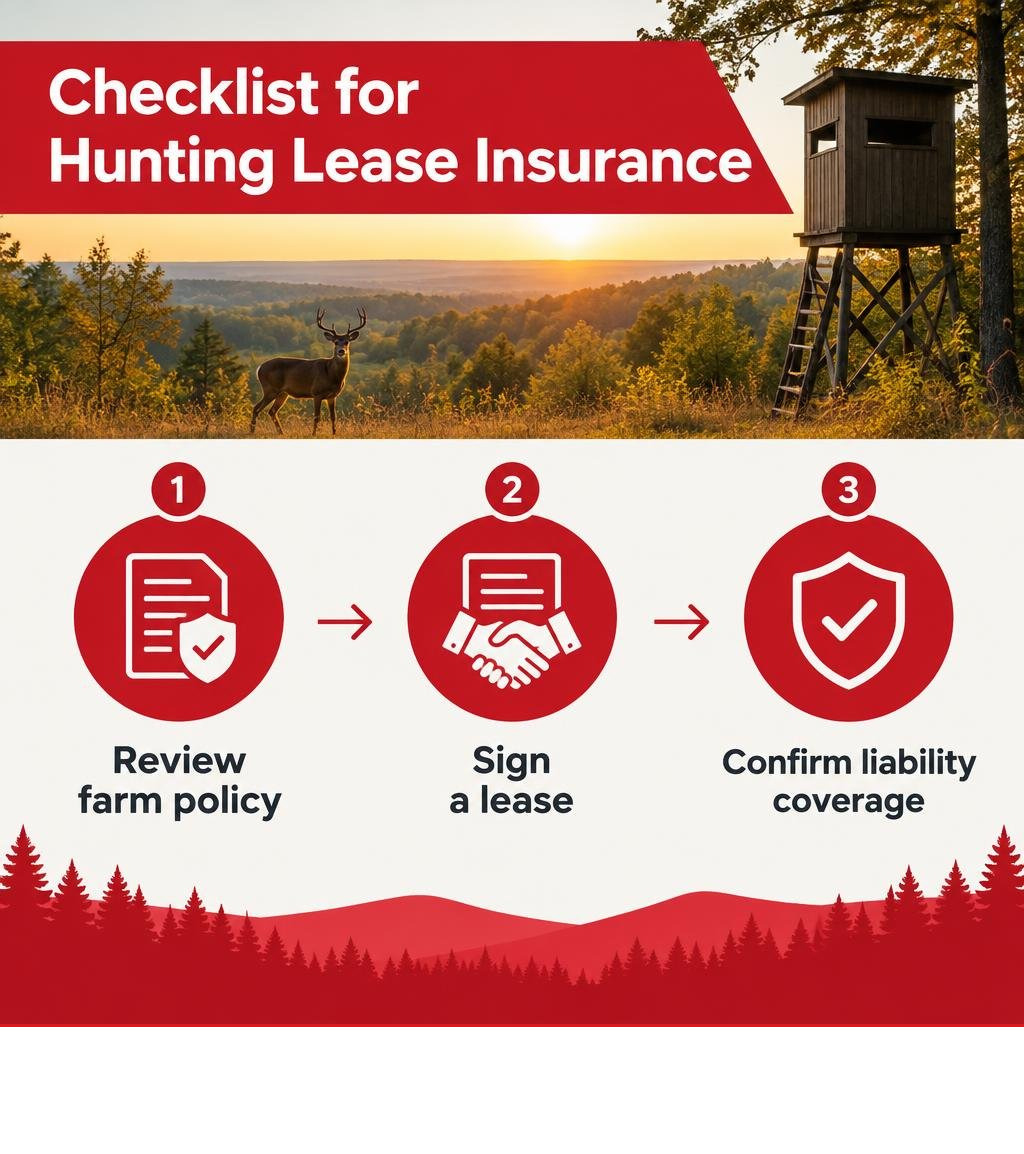
Before leasing your land for hunting, ask your insurance agent whether your farm policy covers paid hunting access. Do not assume it does. Get a written lease, review who is covered for injuries or property damage, and confirm whether the landowner, club members, and guests need hunting lease liability coverage.
Alabama law offers landowners some protection, but it does not prevent someone from filing a claim. A fall from a tree stand or an injury on a trail can still put your finances at risk.
Alabama Landowner Liability and the Landowners Protection Act
When opening rural property to sportsmen, understanding state law is just as critical as maintaining trails and boundary markers. Alabama has deep agricultural roots, and its legal framework reflects an effort to encourage landowners to keep open spaces available for recreation. However, statutory immunity is not a magic force field against lawsuits.
The cornerstone of state statute regarding recreational land use is found in the Alabama Landowners Protection Act (Ala. Code §35-15-40). This law provides substantial protection for owners who grant permission or lease property for hunting, fishing, and outdoor recreation. Under this statute, landowners are generally shielded from liability for injuries that occur during lawful recreational activities, provided the landowner does not engage in willful misconduct or gross negligence. Insights on how state law interacts with recreational access can be found in Alabama Landowner Liability Guidelines.
Statutory protection does not stop someone from hiring an attorney and filing a claim after a severe accident. When an incident occurs, you may still have to hire legal counsel to prove that the statute applies to your situation. Legal defense costs alone can quickly total tens of thousands of dollars. Furthermore, Alabama criminal trespass laws delineate strict property boundaries. Entering fenced property without permission constitutes second-degree criminal trespass, which can carry penalties of up to three months in jail, while entering unfenced land constitutes third-degree criminal trespass, carrying up to 30 days in jail. Clear signage and strict boundary management establish clear legal expectations before anyone discharges a firearm.
Legal Status: Licensees Versus Invitees in Alabama
In premises liability, the legal duty of care a property owner owes an individual depends heavily on their legal classification:
- Trespassers: Individuals on the land without permission. Landowners owe the lowest duty of care—simply refraining from willful, intentional, or wanton injury (such as setting intentional traps).
- Licensees: Individuals on the property with permission for their own convenience, pleasure, or business (such as social guests or recreational users). Under Ala. Code §35-15-40, recreational hunters on leased land are typically classified as licensees rather than business invitees. Landowners owe licensees a duty not to willfully or wantonly cause harm, and must warn them of known, hidden traps or latent dangers not readily observable.
- Invitees: Traditional commercial customers or business visitors. Landowners owe invitees a heightened duty of care to inspect the property actively, keep it reasonably safe, and repair or warn of hazards.
Because the Landowners Protection Act treats recreational lessees as licensees, landowners are spared the exhaustive burden of eliminating every natural tripping root or hidden stump. However, if a landowner knows about an open, abandoned well, a collapsed bridge hidden by brush, or a dangerous sinkhole and fails to disclose it, that failure can be argued as willful concealment, opening the door to substantial liability.
Structuring a Watertight Lease Agreement
A handshake agreement is never sufficient when firearms, tree stands, and off-road vehicles are involved. A written hunting lease agreement protects both the landowner and the hunt club by establishing operational boundaries and risk allocations.
When drafting your agreement, incorporate these foundational provisions:
- Precise Legal Description: Clearly define tract boundaries, acreage, excluded zones (e.g., areas near livestock barns or family dwellings), and access gates.
- Permitted Activities and Game Limits: Outline allowable game species, harvest rules, and strict adherence to state wildlife laws.
- Indemnification and Hold-Harmless Clauses: Require the club and all individual hunters to defend, indemnify, and hold the landowner harmless from any claims, suits, or damages arising out of their presence on the land.
- Guest and Member Limits: Set firm caps on the number of active hunters and non-hunting guests permitted on the property at one time.
- Mandatory Insurance Requirement: Stipulate that the hunting club must secure specialized liability coverage with minimum limits (typically $1,000,000 per occurrence and $2,000,000 aggregate) naming the landowner as an Additional Insured.
For more context on land management and property structures, review our guide on comparing rural Alabama property insurance.
Why Standard Farm Policies Fall Short for Hunting Activities

Many property owners mistakenly assume that an existing farm or rural homeowners policy automatically protects them if someone gets hurt while hunting on their acreage. In reality, traditional farm policies are tailored to standard agricultural operations—raising livestock, row cropping, and storing farm machinery—not commercial recreational enterprises.
The critical issue centers around the business pursuits and commercial lease exclusion. As soon as you collect payment or exchange a lease fee for hunting privileges, insurance carriers often classify the arrangement as a commercial recreational venture. If an accident occurs under a paid lease, a standard farm liability policy may deny coverage entirely, leaving the property owner personally responsible for medical bills, disability settlements, and legal representation. Evaluating your baseline coverage through comparing family farm insurance options highlights where standard agricultural protections stop and specialized endorsements become necessary.
Commercial Endorsements and Hobby Farm Limitations
Even on smaller acreages, personal liability and hobby policies fall short when recreational fees enter the picture. A hobby farm policy is designed for incidental farming activities, not paying hunting clubs. Our overview on hobby farm vs standard farm insurance coverage explains that standard hobby policies strictly exclude commercial recreational access.
Standard farm policies rarely include:
- Member-to-Member Liability: Coverage if one hunting club member accidentally shoots or injures another club member.
- Guest Liability for Fee-Based Access: Protection extended to invited guests of lessees on paying land tracts.
- Off-Premises Activity Exclusions: Protections related to organized sporting activities that intersect road rights-of-way.
Without a dedicated hunting lease policy or a tailored commercial recreation endorsement, collecting even modest lease revenue introduces massive balance-sheet exposure.
Tree Stands, ATVs, and Firearm Risk Exclusions
Hunting inherently involves elevated risk profiles that standard personal policies deliberately restrict. Elevated tree stands represent the leading source of hunting-related injuries. When a strap rots or a climber slips, the resulting spinal and orthopedic injuries can involve catastrophic medical costs.
When evaluating risk during active seasons, our guide on evaluating farm insurance coverage emphasizes that machinery and acreage risks change drastically when non-employees operate high-powered vehicles across your timber stands.
Navigating Hunting Land Insurance Alabama Requirements and Costs
Securing dedicated hunting land insurance in Alabama bridges the dangerous gap between standard farm liability and the real-world exposures of active hunt leases. A specialized policy serves as a Comprehensive General Liability (CGL) instrument tailored specifically to hunting clubs, timberland tracts, and private landowners.
Understanding how legal structures interact with natural resources can be further explored in Liability and Legal Issues in Natural Resources.
| Coverage Feature | Standard Farm Policy | Specialized Hunting Lease Policy |
|---|---|---|
| Fee-Based Hunting Access | Typically Excluded (Business Pursuit) | Fully Covered |
| Standard Policy Limits | $300,000 to $500,000 Occurrence | $1,000,000 Occurrence / $2,000,000 Aggregate |
| Landowner as Additional Insured | N/A (Owner is Named Insured) | Included with Certificate Provided |
| Member-to-Member Liability | Excluded | Included |
| Guest Liability Coverage | Highly Restricted | Included |
| Deductible | $500 to $2,500+ | $0 Deductible on Most Programs |
| Medical Payments Limit | $1,000 to $5,000 (Family/Ag Only) | $5,000 per Person (Recreational Users) |
Essential Coverage Features of Hunting Land Insurance in Alabama
When securing hunting land insurance in Alabama, verify that your policy structure includes these essential core protections:
- $1,000,000 Per Occurrence / $2,000,000 Aggregate Limits: The industry benchmark that satisfies major timberland management firms and sophisticated private landowners.
- Zero Deductible: If an incident occurs, the policy responds without requiring the club or landowner to front out-of-pocket funds before defense coverage activates.
- Additional Insured Endorsement: The landowner receives a formal Certificate of Insurance naming them directly, ensuring the policy provides primary legal defense if the owner is named in a lease-related lawsuit.
- Separate Tract Aggregates: If a policy covers multiple non-contiguous parcels, ensure claims on one tract do not exhaust the liability limits available for another.
- Damage to Premises Rented to You: Coverage for accidental damage caused to the landowner’s fences, gates, or standing timber (often up to $100,000 or more).
Policy Exclusions and Risk Mitigation Best Practices
Even the most robust hunting liability policies have specific exclusions that landowners and clubs must understand.
Common exclusions include:
- Habitational and Residential Structures: Cabins, clubhouses, lodges, and bunkhouses are excluded from general hunting liability policies. These require separate commercial property and premises liability coverage.
- Controlled Burns: Setting prescribed fires for habitat or timber management is strictly excluded; specialized forestry liability endorsements are required.
- Motorized Watercraft Restrictions: Watercraft with high-horsepower outboard motors (typically exceeding 25 hp) or vessels over 19 feet are often excluded from standard hunt policies.
- Commercial Guiding Operations: Policies designed for private hunt clubs do not cover paid commercial outfitters or fee-per-day guided hunts without a dedicated outfitter endorsement.
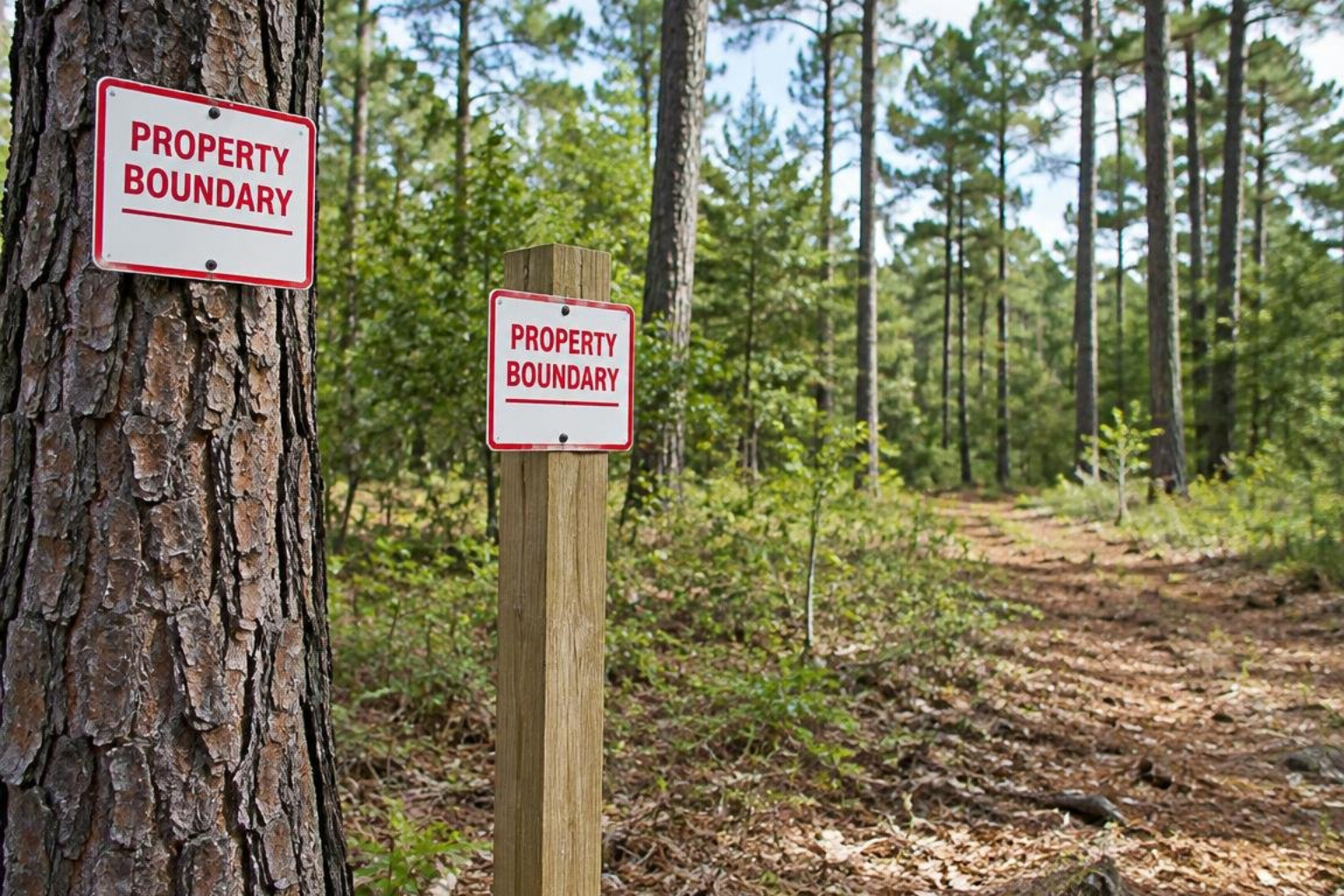
To mitigate operational risk beyond insurance, landowners and hunt clubs should form formal legal entities (such as an LLC for the hunt club) to shield individual personal assets. Conduct an annual pre-season walk-through to identify and document hazards, post bright boundary markings, and inspect existing permanent stands. Broader land risk reviews can be examined in our analysis of rural property insurance options.
Step-by-Step Risk Management for Landowners and Hunt Clubs
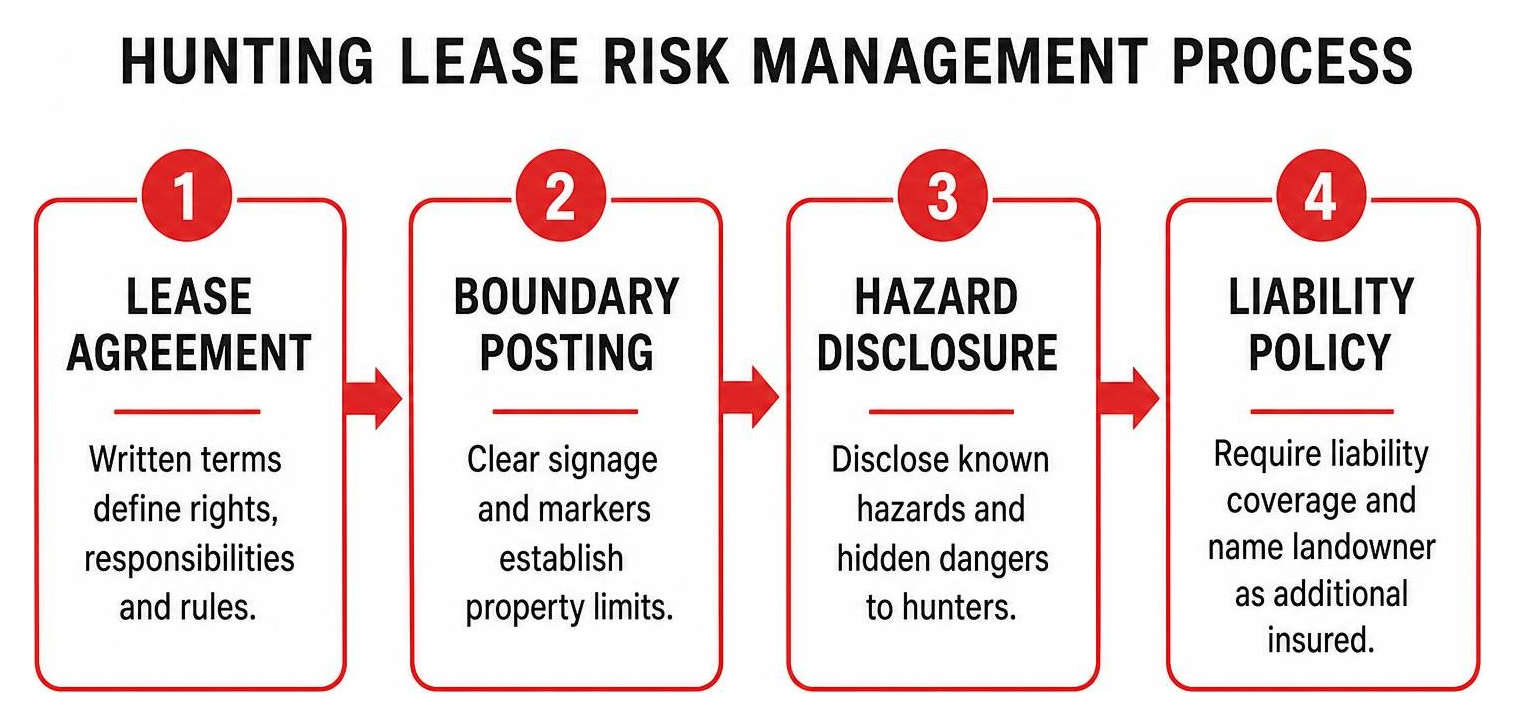
Managing a hunting lease smoothly requires a consistent, repeatable risk management protocol prior to opening day:
- Draft and Execute the Written Lease: Finalize all terms, rules, and boundaries with signatures from club officers and the property owner.
- Submit the Insurance Application: Complete the application with accurate acreage figures, parcel numbers, and complete landowner legal names.
- Issue Certificates of Insurance: Ensure the carrier generates certificates delivering proof of coverage directly to the landowner before anyone enters the property.
- Execute Individual Liability Waivers: Require every active member and guest to sign an annual waiver acknowledging the inherent risks of hunting and property conditions.
- Enforce Club Safety Rules: Mandate tree stand safety harnesses, establish firearm safety zones near property boundaries, and enforce zero-tolerance alcohol policies during shooting hours.
How to Secure Hunting Land Insurance Alabama Landowners Can Trust
Securing hunting land insurance Alabama landowners can rely on begins with aligning the policy renewal date with the hunting season calendar. Most hunting lease policies operate on an annual master policy cycle (often renewing in mid-summer, such as August 1, just ahead of bow season).
When securing coverage, confirm whether the policy is backed by an admitted, A-rated insurance carrier with proven claims-handling capabilities. For guidance on terminology and policy language, review our resource on understanding farm insurance terms.
Frequently Asked Questions About Hunting Land Insurance in Alabama
What does a typical hunting land liability policy cover in Alabama?
A standard policy provides Comprehensive General Liability coverage covering bodily injury and property damage arising from hunting, fishing, and related outdoor recreational activities. It includes member-to-member liability (if one club member accidentally injures another), guest liability, legal defense costs against third-party lawsuits, damage to rented premises (such as gates or timber), and incidental medical payments (typically up to $5,000 per person).
Does Alabama’s Landowners Protection Act eliminate the need for insurance?
No. While Ala. Code §35-15-40 provides critical statutory defenses by classifying recreational users as licensees, it does not stop injured parties from filing lawsuits alleging gross negligence, willful misconduct, or failure to disclose known hazards. Legal defense costs alone can cause significant financial hardship. Hunting land insurance ensures that an insurance carrier provides and funds legal defense from the moment a claim is filed.
How much does hunting land liability insurance cost in Alabama?
Specialized hunting lease liability insurance is economical compared to the coverage provided. For small-to-midsize hunting tracts (up to 499 acres), basic policies frequently start around $260 to $350 per year for $1,000,000 occurrence / $2,000,000 aggregate limits. For larger properties or clubs spanning thousands of acres, pricing is typically structured on a modest per-acre scale (often ranging from pennies to under a dollar per acre). Clubs commonly incorporate this premium directly into their annual member dues.
Conclusion: Protecting Your Alabama Acreage and Legacy
Leasing your rural acreage for hunting generates valuable revenue and supports wildlife conservation, but relying on a standard farm policy to protect you against recreational accidents leaves your assets exposed. By pairing a comprehensive written lease with specialized liability coverage, you establish clear boundaries and safeguard your property for generations to come.
At The Hornbuckle Agency, we believe in providing personalized risk education so you understand exactly how your coverage responds when it matters most. We proudly serve Alabama landowners and families across multiple communities, including Albertville, Guntersville, Boaz, Arab, Geraldine, Crossville, Collinsville, Horton, and Douglas.
Reach out to our team today to explore specialized farm insurance and ensure your land, lifestyle, and legacy remain fully protected season after season.
