
Understanding Home Insurance Equipment Coverage and How It Works
Most homeowners assume their standard policy protects everything inside their walls. While a base policy covers catastrophic perils like windstorms, falling trees, or fires, it generally excludes internal failures. If an electrical surge fries your central air conditioning compressor or a mechanical defect causes your boiler to crack, a standard policy leaves the entire repair bill in your hands.
This is where equipment breakdown coverage comes into play. Originally developed for commercial facilities under the name “boiler and machinery insurance,” this protection is now widely available as an optional residential endorsement. Adding home insurance equipment coverage bridges the gap between major structural perils and sudden internal breakdowns.
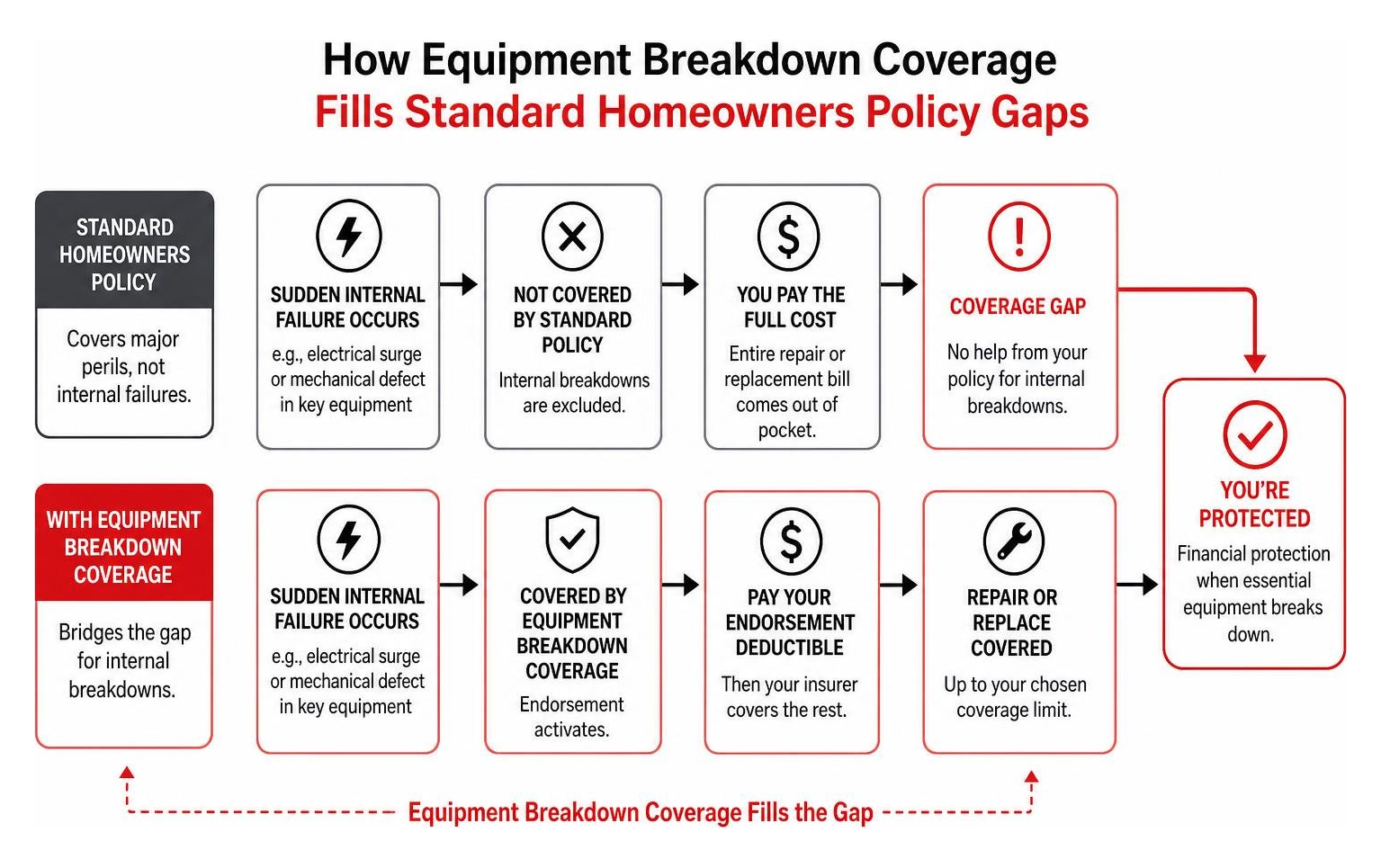
When added as an endorsement, this coverage activates when essential home equipment suffers sudden, accidental mechanical, electrical, or pressure-system failure. Instead of paying thousands out of pocket, you pay your policy’s endorsement deductible, and the insurer covers the remaining cost to repair or replace the unit up to your chosen limit. For an exhaustive look at how endorsements integrate with your core policy, explore our 2026/07/16 Homeowners Insurance Complete Guide.
What Systems Fall Under Home Insurance Equipment Coverage?
Modern homes rely heavily on complex, integrated technology. Equipment breakdown coverage extends far beyond basic kitchen appliances to protect the core infrastructure of your property.
Commonly covered systems and appliances include:
- Heating and Cooling Systems: Central air conditioners, heat pumps, furnaces, and radiant floor systems. Severe seasonal shifts put immense strain on these units; review how to prevent cold snap damage in 7 easy steps to protect your heating equipment during sudden freeze events.
- Water and Plumbing Infrastructure: Tankless and standard water heaters, deep well pumps, sump pumps, and whole-house water filtration units.
- Electrical and Power Generation: Service panels, circuit breakers, backup generators, and residential solar panel arrays.
- Major Kitchen and Laundry Appliances: Refrigerators, freezers, induction ranges, ovens, dishwashers, washing machines, and dryers.
- Smart Technology and Security: Integrated security systems, automated smart thermostats, motorized shades, and central vacuum units.
- Recreation and Specialty Equipment: Pool pumps, hot tub filtration systems, and permanent sauna heaters.
In addition to repairing the hardware itself, many policies provide built-in extras. For example, if your refrigerator’s compressor burns out, coverage frequently includes reimbursement for spoiled food up to a specified sublimit (such as $3,000), as well as temporary living expenses if a winter heating failure temporarily forces your family into a hotel.
Exclusions and What Is Not Covered
While equipment breakdown endorsements provide valuable protection, they are not blank checks for every household issue. Understanding exclusions prevents surprises during the claims process.
Key exclusions include:
- Normal Wear and Tear: Gradual deterioration, rust, corrosion, scale buildup, and general aging are not covered.
- Lack of Maintenance: Breakdowns caused by neglect—such as running an HVAC unit with clogged filters or failing to flush a water heater—will result in denied claims.
- Pest and Rodent Damage: Wires chewed by rodents or insect infestations in outdoor condenser units fall outside coverage.
- Manufacturer Defects and Recalls: If an appliance fails due to a known engineering defect covered by an active factory warranty or manufacturer recall, the insurer will not pay.
- Standard Base Perils: External perils such as direct lightning strikes, house fires, or wind damage remain covered under your base property policy rather than the equipment endorsement. For insight into how property losses are handled under base coverage, see our detailed guide to what homeowners insurance covers after a house fire.
Evaluating Costs, Limits, and Financial Value
One of the main reasons homeowners add an equipment breakdown endorsement is its affordability relative to the protection it delivers. While standalone service contracts and repair plans can be expensive, adding an endorsement to your existing homeowners policy typically costs between $25 and $50 per year.
Endorsement limits generally range from $10,000 to $50,000 per occurrence, with some comprehensive options extending higher. Most carriers attach a flat deductible, commonly $500, which is often lower than standard homeowners property deductibles. Furthermore, modern endorsements frequently include an eco-friendly upgrade incentive, paying up to an additional 25% to replace failed equipment with Energy Star-rated or environmentally efficient alternatives.
To see how these endorsement fees fit alongside your baseline premium, check out The Ultimate Guide to Compare Home Insurance Quotes in Alabama. For additional industry perspectives on policy structures, you can read NerdWallet’s breakdown of equipment coverage.
Equipment Breakdown Endorsements vs. Standard Homeowners Coverage
To understand why this add-on matters, it helps to see how an endorsement performs side-by-side against a standard, unendorsed homeowners policy when mechanical issues occur.
| Feature / Scenario | Standard Homeowners Policy | Homeowners Policy with Equipment Endorsement |
|---|---|---|
| Typical Annual Add-on Cost | $0 (Included in base premium) | $25 – $50 per year |
| Standard Deductible | $1,000 – $2,500 (Base property deductible) | $500 (Dedicated endorsement deductible) |
| Electrical Power Surges | Excluded unless caused directly by lightning | Covered for internal mechanical/electrical surge damage |
| HVAC Compressor Motor Failure | Excluded (Categorized as mechanical breakdown) | Covered (Subject to endorsement limit) |
| Food Spoilage from Appliance Failure | Rarely covered without specific rider | Commonly included up to sublimit (e.g., $3,000) |
| Contractor Selection | Insurer-directed or adjustor-approved | Homeowner chooses licensed repair technician |
| Green Upgrades (Energy Star) | No (Actual cash value or standard replacement) | Often includes bonus payout (up to 25%) for efficient models |
As the comparison highlights, relying solely on a standard policy leaves major mechanical systems unprotected against day-to-day electrical and operational failures.
Is Equipment Endorsement Worth It for Older vs. Modern Homes?
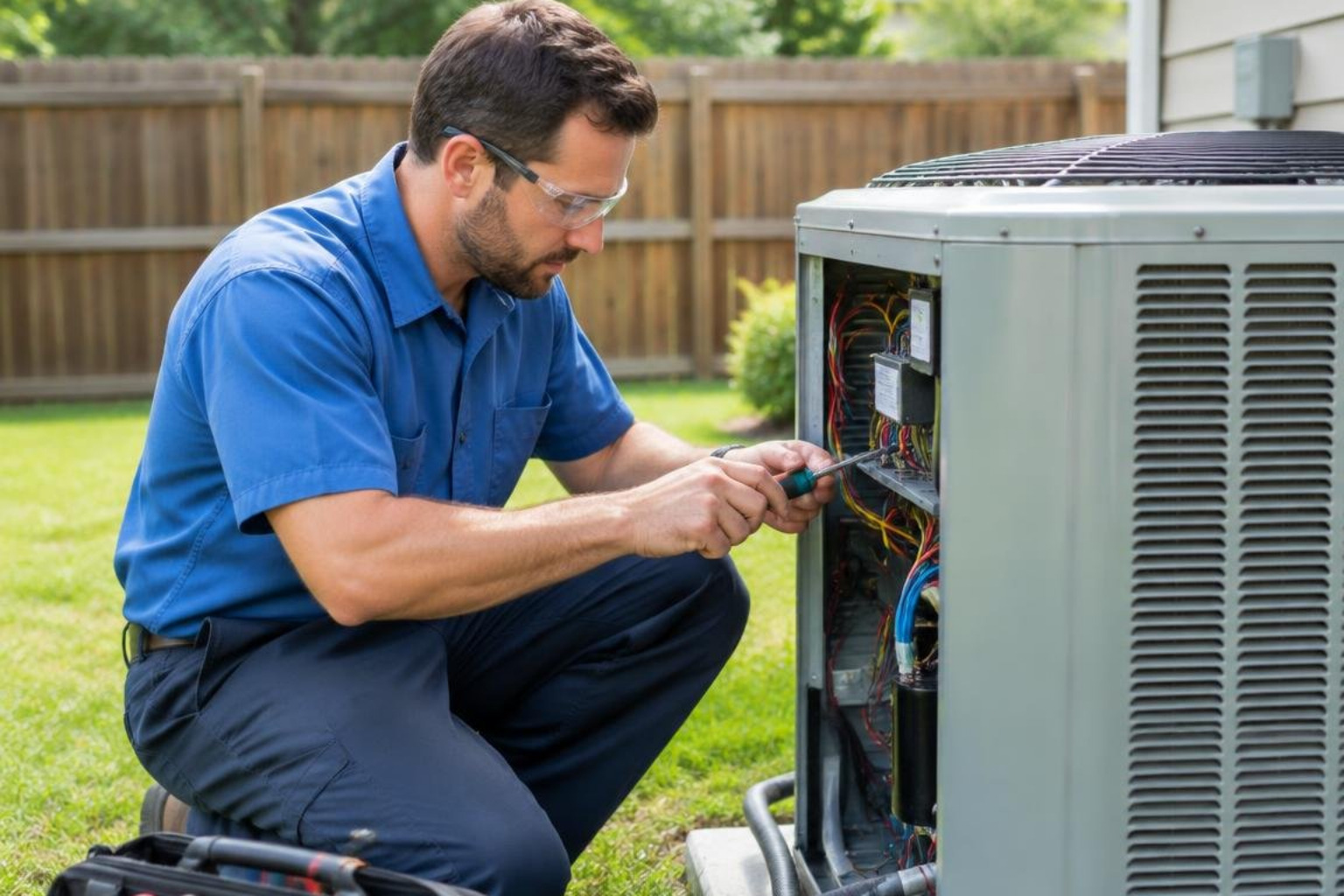
Deciding whether to add equipment breakdown coverage often depends on the age and complexity of your home:
- Modern Homes with High-Tech Systems: Newer homes are packed with complex electronics, variable-speed HVAC systems, smart panels, and automated security hubs. While newer units may have short manufacturer warranties, factory coverage rarely protects against power surges or improper installation issues. Because high-efficiency replacement parts are costly, a low-cost endorsement provides an effective safety net.
- Established Homes with Aging Systems: If your air conditioner, furnace, or water heater is nearing the 8-to-12-year mark, the statistical likelihood of mechanical failure rises sharply. As long as you have maintained the equipment properly, the endorsement can prevent an unexpected $6,000 to $10,000 replacement bill from depleting your emergency savings.
For answers to related coverage questions regarding home systems, review our cheat sheet to common insurance questions for North Alabama homeowners.
Equipment Breakdown for Home Businesses and Landlords
If you own rental properties or operate a business out of your residence, equipment failures introduce operational and financial risks beyond simple inconvenience.
For landlords, an HVAC breakdown in mid-July is an urgent emergency. If a rental unit becomes uninhabitable due to heating or cooling loss, you could face tenant displacement costs or lost rental income. Adding equipment breakdown coverage to a dwelling fire or landlord policy ensures rapid repairs for rental appliances and mechanical systems, protecting your cash flow. If you manage multiple properties or agricultural structures, review our guide to compare rural property insurance options to ensure all equipment is adequately insured.
Home-Based Business Equipment Limits and Sublimits
A common point of confusion for home-based entrepreneurs is how base home insurance treats business property. Standard homeowners policies contain strict business property sublimits—frequently capped at $2,500 on-premises and as low as $250 to $500 off-premises.
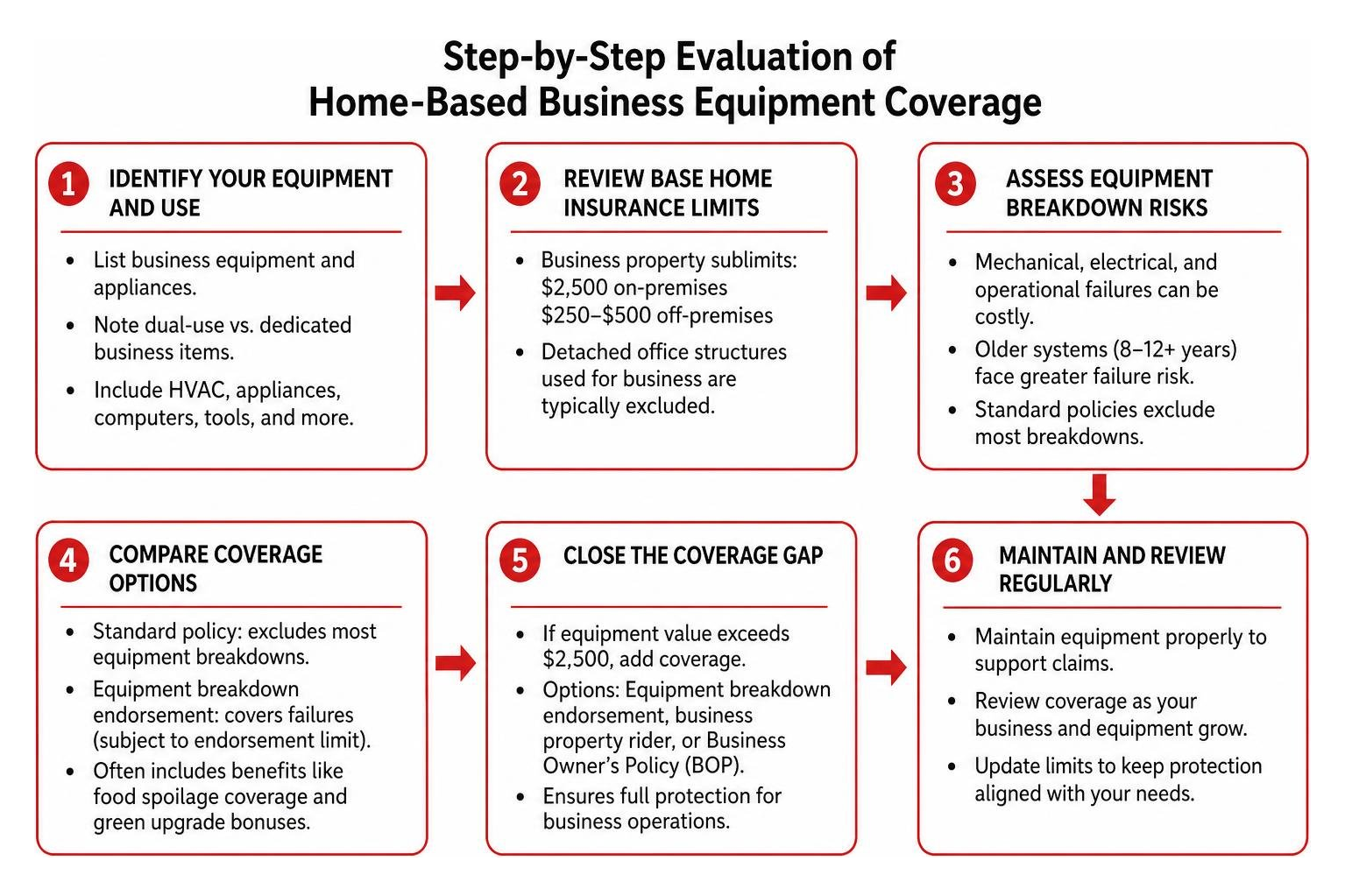
Consider these nuances:
- Dual-Use Gear: If a computer or tablet is used for both personal household management and business tasks, adjusters may classify it under personal property limits. However, dedicated business tools (such as professional photography gear or commercial printers) fall strictly under the $2,500 cap.
- Detached Office Structures: If you operate your business out of a detached garage or converted workshop, standard “other structures” coverage typically excludes buildings used for commercial enterprise.
- Closing the Gap: When your home office equipment exceeds $2,500, you can increase your limits by adding an endorsed business property rider or securing a standalone Business Owner’s Policy (BOP). You can explore additional details on business equipment coverage limits to ensure your professional gear remains fully protected.
How to File a Claim for Equipment Breakdown
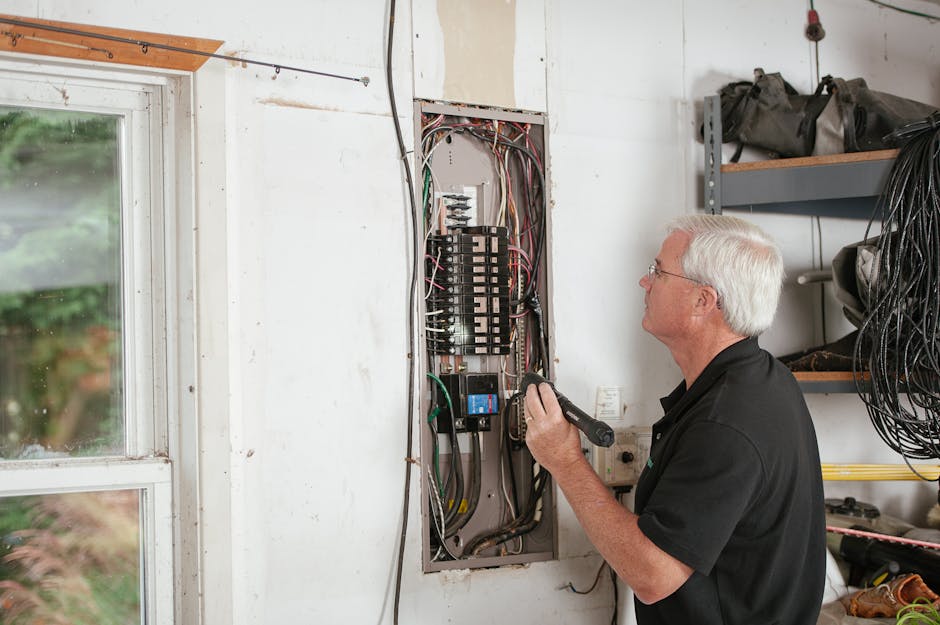
Filing an equipment breakdown claim is straightforward, but taking the proper administrative steps ensures a quick reimbursement.
- Mitigate Further Damage: Turn off power or water to the failed unit immediately to prevent secondary damage to floors, walls, or surrounding electrical circuits.
- Hire a Licensed Technician: Contact a qualified professional to inspect the unit. Ask the technician to provide a written, itemized diagnostic report stating the precise cause of failure (e.g., “internal electrical short in control board” rather than vague wording like “unit stopped working”).
- Preserve the Broken Components: Do not throw away the failed parts or scrap the old unit until the insurance adjuster has reviewed the claim and given approval.
- Gather Maintenance Records: Locate purchase receipts, professional servicing invoices, or annual inspection logs to show the failure was not caused by neglected maintenance.
- Submit the Claim Promptly: File your claim through your local agent or carrier portal. Submit the technician’s estimate, diagnostic statement, photos of serial numbers, and any food loss inventories together.
Frequently Asked Questions about Equipment Breakdown Coverage
How does equipment breakdown insurance differ from commercial property coverage?
Standard commercial and residential property policies protect against external hazards like fire, falling objects, or windstorms. Equipment breakdown insurance specifically covers internal electrical, mechanical, or pressure-related failures that originate from within the machinery itself.
Will filing an equipment breakdown claim increase home insurance rates?
Property insurance claims are cataloged in the Comprehensive Loss Underwriting Exchange (CLUE) database, which insurers consult during renewal underwriting. Filing frequent small claims close to your deductible amount can impact future rates. We recommend using equipment breakdown coverage primarily for major repair bills that significantly exceed your $500 deductible.
Can I add equipment breakdown coverage to manufactured or mobile homes?
Yes. Many modern manufactured home policies allow you to attach an equipment breakdown endorsement. Because manufactured homes rely on specialized packaged HVAC units and water heaters, this add-on offers valuable peace of mind. Learn more about structural and mechanical options in our guide to Manufactured Home Insurance.
Conclusion
A home’s mechanical, electrical, and climate systems represent a substantial financial investment. While baseline homeowners insurance defends against major disasters, adding an equipment breakdown endorsement provides a budget-friendly shield against sudden mechanical failures, power surges, and costly appliance breakdowns.
At The Hornbuckle Agency, we believe in proactive risk education. We help homeowners customize their policies to eliminate gaps without overpaying for unnecessary coverage. We proudly serve families across multiple Alabama communities, including Albertville, Guntersville, Boaz, Arab, Geraldine, Crossville, Collinsville, Horton, and Douglas.
Reach out to our team today to evaluate your policy limits and add customized home insurance coverage tailored to your household.
