
How to Compare Family Farm Insurance
Start with what your farm needs to protect. List your home, barns, equipment, livestock, and other valuable property. Then compare family farm insurance options by checking liability limits, covered losses, exclusions, deductibles, and annual premiums. If crops are a major source of income, review crop insurance separately.
The right coverage depends on what you own, how you use your land, and what a loss would cost your family to recover from. A lower premium may not be a better deal if it leaves an important part of the farm unprotected. USDA’s 2022 Census of Agriculture shows that family farms make up nearly all U.S. farms, but tailored protection should still reflect each farm’s property, operations, and exposures.
Core Coverage Types in Family Farm Insurance

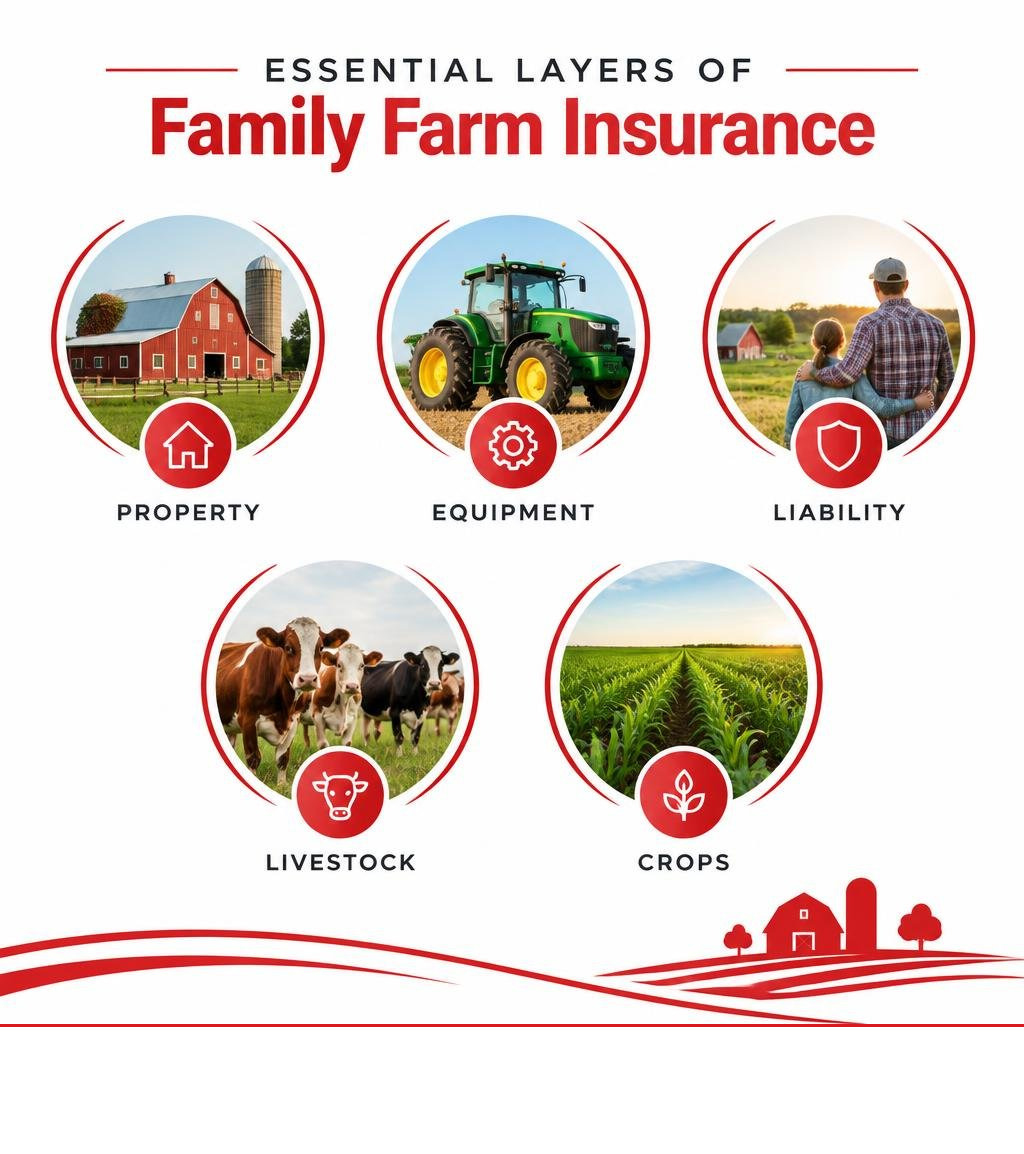
Operating a farm often means balancing a residence with working equipment, buildings, livestock, and commercial activity. USDA’s 2022 Census of Agriculture reported that family farms made up nearly all U.S. farms, but the coverage a farm needs still depends on its specific operations. Standard homeowners policies may not fully address farm buildings, machinery, livestock, or income-producing activities.
A comprehensive policy brings several core protections together under a single umbrella:
- Farm Dwelling Coverage: This shields the primary residence where your family lives. It functions similarly to standard homeowners protection, covering fire, lightning, windstorms, and vandalism, while addressing the specific location risks of rural estates. Understanding the essentials of farm house insurance coverage helps ensure your personal living quarters are not left vulnerable.
- Farm Personal Property: This category includes your tools, grain, silage, harvested crops, animal feed, and minor machinery essential for day-to-day work.
- Outbuilding and Structure Protection: Barns, poultry houses, equipment sheds, grain bins, and silos carry substantial replacement costs. Proper policies account for these specialized structures against severe weather perils, collapse, and fire.
- Livestock Mortality and Theft Coverage: Livestock represents a massive capital investment. Basic coverage safeguards herds against specific perils like barn fires, lightning strikes, building collapse, or transport accidents, while broader endorsements cover accidental drowning or shooting.
Protecting Mobile Machinery and Field Operations
Modern agriculture relies on heavy, sophisticated machinery. From tractors and combines to hay balers and skid steers, equipment failure or road accidents can stop operations during critical planting or harvesting windows.
Standard policies provide machinery breakdown endorsements and physical damage coverage, but you must also account for off-site risks. Securing dedicated off-premises equipment coverage ensures your implements remain covered when moving down public roadways or working on leased acreage.
Timing is everything in farming. When machinery runs long hours under demanding field conditions, evaluating farm insurance coverage for harvest season allows you to raise peak-season coverage limits to protect newly harvested yield and operating equipment against sudden loss.
Managing Farm Liability and Property Risks
Farming involves inherent risks—heavy machinery, unpredictable livestock, visitors, and chemical applications. Standard general farm liability protects your family’s assets if a third party suffers bodily injury or property damage on your land.
Key liability considerations include:
- Chemical Drift Liability: Protects against claims when spraying pesticides or fertilizers that unintentionally drift onto a neighbor’s sensitive crops.
- Agritourism and Public Exposure: If you open your acreage for pumpkin patches, farm tours, or seasonal events, traditional farm liability may exclude these activities without an added rider.
- Product Liability: Covers food products, dairy, eggs, or meat processed and sold directly to consumers from your roadside stand or local markets.
When operations grow beyond personal leisure, shifting coverage from hobby farm to farm insurance ensures that income-generating ventures are completely safeguarded against commercial-scale liability.
Family Farm vs. Commercial Agribusiness Coverage
While family operations and industrial commercial farms both work the land, their insurance structures differ significantly based on ownership model, workforce size, and revenue scale.
| Coverage Feature | Family Farm Policy | Commercial Agribusiness Policy |
|---|---|---|
| Primary Structure | Often combines a residence and qualifying farm operations in one package | Usually built around commercial operations, with residential coverage handled separately when needed |
| Operational Scale | Commonly family-operated, with limited employees and fewer locations | May involve entities, employees, multiple locations, processing, or fleet operations |
| Liability Needs | Limits should reflect visitors, livestock, custom work, products sold, and property exposure | May require higher limits and additional protection for contracts, employees, fleets, or processing risks |
| Custom Farming Scope | May cover limited custom work when it is declared to the insurer | Often designed for broader contract farming, harvesting, or service operations |
| Processing and Retail | May need endorsements for farm stands, direct sales, or small-scale processing | May need specialized coverage for processing facilities, distribution, and product liability |
For smaller landholdings, comparing standard rural property insurance options helps pinpoint whether a residential package policy or an agribusiness policy best matches your annual revenue and operational footprint.
Determining Coverage Needs and Premium Factors

Insurance cost is an important consideration for many farm families, but premiums vary widely by location, buildings, equipment, livestock, claims history, deductible, and the activities conducted on the property. Request comparable quotes using the same limits, valuation method, and endorsements so the difference in protection is clear, not just the difference in price.
Several factors dictate your overall premium:
- Property Valuations and Age: Older barns with outdated electrical wiring present higher fire risks, leading to higher rates unless modern updates are documented.
- Acreage and Public Exposure: Larger parcels bordering busy highways or hosting visitor foot traffic carry increased liability exposure.
- Claims History: A clean loss record over 3 to 5 years directly qualifies your operation for preferred carrier tiers.
- Deductible Structure: Selecting higher property deductibles lowers your annual premium, provided your cash reserves can absorb out-of-pocket costs after a loss.
Familiarizing yourself with key policy language and working to compare farm insurance options ensures you select the correct valuation basis—such as Replacement Cost versus Actual Cash Value—without overpaying.
Government Programs and Disaster Assistance
Public agricultural risk-management programs can supplement private property and liability insurance. Federal crop insurance, administered through the USDA Risk Management Agency, can help eligible producers manage covered production or revenue losses from events such as drought, excess moisture, hail, and price declines. Availability, policy types, deadlines, and coverage levels vary by crop and county.
Federal crop insurance and farm property coverage address different risks. Crop policies can help protect insurable crops and revenue, while farm policies can address homes, barns, equipment, liability, and other covered property. Review both with a qualified insurance professional and, when applicable, a crop-insurance agent before planting or policy deadlines.
Practical Methods to Lower Family Farm Insurance Costs
Managing operational expenses is an ongoing priority. You can lower premiums without compromising critical protection by implementing these strategies:
- Bundle Policies: Combine farm, home, personal auto, and commercial vehicle policies under one carrier for multi-policy credits.
- Implement Safety Protocols: Install commercial fire extinguishers in all outbuildings, maintain clear brush setbacks around barns, and use fenced perimeters with secure gates.
- Schedule High-Value Implements Accurately: Remove decommissioned machinery from your scheduled equipment list to avoid paying premiums on assets you no longer use.
- Establish Seasonal Endorsement Schedules: Adjust coverage amounts for stored grain or livestock inventories only during months of peak capacity.
Taking time to explore rural Alabama property protection ensures your safety measures translate into direct rate savings.
Step-by-Step Claims and Carrier Selection
When property damage or equipment breakdown occurs, handling the claim systematically minimizes downtime and speeds recovery.
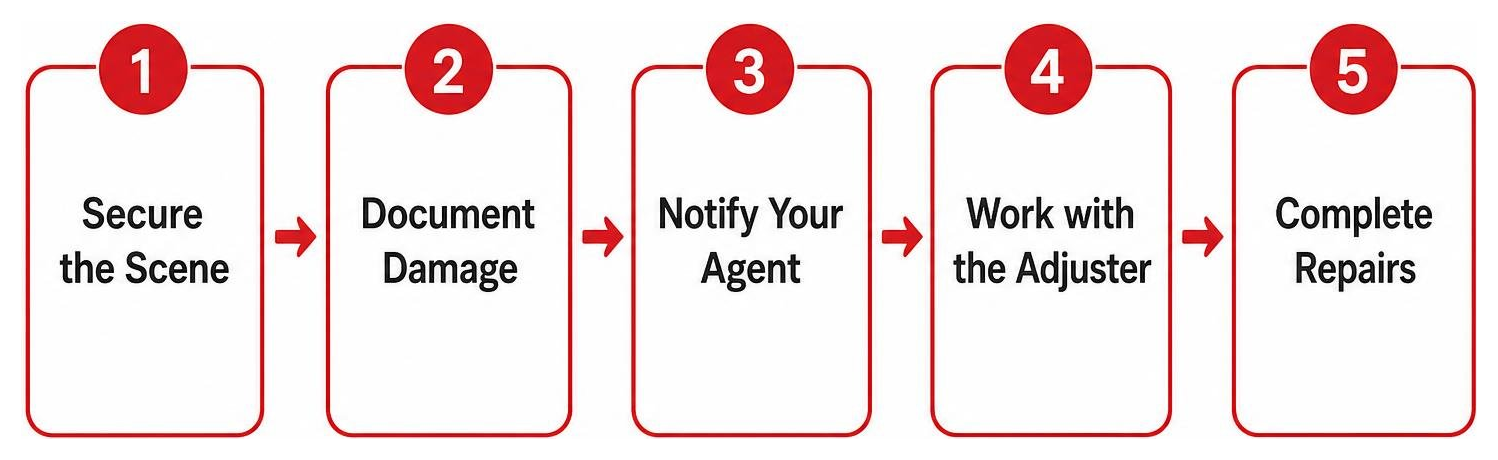
- Secure the Scene: Prevent further damage or injury by shutting off utilities, isolating damaged livestock, or boarding up exposed structures.
- Document Everything: Photograph all structural damage, broken equipment components, and skid marks before altering the scene. Maintain detailed equipment logs and receipts.
- Notify Your Agent Promptly: Report the incident to your local agent to start the claims process and review deductible thresholds.
- Work with the Adjuster: Walk the property with the agricultural claims adjuster, pointing out structural damage and providing serial numbers for machinery.
- Complete Approved Repairs: Retain all invoices, contractor estimates, and receipts for temporary living or operating expenses incurred during restoration.
Key Criteria for Choosing Family Farm Insurance Providers
Not every insurer understands the realities of livestock feeding schedules, seasonal weather demands, or agricultural equipment costs. When selecting a carrier, look for:
- Agricultural Specialization: Choose providers that design policies specifically for farming families rather than retrofitting generic business plans.
- Local Agent Presence: An agent living and working in your region understands local weather risks, soil conditions, and construction costs.
- Financial Strength: Check carrier stability ratings to ensure your insurer can handle widespread catastrophic storm losses.
- Customizable Endorsements: Confirm the insurer allows you to easily add seasonal grain storage endorsements, foreign object ingestion coverage for combines, and outbuilding loss protection.
Selecting specialized farm and home protection plans ensures your coverage evolves alongside your farm’s needs.
Frequently Asked Questions About Farm Insurance
What should a farm family compare before choosing coverage?
There is no single standard price for family farm insurance. Annual cost depends on the home and outbuilding values, acreage, machinery, livestock, operations, claims history, coverage limits, and deductible. Ask for quotes built on the same assumptions so you can compare coverage as well as premium.
Does homeowners insurance cover outbuildings and agricultural operations?
Standard homeowners policies generally exclude commercial agricultural operations, livestock mortality, large machinery, and barns used for income-producing purposes. Once you sell farm goods or house commercial livestock, dedicated farm coverage is necessary.
What losses does family farm insurance typically cover?
Policies cover structural damage to homes and barns from fire, wind, hail, and vandalism, as well as machinery damage, livestock mortality from covered perils, and general liability for third-party injuries or property damage.
Conclusion
Your farm is both an economic engine and a family legacy. Safeguarding it requires balanced protection that shields your home, equipment, and livestock against unexpected losses. Proactive policy reviews and tailored endorsements help keep your operation resilient across generations.
The Hornbuckle Agency serves multiple Alabama communities, including Albertville, Guntersville, Boaz, Arab, Geraldine, Crossville, Collinsville, Horton, and Douglas. We provide local risk education to help you choose the right protection for your land. Contact us today to explore tailored family farm insurance solutions built for your family’s future.
