

How to Compare Home Insurance Quotes
To compare home insurance quotes, ask for the same dwelling limit, coverage for belongings and liability, and deductible on each quote. Then check what each policy excludes and whether it pays replacement cost or subtracts for wear and age. The lowest price is not always the best value if it leaves a costly gap.
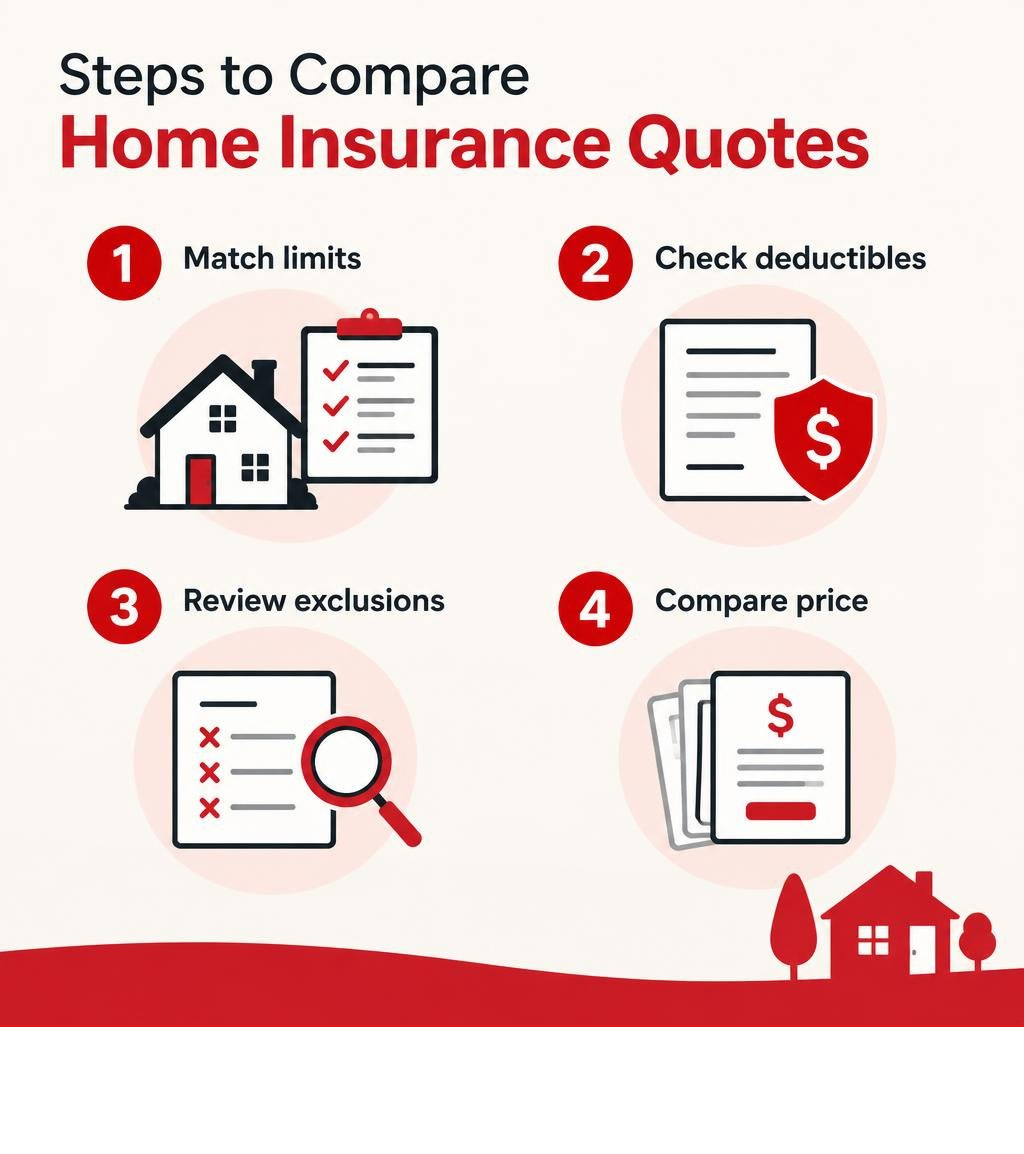
Basic home insurance glossary:
Understanding Core Home Insurance Coverages and Limits
Shopping for property protection can feel overwhelming when numbers and legal terms fill the page. A standard policy breaks down into several distinct coverage sections designed to shield your physical structures, your personal assets, and your financial future from liability lawsuits. Reviewing a comprehensive guide to homeowners insurance helps clarify how each part functions.
| Coverage Type | Standard Baseline Limit | What It Protects |
|---|---|---|
| Dwelling (Coverage A) | 100% of estimated replacement cost | The physical house, attached garage, and built-in fixtures |
| Other Structures (Coverage B) | Typically 10% of Dwelling limit | Detached garages, sheds, fences, and gazebos |
| Personal Property (Coverage C) | Typically 50% of Dwelling limit | Furniture, electronics, clothing, and everyday belongings |
| Loss of Use / ALE (Coverage D) | Typically 10% to 20% of Dwelling limit | Hotel stays, restaurant meals, and temporary living costs |
| Personal Liability (Coverage E) | $100,000 to $500,000 baseline | Legal defense and settlements if someone is injured on your property |
| Medical Payments (Coverage F) | $1,000 to $5,000 per person | Minor medical expenses for guests injured on your property, regardless of fault |
Standard Policy Components and Coverage Percentages
Your dwelling coverage forms the foundation of your policy. Insurers calculate the limits for other property coverages as direct percentages of that dwelling limit. For example, if your house is insured for $300,000 under Coverage A:
- Other Structures (10%): You receive $30,000 to repair or rebuild detached sheds, fences, or unattached carports.
- Personal Property (50%): You have $150,000 to replace your belongings anywhere in the world.
- Loss of Use (10% to 20%): You get $30,000 to $60,000 to cover extra living expenses if a disaster makes your home uninhabitable.
Meeting minimum coverage amounts is critical. Under the standard insurance rule, you must insure your home for at least 80% of its full replacement cost. If coverage drops below this threshold, the insurer can penalize you by paying only a fraction of any partial claim. Mortgage lenders require policies that adequately cover their financial stake, as detailed in the CFPB overview on homeowner insurance requirements.
Replacement Cost vs. Actual Cash Value
When comparing estimates, check whether property settlements use Replacement Cost Value (RCV) or Actual Cash Value (ACV).
- Replacement Cost: Pays the modern market cost to rebuild your home or buy a brand-new item of similar quality, without subtracting for wear, tear, or age.
- Actual Cash Value: Subtracts depreciation from the payout. If a 12-year-old roof is damaged, an ACV policy only pays what a used 12-year-old roof is worth today, leaving you with a large out-of-pocket bill.
Material price increases and local labor shortages can push repair estimates past your original policy caps. Understanding what happens when rebuilding costs exceed your insurance limits ensures you do not get caught short during reconstruction.
Key Policy Endorsements and Common Exclusions
Standard policies (commonly written on an HO-3 special form) cover a long list of named perils, including fire, lightning strikes, windstorms, hail, theft, and falling objects. However, they explicitly exclude several severe hazards.
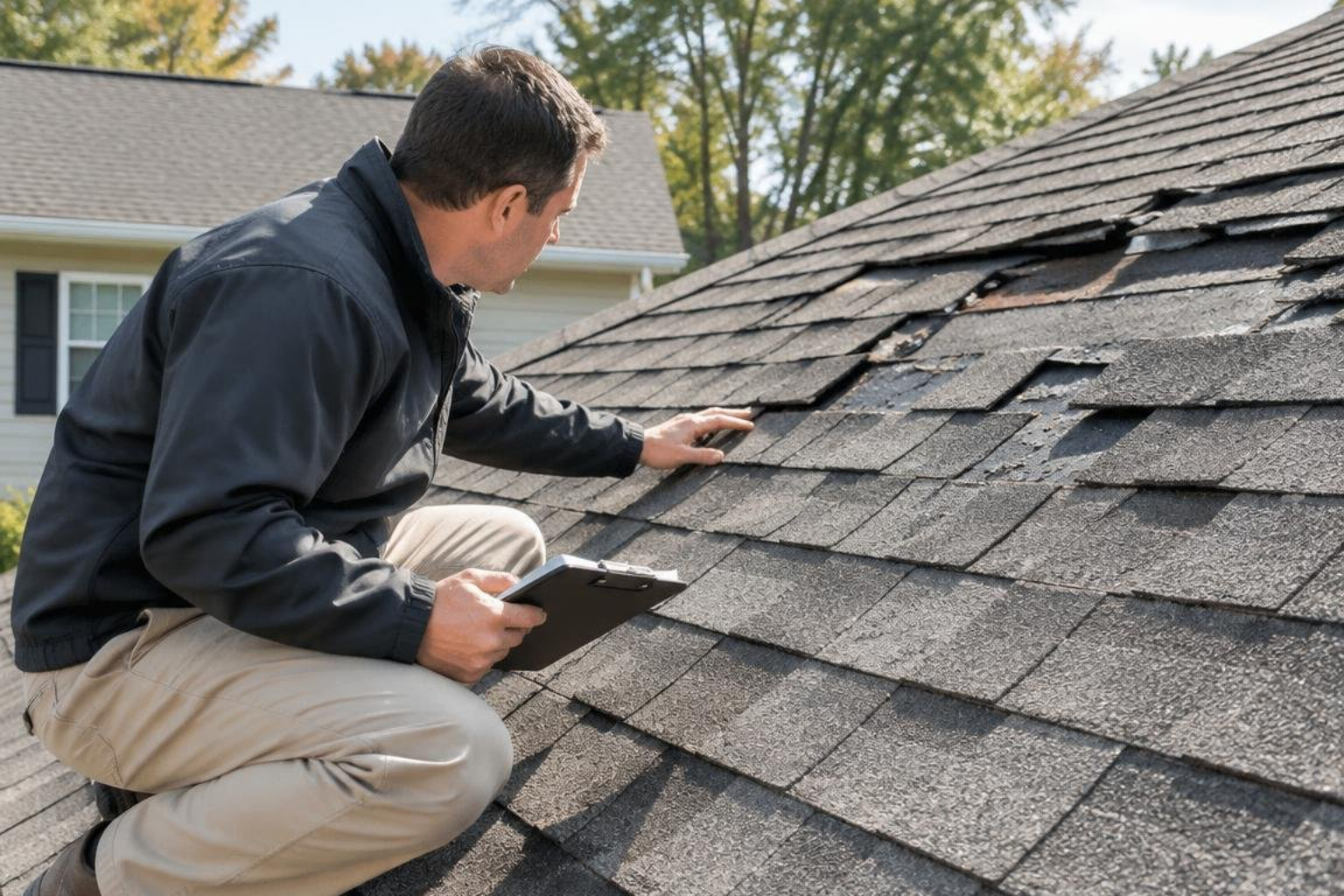
Flood, Earthquake, and Water Backup Exclusions
Standard home policies do not cover flooding from external rising water, heavy rain runoff, or overflowing rivers. Even if your property is not in a designated high-risk flood zone, storm surges and torrential downpours can cause severe damage. In major weather disasters, more than half of flooded homes sit completely outside high-risk flood zones.
Flood policies through the National Flood Insurance Program (NFIP) or private carriers carry a strict 30-day waiting period before coverage takes effect, meaning you cannot buy a policy when a storm is already in the forecast. Similarly, ground tremors, sinkholes, and earthquakes require specific endorsements or standalone policies, as noted in the Pennsylvania Insurance Department homeowners guide.
Essential Add-ons and Endorsements
To close coverage gaps, consider adding endorsements to your base policy:
- Water Backup and Sump Overflow: Covers clean-up and repairs if a municipal sewer backs up or a basement sump pump fails.
- Ordinance or Law Coverage: Pays the extra expense of rebuilding your home up to modern building codes following a covered loss.
- Scheduled Personal Property: Provides higher limits and broader protection for high-value items such as jewelry, firearms, fine art, and antiques.
- Mechanical Breakdown: Protects built-in appliances and major home systems through equipment breakdown endorsements.
- Extended Liability: Adds an extra safety net against catastrophic personal lawsuits with umbrella insurance coverage.
Strategies to Secure Competitive Rates and Discounts
Premiums reflect the risk profile of your property and your household. Insurers look at several key data points during underwriting.
Factors That Determine Your Home Insurance Premiums
Carriers assess risk using multiple variables outlined in the NAIC consumer guide to home insurance:
- Location and Fire Protection: Your distance to the nearest fire station and fire hydrant.
- Home Age and Construction: Brick homes often cost less to insure against wind than wood-frame structures, while older wiring and plumbing increase fire and water risk.
- Claims History: Your past claims and the property’s loss history on comprehensive loss reports.
- Insurance-Based Credit Score: In states where permitted, credit history helps insurers evaluate risk.
- Selected Deductible: Choosing a higher deductible lowers your ongoing premium.
Practical Discounts to Lower Policy Rates
You can trim your annual costs without cutting essential protection:
- Multi-Policy Bundling: Combining your auto and home coverage under one carrier typically delivers the largest premium savings.
- Protective Devices: Installing monitored burglar alarms, smoke detectors, automatic water shutoff valves, and deadbolts earns safety credits.
- Roof Upgrades: Installing impact-resistant, hail-rated shingles reduces roof claim risks.
- Claim-Free Status: Maintaining a clean loss history keeps your baseline rates low.
When you are ready to explore your options, using our quick start insurance quote guide helps you gather the right details before you reach out.
How to Effectively Compare Home Insurance Quotes Step-by-Step
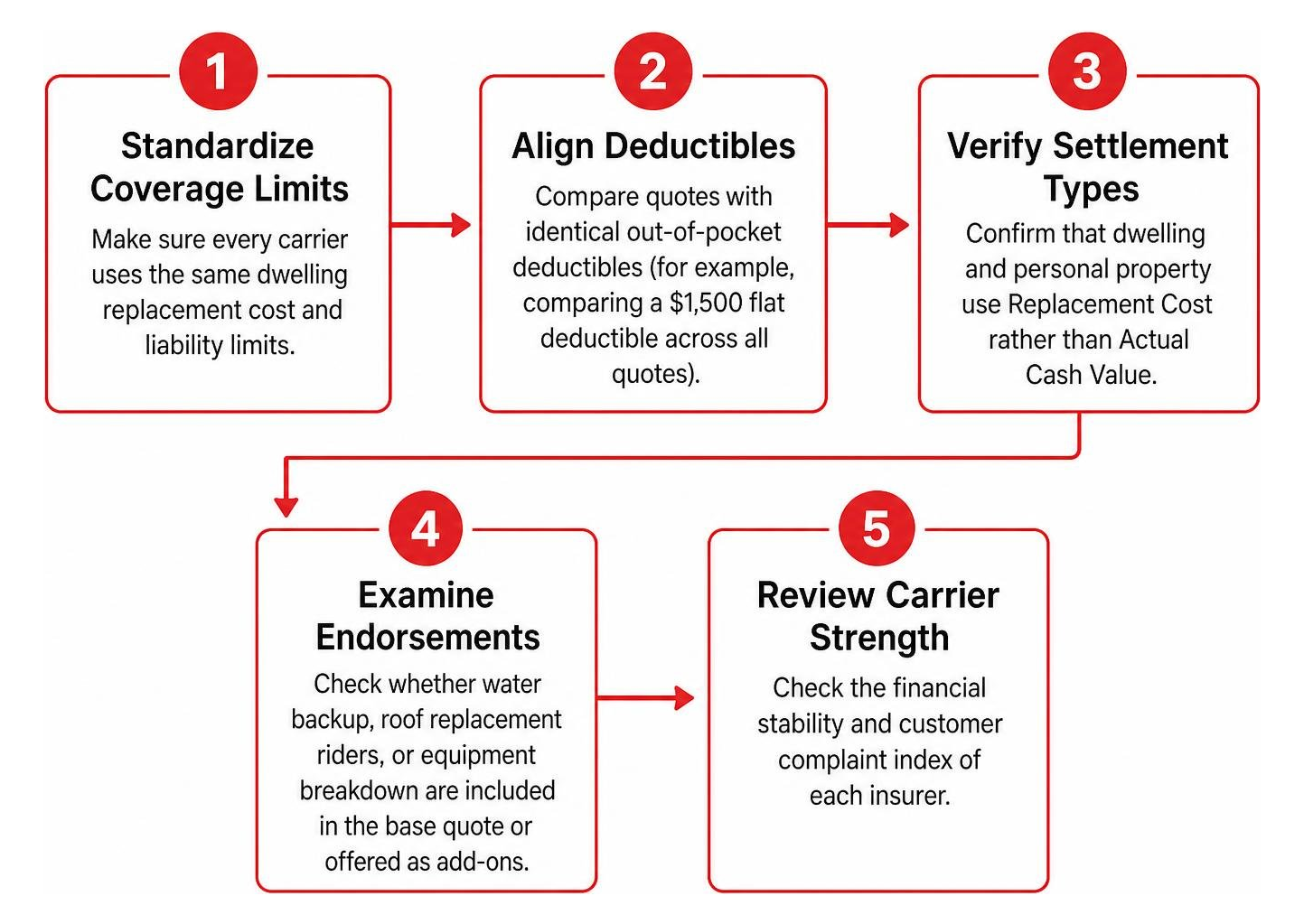
- Standardize Coverage Limits: Make sure every carrier uses the same dwelling replacement cost and liability limits.
- Align Deductibles: Compare quotes with identical out-of-pocket deductibles (for example, comparing a $1,500 flat deductible across all quotes rather than mixing flat fees and percentage deductibles).
- Verify Settlement Types: Confirm that dwelling and personal property use Replacement Cost rather than Actual Cash Value.
- Examine Endorsements: Check whether water backup, roof replacement riders, or equipment breakdown are included in the base quote or offered as add-ons.
- Review Carrier Strength: Check the financial stability and customer complaint index of each insurer.
For regional considerations, consult our resource on comparing home insurance quotes in Alabama or read our cheat sheet for North Alabama homeowners.
Navigating Claims, Non-Renewals, and Policy Maintenance
Managing your policy after purchase ensures smooth handling if disaster strikes.

Filing Claims and Understanding Settlement Timelines
When damage occurs:
- Protect the Property: Prevent further damage by boarding windows or tarping roofs, and save all receipts for temporary repairs.
- Document Everything: Take clear photos and videos before cleaning up debris.
- Notify the Insurer Promptly: An adjuster will inspect the damage and prepare an itemized repair estimate.
- Track Settlement Deadlines: Under standard insurance regulations, an insurer must accept or deny a claim within 15 business days of receiving all requested proof-of-loss documentation. If the claim is approved, payment must generally be sent within five business days. Complex claims or suspected fraud can extend review windows up to 30 or 45 days.
- Manage the Payout: For major structural repairs, insurers issue payments in two checks: the first covers the depreciated actual cash value minus your deductible, and the remaining replacement balance is released after repairs are completed.
Managing Cancellations and Non-Renewal Notices
Insurers must provide advance warning before dropping coverage. State regulations require carriers to give at least 10 days’ notice for policy cancellation and 30 to 60 days’ notice for non-renewal.
Filing multiple non-weather-related claims (such as two or three water damage or theft claims within a three-year span) can trigger a non-renewal notice. If private insurers decline coverage due to high area risk, state-backed FAIR (Fair Access to Insurance Requirements) plans provide basic property protection as a last resort.
Frequently Asked Questions About Home Insurance Quotes
Is homeowners insurance required by law?
No state law mandates homeowners insurance. However, mortgage lenders require proof of continuous coverage before approving a loan. If your policy lapses, your lender can purchase forced-placed insurance on your behalf. This coverage protects only the lender’s financial interest and is often much more expensive than a standard private policy.
What is the 80% rule in property coverage?
The 80% rule requires you to maintain dwelling coverage equal to at least 80% of your home’s total replacement cost. If your home has a $400,000 rebuilding cost and you insure it for only $250,000 (below the $320,000 minimum threshold), your insurer will pay only a proportional share of any partial claim, leaving you with unexpected out-of-pocket costs.
What damage is explicitly excluded from standard policies?
Standard policies exclude damage from rising floodwaters, earthquakes, mudslides, termite infestations, rot, foundation settling, and normal wear and tear. Gradual leaks that go unaddressed over time are also excluded, highlighting the importance of regular home maintenance.
Conclusion
Securing the right property coverage requires balancing cost, coverage limits, and policy terms. Taking time to review replacement cost estimates, align deductibles, and add needed endorsements protects your household from expensive financial surprises down the road.
We recommend scheduling an annual coverage review to keep your policy aligned with recent renovations, rising construction costs, and lifestyle changes. The Hornbuckle Agency serves multiple Alabama communities, including Albertville, Guntersville, Boaz, Arab, Geraldine, Crossville, Collinsville, Horton, and Douglas. Reach out to our local team today to review your property needs and build customized home insurance solutions that keep your home protected.
